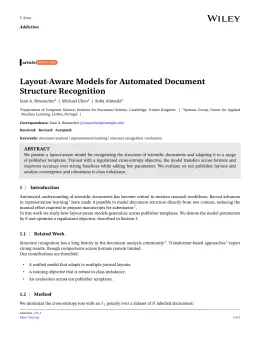
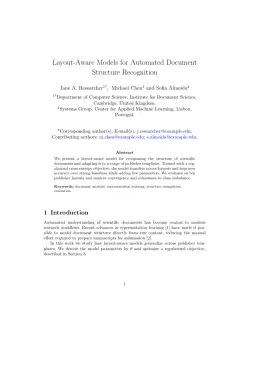
About the Addiction format
Addiction is a peer-reviewed journal published by Wiley, covering Substance Abuse Treatment and Outcomes, Opioid Use Disorder Treatment, Smoking Behavior and Cessation. Over its lifetime it has published 13,442 papers, which have received 544,154 citations.
| Publisher | Wiley |
|---|
| Reference style | Author–year (Chicago) Author–year — (Smith, 2023) in the text
Smith, Ada, Ben Jones, and Cara Lee. 2023. "A Representative Article Title." Addiction 12 (3): 45–58.
Formats any DOI in Addiction style. No sign-up.
|
|---|
| Publishes research in | Substance Abuse Treatment and Outcomes Opioid Use Disorder Treatment Smoking Behavior and Cessation Alcohol Consumption and Health Effects HIV, Drug Use, Sexual Risk |
|---|
| ISSN | 0965-2140 |
|---|
| Citation impact (2-yr) | 3.53 |
|---|
| h-index | 278 |
|---|
| i10-index | 6,475 |
|---|
| Article processing charge | $4,170 |
|---|
| Top institutions publishing here | UNSW Sydney |
|---|
| Journal website | onlinelibrary.wiley.com |
|---|
| You get | A submission-ready PDF and the editable LaTeX source — ready to submit. |
|---|
Papers published in Addiction per year
Citation impact of Addiction by publication year
Citations each year’s papers have accumulated so far — the most recent years are still building up.
Most-cited papers in Addiction
Development of the Alcohol Use Disorders Identification Test (AUDIT): WHO Collaborative Project on Early Detection of Persons with Harmful Alcohol Consumption‐II
John B. Saunders, Olaf Gjerløw Aasland, Thomas F. Babor et al. · 1 Jun 1993
The Alcohol Use Disorders Identification Test (AUDIT) has been developed from a six-country WHO collaborative project as a screening instrument for hazardous and harmful alcohol consumption. It is a 10-item questionnaire which covers the domains of alcohol consumption, drinking behaviour, and alcohol-related problems. Questions were selected from a 150-item assessment schedule (which was administered to…
A pathways model of problem and pathological gambling
Alex Blaszczynski, Lia Nower · 25 Apr 2002
At the moment, there is no single conceptual theoretical model of gambling that adequately accounts for the multiple biological, psychological and ecological variables contributing to the development of pathological gambling. Advances in this area are hampered by imprecise definitions of pathological gambling, failure to distinguish between gambling problems and problem gamblers and a tendency to…
The Alcohol, Smoking and Substance Involvement Screening Test (ASSIST): development, reliability and feasibility
WHO ASSIST Working Group · 30 Aug 2002
AIMS: The Alcohol, Smoking and Substance Involvement Screening Test (ASSIST) was developed for the World Health Organization (WHO) by an international group of substance abuse researchers to detect psychoactive substance use and related problems in primary care patients. This report describes the new instrument as well as a study of its reliability and feasibility. SETTING:…
Meta‐analysis of cue‐reactivity in addiction research
Brian L. Carter, Stephen T. Tiffany · 1 Mar 1999
AIMS: The cue-reactivity procedure exposes addicts to a variety of drug-related stimuli while self-report of craving and physiological responses are monitored. The present review sought to determine the magnitude and overall pattern of responses typically found in cue-reactivity research and which, if any, learning-based model of cue reactivity is best supported by the findings. DESIGN:…
Brief interventions for alcohol problems: a review
Thomas Bien, William R. Miller, J. Scott Tonigan · 1 Mar 1993
Relatively brief interventions have consistently been found to be effective in reducing alcohol consumption or achieving treatment referral of problem drinkers. To date, the literature includes at least a dozen randomized trials of brief referral or retention procedures, and 32 controlled studies of brief interventions targeting drinking behavior, enrolling over 6000 problem drinkers in both…