Taylor & Francis

Virulence Template

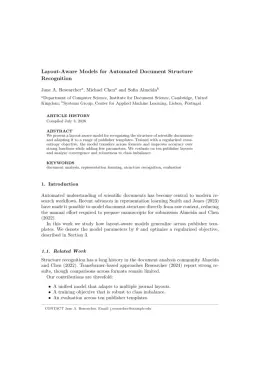
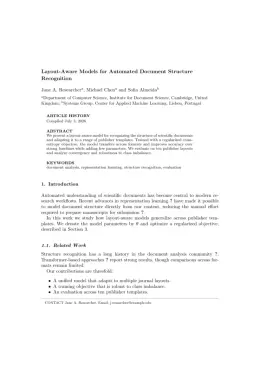
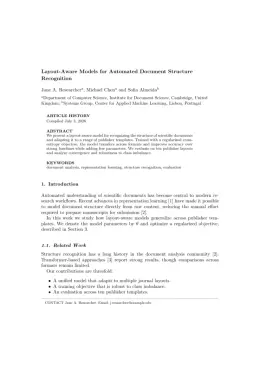
Write in a clean editor, then format for Virulence in one click — DocuGuru applies the official Taylor & Francis template with author–year references and exports a submission-ready PDF plus the editable LaTeX source. Free to start.

About the Virulence format

Virulence is a peer-reviewed journal published by Taylor & Francis, covering Antifungal resistance and susceptibility, Antibiotic Resistance in Bacteria, Fungal Infections and Studies.

PublisherTaylor & Francis
Reference styleAuthor–year (Chicago, T&F)
Author–year — (Smith, 2023) in the text
Smith, Ada, Ben Jones, and Cara Lee. 2023. "A Representative Article Title." Virulence 12 (3): 45–58.

Formats any DOI in Virulence style. No sign-up.

Publishes research inAntifungal resistance and susceptibility Antibiotic Resistance in Bacteria Fungal Infections and Studies Bacterial biofilms and quorum sensing Vibrio bacteria research studies
ISSN2150-5594
Citation impact (2-yr)4.89
h-index126
i10-index1,420
Total citations87,481
Article processing charge$2,557
Open accessYes
Top institutions publishing hereHuazhong Agricultural University
Journal websitewww.tandfonline.com
You getA submission-ready PDF and the editable LaTeX source — ready to submit.

Papers published in Virulence per year

85
2014
133
2015
189
2016
165
2017
122
2018
74
2019
147
2020
187
2021
136
2022
111
2023
171
2024
341
2025

Citation impact of Virulence by publication year

3.7K
2014
5K
2015
9.6K
2016
6.1K
2017
4.4K
2018
2.9K
2019
4.5K
2020
7.8K
2021
3.3K
2022
1.9K
2023
1.9K
2024
1K
2025

Citations each year’s papers have accumulated so far — the most recent years are still building up.

Most-cited papers in Virulence

<i>Candida albicans</i>pathogenicity mechanisms

François L. Mayer, Duncan Wilson, Bernhard Hube · 7 Feb 2013

The polymorphic fungus Candida albicans is a member of the normal human microbiome. In most individuals, C. albicans resides as a lifelong, harmless commensal. Under certain circumstances, however, C. albicans can cause infections that range from superficial infections of the skin to life-threatening systemic infections. Several factors and activities have been identified which contribute to…

1,834 citations Cite SaveGo to paper →
Strategies for combating bacterial biofilms: A focus on anti-biofilm agents and their mechanisms of action

Ranita Roy, Monalisa Tiwari, Gianfranco Donelli et al. · 31 Mar 2017

) values available in the literature so far. Different mode of action of anti biofilm molecules addressed here are inhibition via interference in the quorum sensing pathways, adhesion mechanism, disruption of extracellular DNA, protein, lipopolysaccharides, exopolysaccharides and secondary messengers involved in various signaling pathways. From this study, we conclude that the molecules considered here might…

1,495 citations Cite SaveGo to paper →
Epidemiology of severe sepsis

Florian Mayr, Sachin Yende, Derek C. Angus · 11 Dec 2013

Severe sepsis is a leading cause of death in the United States and the most common cause of death among critically ill patients in non-coronary intensive care units (ICU). Respiratory tract infections, particularly pneumonia, are the most common site of infection, and associated with the highest mortality. The type of organism causing severe sepsis is…

1,222 citations Cite SaveGo to paper →
Hypervirulent (hypermucoviscous)<i>Klebsiella pneumoniae</i>

Alyssa Shon, Rajinder Bajwa, Thomas A. Russo · 7 Feb 2013

A new hypervirulent (hypermucoviscous) variant of Klebsiella pneumoniae has emerged. First described in the Asian Pacific Rim, it now increasingly recognized in Western countries. Defining clinical features are the ability to cause serious, life-threatening community-acquired infection in younger healthy hosts, including liver abscess, pneumonia, meningitis and endophthalmitis and the ability to metastatically spread, an unusual…

1,187 citations Cite SaveGo to paper →

Virulence template — frequently asked questions

How do I write a paper in the Virulence format?
In DocuGuru you write your manuscript in a normal editor — no LaTeX setup required — and select the Virulence template. When you export, DocuGuru compiles the paper into the official Taylor & Francis format and hands you a submission-ready PDF along with the editable LaTeX source.
What reference style does Virulence use?
Virulence uses Author–year (Chicago, T&F) references, shown as author–year markers such as (Smith, 2023) in the text. DocuGuru formats every in-text citation and the reference list in this exact style automatically. A reference appears like this: Smith, Ada, Ben Jones, and Cara Lee. 2023. "A Representative Article Title." Virulence 12 (3): 45–58.
Do I need to know LaTeX to submit to Virulence?
No. DocuGuru generates the interact LaTeX class and compiles the PDF for you in the background, so you get a Taylor & Francis-ready Virulence document without writing any LaTeX. If you do want it, the LaTeX source is included in the export.
Can I import an existing draft into the Virulence template?
Yes. Paste or upload your current manuscript — Word, LaTeX, Markdown, or plain text — and DocuGuru reflows it into the Virulence format with correct headings, figures, tables, and author–year citations.
Who publishes Virulence?
Virulence is a multidisciplinary journal published by Taylor & Francis. DocuGuru's Virulence template matches Taylor & Francis's official submission format.
Can I export a submission-ready Virulence PDF?
Yes — DocuGuru produces a PDF built with the official Virulence template (the interact class) that is ready to submit to Taylor & Francis, together with the matching LaTeX source files.
How much does the Virulence template cost?
You can start writing in the Virulence template for free. Exporting the final submission-ready Virulence PDF and LaTeX source is part of DocuGuru's paid plans — see the app for current pricing.
Use the Virulence template