Taylor & Francis

Toxicology Methods Template

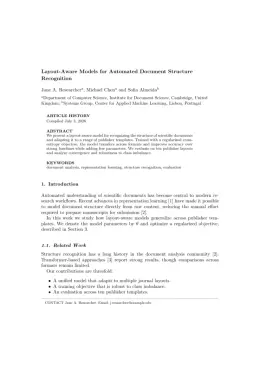
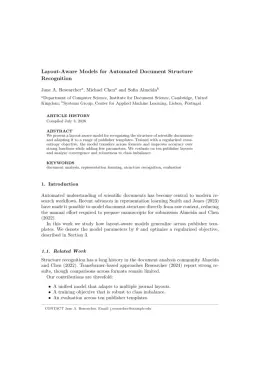
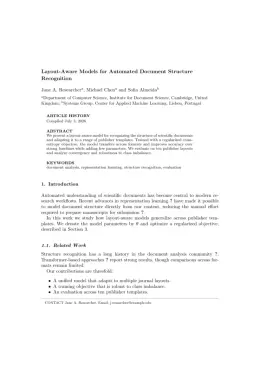
Write in a clean editor, then format for Toxicology Methods in one click — DocuGuru applies the official Taylor & Francis template with author–year references and exports a submission-ready PDF plus the editable LaTeX source. Free to start.

About the Toxicology Methods format

Toxicology Methods is a peer-reviewed journal published by Taylor & Francis, covering Animal testing and alternatives, Carcinogens and Genotoxicity Assessment, Immunotoxicology and immune responses.

PublisherTaylor & Francis
Reference styleAuthor–year (Chicago, T&F)
Author–year — (Smith, 2023) in the text
Smith, Ada, Ben Jones, and Cara Lee. 2023. "A Representative Article Title." Toxicology Methods 12 (3): 45–58.

Formats any DOI in Toxicology Methods style. No sign-up.

Publishes research inAnimal testing and alternatives Carcinogens and Genotoxicity Assessment Immunotoxicology and immune responses Pesticide Exposure and Toxicity Effects and risks of endocrine disrupting chemicals
ISSN1051-7235
h-index26
i10-index73
Total citations2,600
Top institutions publishing hereEnvironmental Protection Agency
Journal websitewww.tandfonline.com
You getA submission-ready PDF and the editable LaTeX source — ready to submit.

Papers published in Toxicology Methods per year

26
1991
25
1992
23
1993
27
1994
22
1995
22
1996
29
1997
23
1998
25
1999
21
2000
24
2001
19
2002

Citation impact of Toxicology Methods by publication year

308
1991
152
1992
155
1993
174
1994
370
1995
163
1996
421
1997
186
1998
234
1999
220
2000
198
2001
13
2002

Citations each year’s papers have accumulated so far — the most recent years are still building up.

Most-cited papers in Toxicology Methods

TETRATOX: TETRAHYMENA PYRIFORMIS POPULATION GROWTH IMPAIRMENT ENDPOINTA SURROGATE FOR FISH LETHALITY

T.W. Schultz · 1 Jan 1997

A short-term, static protocol using the common freshwater ciliate Tetrahymena pyriformis (strain GL-C) is reported. The 50% impairment growth concentration (IGC 50) is the endpoint of choice. Cultures are reared in 50 mL of a semi defined medium in 250-mL Erlenmeyer flasks. Definitive test replicates consist of a minimum of 5 different concentrations of each…

Interlaboratory Evaluation of the Local Lymph Node Assay with 25 Chemicals and Comparison with Guinea Pig Test Data

David A. Basketter, E.W. Scholes, Ian Kimber et al. · 1 Jan 1991

Summary: The murine local lymph node assay (LLNA) has been developed as an alternative method for the identification of skin sensitizing chemicals. Measurement is made of the proliferation of lymphocytes within lymph nodes draining the site of exposure to the test chemical. This report describes a collaborative study in which 25 test chemicals were evaluated…

Molecular Structure-Based Prediction of the Partition Coefficients of Organic Chemicals for Physiological Pharmacokinetic Models

Patrick Poulin, Kannan Krishnan · 1 Jan 1996

The objectives of the present study were (1) to develop and validate a methodology for predicting tissue:air (pt:a) and blood:air (Pb:a) partition coefficients (PCs) of organic chemicals from molecular structure information, and (2) to incorporate this methodology within physiologically based pharmacokinetic (PBPK) models to enable automated calculation of PCs from molecular structure information provided as…

Dynamic Organ Culture is Superior to Multiwell Plate Culture for Maintaining Precision-Cut Tissue Slices: Optimization of Tissue Slice Culture, Part 1

Robyn L. Fisher, Richard Shaughnessy, Patty M. Jenkins et al. · 1 Jan 1995

The increase in the use of precision-cut tissue slices for metabolism and toxicity studies has resulted in the development of various incubation systems and techniques for culturing the slices. This has led to inconsistencies in data obtained from different laboratories. For data to be comparable from one laboratory to another, reliable and consistent incubation systems…

Toxicology Methods template — frequently asked questions

How do I write a paper in the Toxicology Methods format?
In DocuGuru you write your manuscript in a normal editor — no LaTeX setup required — and select the Toxicology Methods template. When you export, DocuGuru compiles the paper into the official Taylor & Francis format and hands you a submission-ready PDF along with the editable LaTeX source.
What reference style does Toxicology Methods use?
Toxicology Methods uses Author–year (Chicago, T&F) references, shown as author–year markers such as (Smith, 2023) in the text. DocuGuru formats every in-text citation and the reference list in this exact style automatically. A reference appears like this: Smith, Ada, Ben Jones, and Cara Lee. 2023. "A Representative Article Title." Toxicology Methods 12 (3): 45–58.
Do I need to know LaTeX to submit to Toxicology Methods?
No. DocuGuru generates the interact LaTeX class and compiles the PDF for you in the background, so you get a Taylor & Francis-ready Toxicology Methods document without writing any LaTeX. If you do want it, the LaTeX source is included in the export.
Can I import an existing draft into the Toxicology Methods template?
Yes. Paste or upload your current manuscript — Word, LaTeX, Markdown, or plain text — and DocuGuru reflows it into the Toxicology Methods format with correct headings, figures, tables, and author–year citations.
Who publishes Toxicology Methods?
Toxicology Methods is a multidisciplinary journal published by Taylor & Francis. DocuGuru's Toxicology Methods template matches Taylor & Francis's official submission format.
Can I export a submission-ready Toxicology Methods PDF?
Yes — DocuGuru produces a PDF built with the official Toxicology Methods template (the interact class) that is ready to submit to Taylor & Francis, together with the matching LaTeX source files.
How much does the Toxicology Methods template cost?
You can start writing in the Toxicology Methods template for free. Exporting the final submission-ready Toxicology Methods PDF and LaTeX source is part of DocuGuru's paid plans — see the app for current pricing.

Use the Toxicology Methods template