Taylor & Francis

Toxicological & Environmental Chemistry Reviews Template

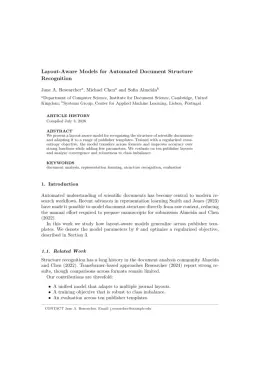
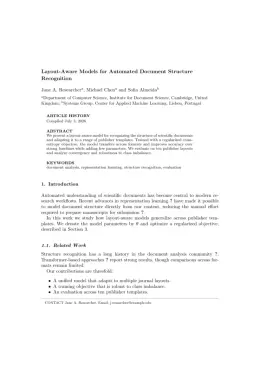
Write in a clean editor, then format for Toxicological & Environmental Chemistry Reviews in one click — DocuGuru applies the official Taylor & Francis template with author–year references and exports a submission-ready PDF plus the editable LaTeX source. Free to start.

About the Toxicological & Environmental Chemistry Reviews format

Toxicological & Environmental Chemistry Reviews is a peer-reviewed journal published by Taylor & Francis, covering Heavy metals in environment, Environmental Toxicology and Ecotoxicology, Toxic Organic Pollutants Impact.

PublisherTaylor & Francis
Reference styleAuthor–year (Chicago, T&F)
Author–year — (Smith, 2023) in the text
Smith, Ada, Ben Jones, and Cara Lee. 2023. "A Representative Article Title." Toxicological & Environmental Chemistry Reviews 12 (3): 45–58.

Formats any DOI in Toxicological & Environmental Chemistry Reviews style. No sign-up.

Publishes research inHeavy metals in environment Environmental Toxicology and Ecotoxicology Toxic Organic Pollutants Impact Heavy Metal Exposure and Toxicity Pesticide and Herbicide Environmental Studies
ISSN0092-9867
Citation impact (2-yr)1.5
h-index67
i10-index1,304
Total citations42,856
Top institutions publishing hereAristotle University of Thessaloniki
Journal websitewww.tandfonline.com
You getA submission-ready PDF and the editable LaTeX source — ready to submit.

Papers published in Toxicological & Environmental Chemistry Reviews per year

139
2014
192
2015
99
2016
70
2017
51
2018
34
2019
39
2020
34
2021
15
2022
18
2023
11
2024
91
2025

Citation impact of Toxicological & Environmental Chemistry Reviews by publication year

2.4K
2014
2.4K
2015
1.2K
2016
1.1K
2017
654
2018
354
2019
438
2020
278
2021
57
2022
72
2023
21
2024
126
2025

Citations each year’s papers have accumulated so far — the most recent years are still building up.

Most-cited papers in Toxicological & Environmental Chemistry Reviews

What are heavy metals? Long-standing controversy over the scientific use of the term ‘heavy metals’ – proposal of a comprehensive definition

Hazrat Ali, Ezzat Khan · 7 Dec 2017

The term ‘heavy metals’ is commonly used in the environmental literature to refer to metals and metalloids associated with environmental pollution, toxicity and adverse effects on biota. The term has been diversely defined, mostly in terms of density, relative atomic mass and atomic number. This diversity of definitions has raised questions about the nomenclature of…

Effect of zinc oxide nanoparticles on growth and antioxidant system of chickpea seedlings

Uday Burman, Mahesh Saini, Praveen Kumar · 1 Apr 2013

Ten days old seedlings of chickpea (Cicer arietinum L var. HC-1) were foliar sprayed with 1.5 or 10 ppm aqueous solution of zinc oxide (ZnO) nanoparticles and effects were compared with corresponding concentration of zinc sulphate and ZnO of normal size. Maximum promontory response with respect to shoot dry weight was observed in seedlings treated…

Photocatalytic degradation of phenol in aqueous titanium dioxide dispersions

Vincenzo Augugliaro, Leonardo Palmisano, A. Sclafani et al. · 1 Jan 1988

Abstract The results of a study of photocatalytic degradation of phenol using aqueous oxygenated TiO2 (anatase) suspensions in a batch Pyrex photoreactor are reported. The influence on the photodegradation rate of various parameters as pH, phenol and TiO2 content, oxygen partial pressure, anions present in the dispersions was investigated. A complete oxidation of phenol was…

Pharmaceuticals as priority water contaminants

Paola Bottoni, Sergio Caroli, Anna Barra Caracciolo · 1 Mar 2010

Pharmaceuticals and their metabolites can reach water bodies through sewage systems, industrial discharges, effluents from sewage treatment plants (STPs), aquaculture, and livestock farming. Pharmaceuticals include a hundred substances which are very different as regards chemical–physical properties and environmental behavior, although they may have strong biochemical activities. At present, pharmaceuticals can reach water concentrations of ng…

Metal organic frameworks as adsorbents for dye adsorption: overview, prospects and future challenges

Aderonke Ajibola Adeyemo, Idowu Olatunbosun Adeoye, Olugbenga Solomon Bello · 29 Oct 2012

Considering the amount of colored waste water generated from many industries (textile, leather, paper, printing, dyestuff, and plastic) that are sent to various water bodies and the ecosystem, the search for efficient and better methods of purification still continues. With the recent research into metal organic frameworks (MOFs), there is a steady growing interest worldwide…

Toxicological & Environmental Chemistry Reviews template — frequently asked questions

How do I write a paper in the Toxicological & Environmental Chemistry Reviews format?
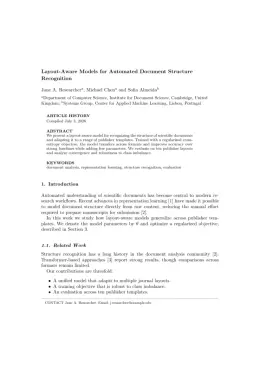
In DocuGuru you write your manuscript in a normal editor — no LaTeX setup required — and select the Toxicological & Environmental Chemistry Reviews template. When you export, DocuGuru compiles the paper into the official Taylor & Francis format and hands you a submission-ready PDF along with the editable LaTeX source.
What reference style does Toxicological & Environmental Chemistry Reviews use?
Toxicological & Environmental Chemistry Reviews uses Author–year (Chicago, T&F) references, shown as author–year markers such as (Smith, 2023) in the text. DocuGuru formats every in-text citation and the reference list in this exact style automatically. A reference appears like this: Smith, Ada, Ben Jones, and Cara Lee. 2023. "A Representative Article Title." Toxicological & Environmental Chemistry Reviews 12 (3): 45–58.
Do I need to know LaTeX to submit to Toxicological & Environmental Chemistry Reviews?
No. DocuGuru generates the interact LaTeX class and compiles the PDF for you in the background, so you get a Taylor & Francis-ready Toxicological & Environmental Chemistry Reviews document without writing any LaTeX. If you do want it, the LaTeX source is included in the export.
Can I import an existing draft into the Toxicological & Environmental Chemistry Reviews template?
Yes. Paste or upload your current manuscript — Word, LaTeX, Markdown, or plain text — and DocuGuru reflows it into the Toxicological & Environmental Chemistry Reviews format with correct headings, figures, tables, and author–year citations.
Who publishes Toxicological & Environmental Chemistry Reviews?
Toxicological & Environmental Chemistry Reviews is a multidisciplinary journal published by Taylor & Francis. DocuGuru's Toxicological & Environmental Chemistry Reviews template matches Taylor & Francis's official submission format.
Can I export a submission-ready Toxicological & Environmental Chemistry Reviews PDF?
Yes — DocuGuru produces a PDF built with the official Toxicological & Environmental Chemistry Reviews template (the interact class) that is ready to submit to Taylor & Francis, together with the matching LaTeX source files.
How much does the Toxicological & Environmental Chemistry Reviews template cost?
You can start writing in the Toxicological & Environmental Chemistry Reviews template for free. Exporting the final submission-ready Toxicological & Environmental Chemistry Reviews PDF and LaTeX source is part of DocuGuru's paid plans — see the app for current pricing.
Use the Toxicological & Environmental Chemistry Reviews template