Taylor & Francis

Toxic Substance Mechanisms Template

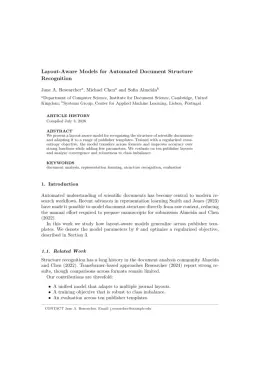
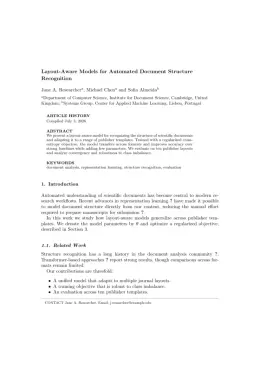
Write in a clean editor, then format for Toxic Substance Mechanisms in one click — DocuGuru applies the official Taylor & Francis template with author–year references and exports a submission-ready PDF plus the editable LaTeX source. Free to start.

About the Toxic Substance Mechanisms format

Toxic Substance Mechanisms is a peer-reviewed journal published by Taylor & Francis, covering Heavy Metal Exposure and Toxicity, Carcinogens and Genotoxicity Assessment, Trace Elements in Health.

PublisherTaylor & Francis
Reference styleAuthor–year (Chicago, T&F)
Author–year — (Smith, 2023) in the text
Smith, Ada, Ben Jones, and Cara Lee. 2023. "A Representative Article Title." Toxic Substance Mechanisms 12 (3): 45–58.

Formats any DOI in Toxic Substance Mechanisms style. No sign-up.

Publishes research inHeavy Metal Exposure and Toxicity Carcinogens and Genotoxicity Assessment Trace Elements in Health Pesticide Exposure and Toxicity Electrochemical Analysis and Applications
ISSN1076-9188
h-index11
i10-index14
Total citations384
Top institutions publishing hereNational Institutes of Health
Journal websitewww.tandfonline.com
You getA submission-ready PDF and the editable LaTeX source — ready to submit.

Papers published in Toxic Substance Mechanisms per year

2
1995
4
1996
35
1997
25
1998
19
1999
18
2000

Citation impact of Toxic Substance Mechanisms by publication year

2
1995
7
1996
97
1997
76
1998
90
1999
111
2000

Citations each year’s papers have accumulated so far — the most recent years are still building up.

Most-cited papers in Toxic Substance Mechanisms

REDUCTION OF CHROMIUM(VI) TO CHROMIUM(V) BY HUMAN MICROSOMAL ENZYMES: EFFECTS OF IRON AND QUINONES

Charles R. Myers, Judith M. Myers, Brian P. Carstens et al. · 1 Jan 2000

The NADPH- and NADH-dependent reduction of chromium(VI), a known carcinogen, by human hepatic and lung microsomes likely proceeds through cytochrome b 5 as the common mediator of electron transfer to Cr(VI). Consistent with the ability of cytochrome b 5 to transfer one electron at a time, Cr(V) was generated as a transient intermediate during human…

EFFECTS OF RUBIDIUM ON THE SECRETORY FUNCTION OF THE RAT SUBMANDIBULAR GLAND

Mohammad Abdollahi Ahmadreza Dehpou · 1 Apr 1998

Abstract Effects of rubidium chloride (1200 mg/L drinking water) treatment for 10 d on rat submandibular saliva composition were examined in this study. Both submandibular ducts were cannulated intraorally with polyethylene tubes, and pure saliva was collected from anesthetized rubidium-treated and control rats using pilocarpine as a secretagogue. Saliva protein and calcium concentrations were found…

LIPID PEROXIDATION AND PROTEIN OXIDATION IN AZOTOBACTER VINELANDII EXPOSED TO MERCURY, SILVER, CRUDE OIL, AND FENTON REAGENT

Ikechukwu N.E. Onwurah · 1 Oct 1999

A pure strain of Azotobacter vinelandii was isolated from soil samples with no known history of contamination by crude oil, mercury, silver or any other heavy metal salts. The isolate was grown to a density of 10 8 cells/ml as the primary culture, in an enriched mineral Azotobacter medium. From this, 90 ml was pipetted…

TOXIC MECHANISM OF NICKEL EXPOSURE ON CARDIAC TISSUE

E.L.B. Novelli, Yeda S. Diniz, Thiago Machado et al. · 1 Jul 2000

The incidence of cardiovascular disease has increased in the general population, and cardiac damage is indicated as one important cause of mortality. In addition, pollution and metal exposure have increased in recent years. For this reason, toxic effects of metals, such as nickel, and the irrelation to cardiac damage should be urgently established. Although free…

COMPARATIVE ACUTE TOXICITY AND PRIMARY IRRITANCY OF VARIOUS CLASSES OF AMINES

Bryan Ballantyne Roy C. Myers · 1 Apr 1997

Results of acute toxicity and prim ary irritation studies for 43 amines of 9 chem ical classes are presented. Effects were variable, even within the same structural class, but several trends were apparent. Based on LD50 values, saturated short- and long-chain aliphatic amines were of moderate to high toxicity by peroral (rat) and percutaneous (rabbit)…

Toxic Substance Mechanisms template — frequently asked questions

How do I write a paper in the Toxic Substance Mechanisms format?
In DocuGuru you write your manuscript in a normal editor — no LaTeX setup required — and select the Toxic Substance Mechanisms template. When you export, DocuGuru compiles the paper into the official Taylor & Francis format and hands you a submission-ready PDF along with the editable LaTeX source.
What reference style does Toxic Substance Mechanisms use?
Toxic Substance Mechanisms uses Author–year (Chicago, T&F) references, shown as author–year markers such as (Smith, 2023) in the text. DocuGuru formats every in-text citation and the reference list in this exact style automatically. A reference appears like this: Smith, Ada, Ben Jones, and Cara Lee. 2023. "A Representative Article Title." Toxic Substance Mechanisms 12 (3): 45–58.
Do I need to know LaTeX to submit to Toxic Substance Mechanisms?
No. DocuGuru generates the interact LaTeX class and compiles the PDF for you in the background, so you get a Taylor & Francis-ready Toxic Substance Mechanisms document without writing any LaTeX. If you do want it, the LaTeX source is included in the export.
Can I import an existing draft into the Toxic Substance Mechanisms template?
Yes. Paste or upload your current manuscript — Word, LaTeX, Markdown, or plain text — and DocuGuru reflows it into the Toxic Substance Mechanisms format with correct headings, figures, tables, and author–year citations.
Who publishes Toxic Substance Mechanisms?
Toxic Substance Mechanisms is a multidisciplinary journal published by Taylor & Francis. DocuGuru's Toxic Substance Mechanisms template matches Taylor & Francis's official submission format.
Can I export a submission-ready Toxic Substance Mechanisms PDF?
Yes — DocuGuru produces a PDF built with the official Toxic Substance Mechanisms template (the interact class) that is ready to submit to Taylor & Francis, together with the matching LaTeX source files.
How much does the Toxic Substance Mechanisms template cost?
You can start writing in the Toxic Substance Mechanisms template for free. Exporting the final submission-ready Toxic Substance Mechanisms PDF and LaTeX source is part of DocuGuru's paid plans — see the app for current pricing.

Use the Toxic Substance Mechanisms template