Taylor & Francis

Scandinavian Economic History Review Template

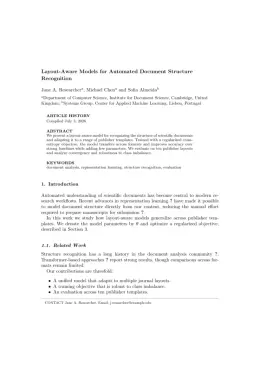
Write in a clean editor, then format for Scandinavian Economic History Review in one click — DocuGuru applies the official Taylor & Francis template with author–year references and exports a submission-ready PDF plus the editable LaTeX source. Free to start.

About the Scandinavian Economic History Review format

Scandinavian Economic History Review is a peer-reviewed journal published by Taylor & Francis, covering Historical Economic and Social Studies, Historical and Archaeological Studies, Historical Influence and Diplomacy.

PublisherTaylor & Francis
Reference styleAuthor–year (Chicago, T&F)
Author–year — (Smith, 2023) in the text
Smith, Ada, Ben Jones, and Cara Lee. 2023. "A Representative Article Title." Scandinavian Economic History Review 12 (3): 45–58.

Formats any DOI in Scandinavian Economic History Review style. No sign-up.

Publishes research inHistorical Economic and Social Studies Historical and Archaeological Studies Historical Influence and Diplomacy Economic Theory and Institutions European and International Law Studies
ISSN0358-5522
Citation impact (2-yr)0.45
h-index55
i10-index274
Total citations11,758
Top institutions publishing hereUppsala University
Journal websitewww.tandfonline.com
You getA submission-ready PDF and the editable LaTeX source — ready to submit.

Papers published in Scandinavian Economic History Review per year

26
2014
16
2015
36
2016
30
2017
37
2018
24
2019
27
2020
41
2021
26
2022
13
2023
15
2024
18
2025

Citation impact of Scandinavian Economic History Review by publication year

209
2014
101
2015
167
2016
202
2017
207
2018
124
2019
143
2020
112
2021
103
2022
27
2023
14
2024
6
2025

Citations each year’s papers have accumulated so far — the most recent years are still building up.

Most-cited papers in Scandinavian Economic History Review

The economics of the family firm

Mark Casson · 1 Jan 1999

Abstract The paper investigates how far the study of family firms constitutes a subject in its own right. It is argued that family ownership per se does not require the development of a special theory of family firms. It is suggested that the uniqueness of the family firm resides in the strength of the dynastic…

Climatic fluctuations and population problems in early modern history

Gustaf Utterström · 1 Jan 1955

Abstract Ever since Malthus and Ricardo, all discussions of the pressure on food supplies have started from the assumption that population is the active factor and Nature the fixed. This interpretation, however, can hardly be reconciled with modern scientific thought, especially if the problem is viewed in the long term. It is not necessary to…

Growth and stagnation in the European economy

William N. Parker · 1 Jul 1955

Abstract At the risk of oversimplifying them, the major conclusions of this important study by Professor Svennilson may be stated as follows: 1. From 1913 up to the Second World War total output and output per capita increased only slowly in Europe. Growth, taken over the whole period, was slow relative both to the development…

Aggregate and per capita GDP in Europe, 1870–2000: continental, regional and national data with changing boundaries

Stephen Broadberry, Alexander Klein · 21 Feb 2012

This article presents estimates of aggregate and per capita GDP in constant prices for Europe over the period 1870-2000. Following the approach of Bairoch, we present figures for the continent as a whole and for individual countries on the basis of changing boundaries. This is complementary to the Maddison data-set, where country data are presented…

Scandinavian Economic History Review template — frequently asked questions

How do I write a paper in the Scandinavian Economic History Review format?
In DocuGuru you write your manuscript in a normal editor — no LaTeX setup required — and select the Scandinavian Economic History Review template. When you export, DocuGuru compiles the paper into the official Taylor & Francis format and hands you a submission-ready PDF along with the editable LaTeX source.
What reference style does Scandinavian Economic History Review use?
Scandinavian Economic History Review uses Author–year (Chicago, T&F) references, shown as author–year markers such as (Smith, 2023) in the text. DocuGuru formats every in-text citation and the reference list in this exact style automatically. A reference appears like this: Smith, Ada, Ben Jones, and Cara Lee. 2023. "A Representative Article Title." Scandinavian Economic History Review 12 (3): 45–58.
Do I need to know LaTeX to submit to Scandinavian Economic History Review?
No. DocuGuru generates the interact LaTeX class and compiles the PDF for you in the background, so you get a Taylor & Francis-ready Scandinavian Economic History Review document without writing any LaTeX. If you do want it, the LaTeX source is included in the export.
Can I import an existing draft into the Scandinavian Economic History Review template?
Yes. Paste or upload your current manuscript — Word, LaTeX, Markdown, or plain text — and DocuGuru reflows it into the Scandinavian Economic History Review format with correct headings, figures, tables, and author–year citations.
Who publishes Scandinavian Economic History Review?
Scandinavian Economic History Review is a multidisciplinary journal published by Taylor & Francis. DocuGuru's Scandinavian Economic History Review template matches Taylor & Francis's official submission format.
Can I export a submission-ready Scandinavian Economic History Review PDF?
Yes — DocuGuru produces a PDF built with the official Scandinavian Economic History Review template (the interact class) that is ready to submit to Taylor & Francis, together with the matching LaTeX source files.
How much does the Scandinavian Economic History Review template cost?
You can start writing in the Scandinavian Economic History Review template for free. Exporting the final submission-ready Scandinavian Economic History Review PDF and LaTeX source is part of DocuGuru's paid plans — see the app for current pricing.

Use the Scandinavian Economic History Review template