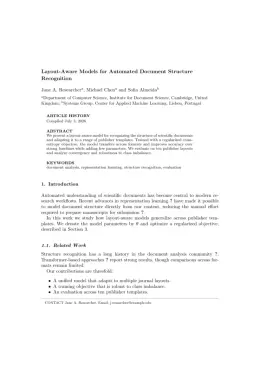
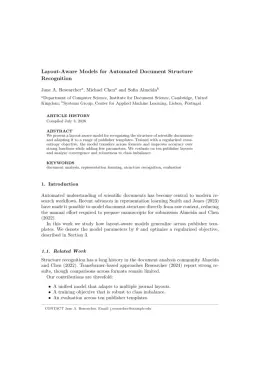
About the Polycyclic aromatic compounds format
Polycyclic aromatic compounds is a peer-reviewed journal published by Taylor & Francis, covering Synthesis and biological activity, Multicomponent Synthesis of Heterocycles, Toxic Organic Pollutants Impact.
| Publisher | Taylor & Francis |
|---|
| Reference style | Author–year (Chicago, T&F) Author–year — (Smith, 2023) in the text
Smith, Ada, Ben Jones, and Cara Lee. 2023. "A Representative Article Title." Polycyclic aromatic compounds 12 (3): 45–58.
Formats any DOI in Polycyclic aromatic compounds style. No sign-up.
|
|---|
| Publishes research in | Synthesis and biological activity Multicomponent Synthesis of Heterocycles Toxic Organic Pollutants Impact Synthesis and Biological Evaluation Synthesis and Characterization of Heterocyclic Compounds |
|---|
| ISSN | 1026-7743 |
|---|
| Citation impact (2-yr) | 3.01 |
|---|
| h-index | 55 |
|---|
| i10-index | 1,123 |
|---|
| Total citations | 35,386 |
|---|
| Top institutions publishing here | COMSATS University Islamabad |
|---|
| Journal website | www.tandfonline.com |
|---|
| You get | A submission-ready PDF and the editable LaTeX source — ready to submit. |
|---|
Papers published in Polycyclic aromatic compounds per year
Citation impact of Polycyclic aromatic compounds by publication year
Citations each year’s papers have accumulated so far — the most recent years are still building up.
Most-cited papers in Polycyclic aromatic compounds
Time to Say Goodbye to the 16 EPA PAHs? Toward an Up-to-Date Use of PACs for Environmental Purposes
Jan T. Andersson, Christine Achten · 15 Mar 2015
The 16 EPA PAHs have played an exceptionally large role above all in environmental and analytical sciences in the last 40 years, but now there are good reasons to question their utility in many circumstances even though their use is so established and comfortable. Here we review the reasons why the list has been so…
The Source of U.S. EPA's Sixteen PAH Priority Pollutants
Lawrence H. Keith · 8 Dec 2014
Little is written or published about where EPA's 16 PAH Priority Pollutants came from or how and why these particular compounds were selected as representatives of PAHs to regulate. Now, over thirty years later questions are being asked whether some of these compounds are still useful or whether others might be better. Environmental analysis today…
The Occurrence of 16 EPA PAHs in Food – A Review
Zuzana Zelinková, Thomas Wenzl · 8 Jan 2015
Occurrence and toxicity of polycyclic aromatic hydrocarbons (PAHs) have been extensively studied in countries all over the world. PAHs generally occur in complex mixtures which may consist of hundreds of compounds. The U.S. Environmental Protection Agency (EPA) proposed in the 1970 to monitor a set of 16 PAHs which are frequently found in environmental samples.…
Overview of Polycyclic Aromatic Compounds (PAC)
Christine Achten, Jan T. Andersson · 15 Mar 2015
The chemical group of polycyclic aromatic compounds (PAC), including the better-known subgroup of polycyclic aromatic hydrocarbons (PAH) and the heterocyclic aromatic compounds (NSO-PAC, heterocycles), comprise several thousand individual compounds. It is hard to find a comprehensive overview in the literature of these PACs that includes a substantial amount of relevant properties. Here an attempt is…
Polycyclic Aromatic Hydrocarbons in the Environment: Environmental Fate and Transformation
Sergio Manzetti · 26 Jun 2013
Abstract Polycyclic aromatic hydrocarbons are toxic and carcinogenic compounds that occur in the environment and derive from two classes processes: petrogenic and pyrogenic processes. The petrogenic part derives from oil- and drilling activities, including oil disasters, spills, and pollution from industrial sites, refineries, and most importantly traffic exhaust emissions, while the pyrogenic part derives from…