
1,674 citations
Cite
SaveGo to paper →
Taylor & Francis
Petroleum Science and Technology Template
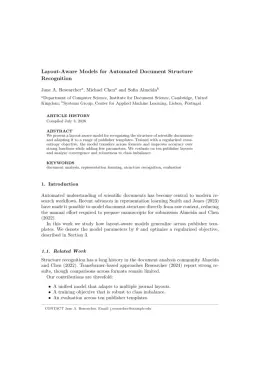
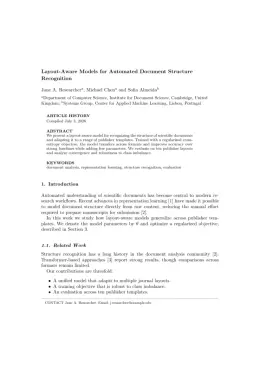
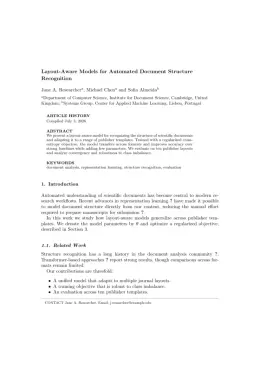
Write in a clean editor, then format for Petroleum Science and Technology in one click — DocuGuru applies the official Taylor & Francis template with author–year references and exports a submission-ready PDF plus the editable LaTeX source. Free to start.
About the Petroleum Science and Technology format
Petroleum Science and Technology is a peer-reviewed journal published by Taylor & Francis, covering Petroleum Processing and Analysis, Hydrocarbon exploration and reservoir analysis, Enhanced Oil Recovery Techniques.
| Publisher | Taylor & Francis |
|---|---|
| Reference style | Author–year (Chicago, T&F) Author–year — (Smith, 2023) in the text Smith, Ada, Ben Jones, and Cara Lee. 2023. "A Representative Article Title." Petroleum Science and Technology 12 (3): 45–58.
Formats any DOI in Petroleum Science and Technology style. No sign-up. |
| Publishes research in | Petroleum Processing and Analysis Hydrocarbon exploration and reservoir analysis Enhanced Oil Recovery Techniques Hydraulic Fracturing and Reservoir Analysis Reservoir Engineering and Simulation Methods |
| ISSN | 1091-6466 |
| Citation impact (2-yr) | 1.2 |
| h-index | 68 |
| i10-index | 1,742 |
| Total citations | 57,167 |
| Top institutions publishing here | China University of Petroleum, Beijing |
| Journal website | www.tandfonline.com |
| You get | A submission-ready PDF and the editable LaTeX source — ready to submit. |
Papers published in Petroleum Science and Technology per year
Citation impact of Petroleum Science and Technology by publication year
Citations each year’s papers have accumulated so far — the most recent years are still building up.
Most-cited papers in Petroleum Science and Technology
Microbial enhanced oil recovery (MEOR) represents the use of microorganisms to extract the remaining oil from reservoirs. This technique has the potential to be cost-efficient in the extraction of oil remained trapped in capillary pores of the formation rock or in areas not swept by the classical or modern enhanced oil recovery (EOR) methods, such…
338 citations
Cite
SaveGo to paper →
ABSTRACT Improved prediction of the onset of asphaltene precipitation may be achieved using refractive index (RI) to characterize crude oils and their mixtures with precipitants and solvents. Experimental measurements of RI for mixtures of several crude oils with the precipitant n-heptane, are reported at ambient conditions. Theoretical developments are described that will permit extension of…
261 citations
Cite
SaveGo to paper →
Abstract Deposition of high molecular weight paraffins on the inner wall of subsea production and transportation pipelines continues to be a critical operational problem faced by the petroleum industry. The accumulation of the deposited material on the inner wall of the lines may lead to increased pumping power, decreased flow rate or even to the…
251 citations
Cite
SaveGo to paper →
ABSTRACT In Alberta, oil sands bitumen is utilized for synthetic crude oil (SCO) production by surface mining, bitumen extraction followed by primary (coking) and secondary (catalytic hydrotreating) upgrading processes. SCO is further refined in specially designed or slightly modified conventional refineries into transportation fuels. Oil sands tailings, composed of water, sands, silt, clay and residual…
233 citations
Cite
SaveGo to paper →
Related journal templates
Petroleum Science and Technology template — frequently asked questions
How do I write a paper in the Petroleum Science and Technology format?
In DocuGuru you write your manuscript in a normal editor — no LaTeX setup required — and select the Petroleum Science and Technology template. When you export, DocuGuru compiles the paper into the official Taylor & Francis format and hands you a submission-ready PDF along with the editable LaTeX source.
What reference style does Petroleum Science and Technology use?
Petroleum Science and Technology uses Author–year (Chicago, T&F) references, shown as author–year markers such as (Smith, 2023) in the text. DocuGuru formats every in-text citation and the reference list in this exact style automatically. A reference appears like this: Smith, Ada, Ben Jones, and Cara Lee. 2023. "A Representative Article Title." Petroleum Science and Technology 12 (3): 45–58.
Do I need to know LaTeX to submit to Petroleum Science and Technology?
No. DocuGuru generates the interact LaTeX class and compiles the PDF for you in the background, so you get a Taylor & Francis-ready Petroleum Science and Technology document without writing any LaTeX. If you do want it, the LaTeX source is included in the export.
Can I import an existing draft into the Petroleum Science and Technology template?
Yes. Paste or upload your current manuscript — Word, LaTeX, Markdown, or plain text — and DocuGuru reflows it into the Petroleum Science and Technology format with correct headings, figures, tables, and author–year citations.
Who publishes Petroleum Science and Technology?
Petroleum Science and Technology is a multidisciplinary journal published by Taylor & Francis. DocuGuru's Petroleum Science and Technology template matches Taylor & Francis's official submission format.
Can I export a submission-ready Petroleum Science and Technology PDF?
Yes — DocuGuru produces a PDF built with the official Petroleum Science and Technology template (the interact class) that is ready to submit to Taylor & Francis, together with the matching LaTeX source files.
How much does the Petroleum Science and Technology template cost?
You can start writing in the Petroleum Science and Technology template for free. Exporting the final submission-ready Petroleum Science and Technology PDF and LaTeX source is part of DocuGuru's paid plans — see the app for current pricing.