Taylor & Francis

Person-Centered & Experiential Psychotherapies Template

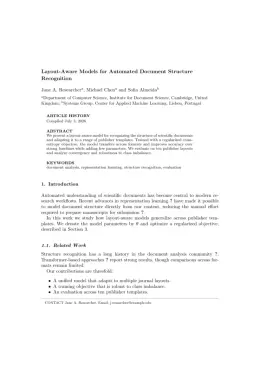
Write in a clean editor, then format for Person-Centered & Experiential Psychotherapies in one click — DocuGuru applies the official Taylor & Francis template with author–year references and exports a submission-ready PDF plus the editable LaTeX source. Free to start.

About the Person-Centered & Experiential Psychotherapies format

Person-Centered & Experiential Psychotherapies is a peer-reviewed journal published by Taylor & Francis, covering Psychotherapy Techniques and Applications, Counseling, Therapy, and Family Dynamics, Child Therapy and Development.

PublisherTaylor & Francis
Reference styleAuthor–year (Chicago, T&F)
Author–year — (Smith, 2023) in the text
Smith, Ada, Ben Jones, and Cara Lee. 2023. "A Representative Article Title." Person-Centered & Experiential Psychotherapies 12 (3): 45–58.

Formats any DOI in Person-Centered & Experiential Psychotherapies style. No sign-up.

Publishes research inPsychotherapy Techniques and Applications Counseling, Therapy, and Family Dynamics Child Therapy and Development Transactional Analysis in Psychotherapy Psychology, Coaching, and Therapy
ISSN1477-9757
Citation impact (2-yr)0.94
h-index32
i10-index150
Total citations4,965
Top institutions publishing hereUniversity of Strathclyde
Journal websitewww.tandfonline.com
You getA submission-ready PDF and the editable LaTeX source — ready to submit.

Papers published in Person-Centered & Experiential Psychotherapies per year

31
2014
20
2015
26
2016
31
2017
20
2018
36
2019
29
2020
20
2021
41
2022
31
2023
29
2024
53
2025

Citation impact of Person-Centered & Experiential Psychotherapies by publication year

246
2014
217
2015
186
2016
374
2017
205
2018
168
2019
192
2020
96
2021
157
2022
135
2023
41
2024
56
2025

Citations each year’s papers have accumulated so far — the most recent years are still building up.

Most-cited papers in Person-Centered & Experiential Psychotherapies

Therapeutic Presence: Therapists' experience of presence in the psychotherapy encounter / Therapeutische Präsenz: Erfahrungen von Therapeuten mit Präsenz in der psychotherapeutischen Begegnung / La Presencia Terapéutica: La Experiencia de la Presencia que Viven los Terapeutas en el Encuentro Psicoterapéutico

Shari M. Geller, Leslie S. Greenberg · 1 Dec 2002

Abstract A qualitative study was conducted with expert therapists who are proponents or have written about presence and its importance in psychotherapy. Based on a qualitative analysis of therapists' reports, a working model of therapeutic presence was developed. This included three emergent domains. One domain entails preparing the ground for presence, referring to the pre-session…

Person-centered therapy: A pluralistic perspective

Mick Cooper, John McLeod · 2 Aug 2011

The aim of this paper is to articulate a “pluralistic” understanding of what it means to be person-centered. This perspective places particular emphasis on an understanding of clients as unique, nonstandardizable “othernesses,” whose therapeutic wants and needs are likely to be highly heterogeneous and unknowable in advance. Based on this idiographic standpoint, it is argued…

Person-centered/experiential psychotherapy for anxiety difficulties: Theory, research and practice

Robert Elliott · 1 Mar 2013

Anxiety difficulties are an increasingly important focus for person-centered/experiential (PCE) psychotherapies. I begin by reviewing person-centered, focusing-oriented, and emotion-focused therapy (EFT) theories of anxiety. Next, I summarize a meta-analysis of 19 outcome studies of PCE therapies for adults with anxiety, most commonly supportive or person-centered therapies (PCT) carried out by cognitive behavior therapy (CBT) researchers.…

Carl Rogers' fateful wrong move in the development of Rogerian relational therapy: Retitling “relationship therapy” “non-directive therapy”

Ivan Ellingham · 2 Aug 2011

This article examines the relationship between Rogerian therapy and Rankian relationship therapy across four stages in the development of Rogerian therapy to its present relational form. The case is made that Rogers perpetrated a fateful wrong move in first titling his therapy “non-directive therapy” since Rogerian therapy is essentially an evolved elaboration of Rankian relationship…

Emotion-focused therapy of depression

Leslie S. Greenberg · 3 Apr 2017

A review of emotion-focused therapy (EFT) of depression including a discussion of its evidence base is provided. EFT aims within an affectively attuned empathic relationship to access and transform habitual maladaptive emotional schematic memories that are seen as the source of the depression. These memories often involve feelings of the shame of worthlessness, anxious insecurity…

Person-Centered & Experiential Psychotherapies template — frequently asked questions

How do I write a paper in the Person-Centered & Experiential Psychotherapies format?
In DocuGuru you write your manuscript in a normal editor — no LaTeX setup required — and select the Person-Centered & Experiential Psychotherapies template. When you export, DocuGuru compiles the paper into the official Taylor & Francis format and hands you a submission-ready PDF along with the editable LaTeX source.
What reference style does Person-Centered & Experiential Psychotherapies use?
Person-Centered & Experiential Psychotherapies uses Author–year (Chicago, T&F) references, shown as author–year markers such as (Smith, 2023) in the text. DocuGuru formats every in-text citation and the reference list in this exact style automatically. A reference appears like this: Smith, Ada, Ben Jones, and Cara Lee. 2023. "A Representative Article Title." Person-Centered & Experiential Psychotherapies 12 (3): 45–58.
Do I need to know LaTeX to submit to Person-Centered & Experiential Psychotherapies?
No. DocuGuru generates the interact LaTeX class and compiles the PDF for you in the background, so you get a Taylor & Francis-ready Person-Centered & Experiential Psychotherapies document without writing any LaTeX. If you do want it, the LaTeX source is included in the export.
Can I import an existing draft into the Person-Centered & Experiential Psychotherapies template?
Yes. Paste or upload your current manuscript — Word, LaTeX, Markdown, or plain text — and DocuGuru reflows it into the Person-Centered & Experiential Psychotherapies format with correct headings, figures, tables, and author–year citations.
Who publishes Person-Centered & Experiential Psychotherapies?
Person-Centered & Experiential Psychotherapies is a multidisciplinary journal published by Taylor & Francis. DocuGuru's Person-Centered & Experiential Psychotherapies template matches Taylor & Francis's official submission format.
Can I export a submission-ready Person-Centered & Experiential Psychotherapies PDF?
Yes — DocuGuru produces a PDF built with the official Person-Centered & Experiential Psychotherapies template (the interact class) that is ready to submit to Taylor & Francis, together with the matching LaTeX source files.
How much does the Person-Centered & Experiential Psychotherapies template cost?
You can start writing in the Person-Centered & Experiential Psychotherapies template for free. Exporting the final submission-ready Person-Centered & Experiential Psychotherapies PDF and LaTeX source is part of DocuGuru's paid plans — see the app for current pricing.

Use the Person-Centered & Experiential Psychotherapies template