Taylor & Francis

NRIAG Journal of Astronomy and Geophysics Template

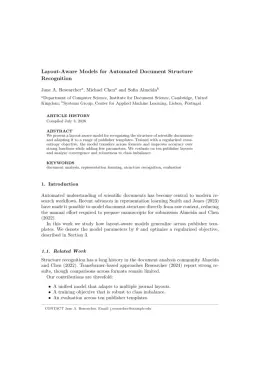
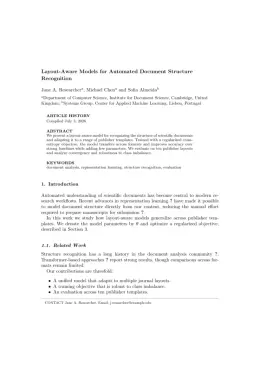
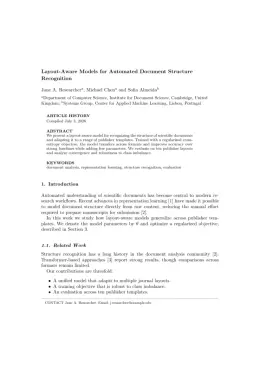
Write in a clean editor, then format for NRIAG Journal of Astronomy and Geophysics in one click — DocuGuru applies the official Taylor & Francis template with author–year references and exports a submission-ready PDF plus the editable LaTeX source. Free to start.

About the NRIAG Journal of Astronomy and Geophysics format

NRIAG Journal of Astronomy and Geophysics is a peer-reviewed journal published by Taylor & Francis, covering Geophysical and Geoelectrical Methods, Geophysical Methods and Applications, Seismic Waves and Analysis.

PublisherTaylor & Francis
Reference styleAuthor–year (Harvard)
Author–year — (Smith, 2023) in the text
Smith, A., Jones, B. and Lee, C. (2023) 'A representative article title', NRIAG Journal of Astronomy and Geophysics, 12(3), pp. 45–58.

Formats any DOI in NRIAG Journal of Astronomy and Geophysics style. No sign-up.

Publishes research inGeophysical and Geoelectrical Methods Geophysical Methods and Applications Seismic Waves and Analysis Seismic Imaging and Inversion Techniques earthquake and tectonic studies
ISSN2090-9977
Citation impact (2-yr)1.25
h-index32
i10-index153
Total citations5,078
Open accessYes
Top institutions publishing hereNational Research Institute of Astronomy and Geophysics
Journal websitewww.tandfonline.com
You getA submission-ready PDF and the editable LaTeX source — ready to submit.

Papers published in NRIAG Journal of Astronomy and Geophysics per year

26
2014
33
2015
47
2016
45
2017
41
2018
23
2019
56
2020
34
2021
27
2022
10
2023
13
2024
11
2025

Citation impact of NRIAG Journal of Astronomy and Geophysics by publication year

806
2014
299
2015
574
2016
808
2017
649
2018
162
2019
507
2020
193
2021
239
2022
28
2023
17
2024
9
2025

Citations each year’s papers have accumulated so far — the most recent years are still building up.

Most-cited papers in NRIAG Journal of Astronomy and Geophysics

A detailed modeling of photovoltaic module using MATLAB

Habbati Bellia, Youcef Ramdani, Moulay Fatima · 16 May 2014

The PV module is the interface which converts light into electricity. Modeling this device, necessarily requires taking weather data (irradiance and temperature) as input variables. The output can be current, voltage, power or other. However, trace the characteristics I(V) or P(V) needs of these three variables. Any change in the entries immediately implies changes in…

Prediction of shear wave velocity using empirical correlations and artificial intelligence methods

Shahoo Maleki, Ali Moradzadeh, Reza Ghavami Riabi et al. · 1 Jun 2014

Good understanding of mechanical properties of rock formations is essential during the development and production phases of a hydrocarbon reservoir. Conventionally, these properties are estimated from the petrophysical logs with compression and shear sonic data being the main input to the correlations. This is while in many cases the shear sonic data are not acquired…

Application of multi-criteria decision analysis in prediction of groundwater resources potential: A case of Oke-Ana, Ilesa Area Southwestern, Nigeria

Ayokunle Adewale Akinlalu, A. Adegbuyiro, K.A.N. Adiat et al. · 15 Mar 2017

Groundwater Potential of Oke-Ana area southwestern Nigeria have been evaluated using the integration of electrical resistivity method, remote sensing and geographic information systems. The effect of five hydrogeological indices, namely lineament density, drainage density, lithology, overburden thickness and aquifer layer resistivity on groundwater occurrence was established. Multi-criteria decision analysis technique was employed to assign weight…

Delineation potential gold mineralization zones in a part of Central Eastern Desert, Egypt using Airborne Magnetic and Radiometric data

Sayed O. Elkhateeb, Mahmoud Abdellatif · 1 Jun 2018

Localization of probable gold mineralization zones in a selected part of the central Eastern Desert of Egypt has been executed by mapping lithology, structures and hydrothermal alteration zones. In this regard, both aeromagnetic and aeroradiometric data have been utilized in the analysis; by making use of some enhancement techniques such as first vertical derivative, analytic…

Automatic concrete cracks detection and mapping of terrestrial laser scan data

Mostafa Rabah, Ahmed El-Hattab, Atef Fayad · 1 Dec 2013

Terrestrial laser scanning has become one of the standard technologies for object acquisition in surveying engineering. The high spatial resolution of imaging and the excellent capability of measuring the 3D space by laser scanning bear a great potential if combined for both data acquisition and data compilation. Automatic crack detection from concrete surface images is…

NRIAG Journal of Astronomy and Geophysics template — frequently asked questions

How do I write a paper in the NRIAG Journal of Astronomy and Geophysics format?
In DocuGuru you write your manuscript in a normal editor — no LaTeX setup required — and select the NRIAG Journal of Astronomy and Geophysics template. When you export, DocuGuru compiles the paper into the official Taylor & Francis format and hands you a submission-ready PDF along with the editable LaTeX source.
What reference style does NRIAG Journal of Astronomy and Geophysics use?
NRIAG Journal of Astronomy and Geophysics uses Author–year (Harvard) references, shown as author–year markers such as (Smith, 2023) in the text. DocuGuru formats every in-text citation and the reference list in this exact style automatically. A reference appears like this: Smith, A., Jones, B. and Lee, C. (2023) 'A representative article title', NRIAG Journal of Astronomy and Geophysics, 12(3), pp. 45–58.
Do I need to know LaTeX to submit to NRIAG Journal of Astronomy and Geophysics?
No. DocuGuru generates the elsarticle LaTeX class and compiles the PDF for you in the background, so you get a Taylor & Francis-ready NRIAG Journal of Astronomy and Geophysics document without writing any LaTeX. If you do want it, the LaTeX source is included in the export.
Can I import an existing draft into the NRIAG Journal of Astronomy and Geophysics template?
Yes. Paste or upload your current manuscript — Word, LaTeX, Markdown, or plain text — and DocuGuru reflows it into the NRIAG Journal of Astronomy and Geophysics format with correct headings, figures, tables, and author–year citations.
Who publishes NRIAG Journal of Astronomy and Geophysics?
NRIAG Journal of Astronomy and Geophysics is a multidisciplinary journal published by Taylor & Francis. DocuGuru's NRIAG Journal of Astronomy and Geophysics template matches Taylor & Francis's official submission format.
Can I export a submission-ready NRIAG Journal of Astronomy and Geophysics PDF?
Yes — DocuGuru produces a PDF built with the official NRIAG Journal of Astronomy and Geophysics template (the elsarticle class) that is ready to submit to Taylor & Francis, together with the matching LaTeX source files.
How much does the NRIAG Journal of Astronomy and Geophysics template cost?
You can start writing in the NRIAG Journal of Astronomy and Geophysics template for free. Exporting the final submission-ready NRIAG Journal of Astronomy and Geophysics PDF and LaTeX source is part of DocuGuru's paid plans — see the app for current pricing.

Use the NRIAG Journal of Astronomy and Geophysics template