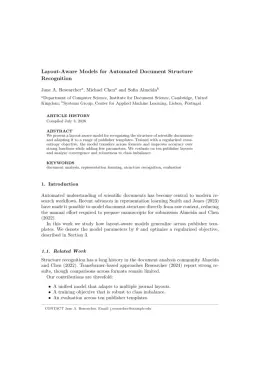
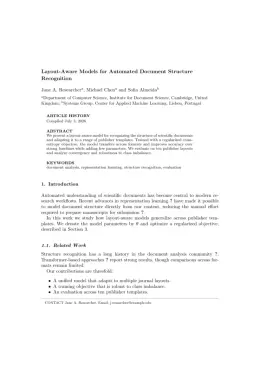
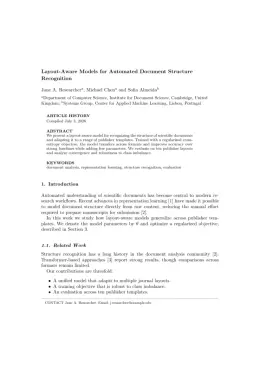
About the Nordic Psychology format
Nordic Psychology is a peer-reviewed journal published by Taylor & Francis, covering Child and Adolescent Psychosocial and Emotional Development, Psychotherapy Techniques and Applications, Anxiety, Depression, Psychometrics, Treatment, Cognitive Processes.
| Publisher | Taylor & Francis |
|---|
| Reference style | Author–year (Chicago, T&F) Author–year — (Smith, 2023) in the text
Smith, Ada, Ben Jones, and Cara Lee. 2023. "A Representative Article Title." Nordic Psychology 12 (3): 45–58.
Formats any DOI in Nordic Psychology style. No sign-up.
|
|---|
| Publishes research in | Child and Adolescent Psychosocial and Emotional Development Psychotherapy Techniques and Applications Anxiety, Depression, Psychometrics, Treatment, Cognitive Processes Personality Disorders and Psychopathology Attachment and Relationship Dynamics |
|---|
| ISSN | 1901-2276 |
|---|
| Citation impact (2-yr) | 0.57 |
|---|
| h-index | 34 |
|---|
| i10-index | 164 |
|---|
| Total citations | 6,074 |
|---|
| Open access | Yes |
|---|
| Top institutions publishing here | Aarhus University |
|---|
| Journal website | www.tandfonline.com |
|---|
| You get | A submission-ready PDF and the editable LaTeX source — ready to submit. |
|---|
Papers published in Nordic Psychology per year
Citation impact of Nordic Psychology by publication year
Citations each year’s papers have accumulated so far — the most recent years are still building up.
Most-cited papers in Nordic Psychology
A conceptual analysis of Ageism
Thomas Nicolaj Iversen, Lars Larsen, Per Erik Solem · 1 Jan 2009
Presently the research on ageism is marked by numerous more or less diffuse definitions of the concept of ageism. Many studies investigate both the causes and consequences of ageism without a clear definition of the phenomenon. As a consequence the area is characterized by diverging research results which are hard to re-test and to compare.…
Guidelines for translating and adapting psychological instruments
E. H. Gudmundsson · 1 Jan 2009
Translated but unstandardised psychological instruments are widely used in non-English speaking countries. For many of these instruments meagre information is available on the method of translation, extent of adaptations, reliability, validity and other psychometric properties. This lack of information has unforeseen consequences for test-takers and decision making in clinical and other applied settings. In this…
Staying close and reflexive: An explorative and reflexive approach to qualitative research on psychotherapy
Per‐Einar Binder, Helge Holgersen, Christian Moltu · 1 Jun 2012
Qualitative research has the potential to explore patient and therapist experiences of psychotherapeutic processes, as well as the challenges and opportunities inherent in relational and technical aspects of therapy. This paper examines explorative and reflexive ways of doing qualitative research on psychotherapy, based on the ontological and epistemological premises of hermeneutic phenomenology. An explorative–reflective thematic…
Early identification of dyslexia and the use of computer game-based practice to support reading acquisition
Heikki Lyytinen, Miia Ronimus, Anne Alanko et al. · 1 Jan 2007
Abstract The validity of early predictive measures of delayed reading acquisition is summarized on the basis of the Jyväskylä Longitudinal study of Dyslexia (JLD). These results show that children in need of support can be identified years before school age. After a brief review of the literature on computer-based interventions, pilot data is reported on…
Factors contributing to verbal self-disclosure
Emmi Ignatius, Marja Kokkonen · 1 Jan 2007
The phenomenon of self-disclosure has been actively studied in several sub-discliplines of psychology from the 1970s on, and neighbouring disciplines, such as social and communication sciences, have enriched the psychological understanding of the topic. The psychological literature on self-disclosure, which is viewed, sometimes as a trait-like construct, varying in degree from one person to another,…