Taylor & Francis

Neuropsychoanalysis Template

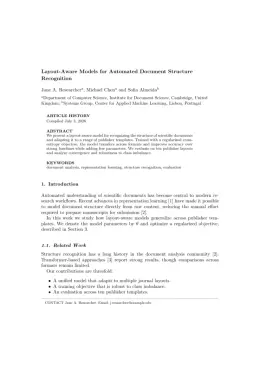
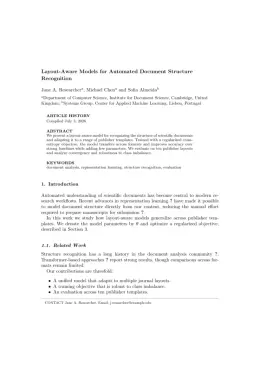
Write in a clean editor, then format for Neuropsychoanalysis in one click — DocuGuru applies the official Taylor & Francis template with author–year references and exports a submission-ready PDF plus the editable LaTeX source. Free to start.

About the Neuropsychoanalysis format

Neuropsychoanalysis is a peer-reviewed journal published by Taylor & Francis, covering Psychotherapy Techniques and Applications, Mental Health and Psychiatry, Memory and Neural Mechanisms.

PublisherTaylor & Francis
Reference styleAuthor–year (Chicago, T&F)
Author–year — (Smith, 2023) in the text
Smith, Ada, Ben Jones, and Cara Lee. 2023. "A Representative Article Title." Neuropsychoanalysis 12 (3): 45–58.

Formats any DOI in Neuropsychoanalysis style. No sign-up.

Publishes research inPsychotherapy Techniques and Applications Mental Health and Psychiatry Memory and Neural Mechanisms Psychosomatic Disorders and Their Treatments Action Observation and Synchronization
ISSN1529-4145
Citation impact (2-yr)1.29
h-index40
i10-index127
Total citations13,405
Top institutions publishing hereBangor University
Journal websitewww.tandfonline.com
You getA submission-ready PDF and the editable LaTeX source — ready to submit.

Papers published in Neuropsychoanalysis per year

23
2014
18
2015
27
2016
24
2017
13
2018
13
2019
21
2020
15
2021
39
2022
24
2023
23
2024
37
2025

Citation impact of Neuropsychoanalysis by publication year

929
2014
152
2015
87
2016
661
2017
87
2018
69
2019
157
2020
80
2021
61
2022
91
2023
23
2024
56
2025

Citations each year’s papers have accumulated so far — the most recent years are still building up.

Most-cited papers in Neuropsychoanalysis

Mentalizing homeostasis: The social origins of interoceptive inference

Aikaterini Fotopoulou, Manos Tsakiris · 2 Jan 2017

Is the self already relational in its very bodily foundations? The question of whether our mental life is initially and primarily shaped by embodied dimensions of the individual or by interpersonal relations is debated in many fields, including psychology, philosophy, psychoanalysis, and more recently, cognitive neuroscience. In this interdisciplinary target article, we put forward the…

The Affective Neuroscience Personality Scales: Normative Data and Implications

Kenneth L. Davis, Jaak Panksepp, Larry Normansell · 1 Jan 2003

Based on evidence for brain affective systems, parceled into six distinct groups (Panksepp, 1998a), it was hypothesized that a great deal of personality variability would be related to strengths and weaknesses found in these six systems. If supported, this hypothesis would provide further evidence for the physiological bases of personality. Personality scales, modeled after the…

The Conscious Id

Mark Solms · 1 Jan 2013

AbstractTwo aspects of the body are represented in the brain, and they are represented differently. The most important difference is that the brain regions for the two aspects of the body are associated with different aspects of consciousness. Very broadly speaking, the brainstem mechanisms derived from the autonomic body are associated with affective consciousness, and…

Depression: An Evolutionarily Conserved Mechanism to Terminate Separation Distress? A Review of Aminergic, Peptidergic, and Neural Network Perspectives

Douglas F. Watt, Jaak Panksepp · 1 Jan 2009

Our basic thesis is that depression is an evolutionarily conserved mechanism in mammalian brains, selected as a shutdown mechanism to terminate protracted separation distress (a prototype mammalian emotional state), which, if sustained, would be dangerous for infant mammals. However, this fundamental shutdown mechanism remains available to more mature mammalian and hominid brains, particularly those with…

An Evolutionary Framework to Understand Foraging, Wanting, and Desire: The Neuropsychology of the SEEKING System

Jason S. Wright, Jaak Panksepp · 1 Jan 2012

The SEEKING system of mammalian brains needs to be understood from multiple scientific and clinical perspectives. SEEKING theory provides new neuropsychoanalytic perspectives for understanding the human mind and its behavioral and emotional disorders and considers dimensions of experience that have traditionally been subsumed under concepts such as “drives” and “motivations.” Historically these concepts became problematic…

Neuropsychoanalysis template — frequently asked questions

How do I write a paper in the Neuropsychoanalysis format?
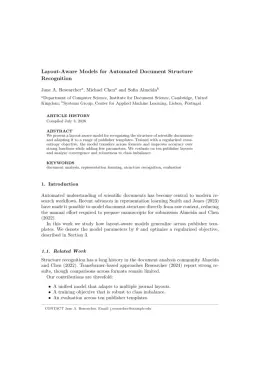
In DocuGuru you write your manuscript in a normal editor — no LaTeX setup required — and select the Neuropsychoanalysis template. When you export, DocuGuru compiles the paper into the official Taylor & Francis format and hands you a submission-ready PDF along with the editable LaTeX source.
What reference style does Neuropsychoanalysis use?
Neuropsychoanalysis uses Author–year (Chicago, T&F) references, shown as author–year markers such as (Smith, 2023) in the text. DocuGuru formats every in-text citation and the reference list in this exact style automatically. A reference appears like this: Smith, Ada, Ben Jones, and Cara Lee. 2023. "A Representative Article Title." Neuropsychoanalysis 12 (3): 45–58.
Do I need to know LaTeX to submit to Neuropsychoanalysis?
No. DocuGuru generates the interact LaTeX class and compiles the PDF for you in the background, so you get a Taylor & Francis-ready Neuropsychoanalysis document without writing any LaTeX. If you do want it, the LaTeX source is included in the export.
Can I import an existing draft into the Neuropsychoanalysis template?
Yes. Paste or upload your current manuscript — Word, LaTeX, Markdown, or plain text — and DocuGuru reflows it into the Neuropsychoanalysis format with correct headings, figures, tables, and author–year citations.
Who publishes Neuropsychoanalysis?
Neuropsychoanalysis is a multidisciplinary journal published by Taylor & Francis. DocuGuru's Neuropsychoanalysis template matches Taylor & Francis's official submission format.
Can I export a submission-ready Neuropsychoanalysis PDF?
Yes — DocuGuru produces a PDF built with the official Neuropsychoanalysis template (the interact class) that is ready to submit to Taylor & Francis, together with the matching LaTeX source files.
How much does the Neuropsychoanalysis template cost?
You can start writing in the Neuropsychoanalysis template for free. Exporting the final submission-ready Neuropsychoanalysis PDF and LaTeX source is part of DocuGuru's paid plans — see the app for current pricing.
Use the Neuropsychoanalysis template