Taylor & Francis

Molluscan Research Template

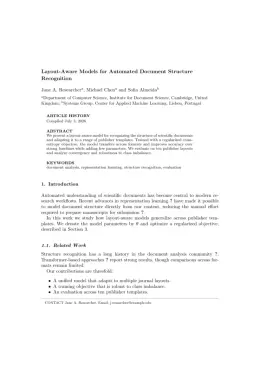
Write in a clean editor, then format for Molluscan Research in one click — DocuGuru applies the official Taylor & Francis template with author–year references and exports a submission-ready PDF plus the editable LaTeX source. Free to start.

About the Molluscan Research format

Molluscan Research is a peer-reviewed journal published by Taylor & Francis, covering Marine Biology and Ecology Research, Aquatic Invertebrate Ecology and Behavior, Mollusks and Parasites Studies.

PublisherTaylor & Francis
Reference styleAuthor–year (Chicago, T&F)
Author–year — (Smith, 2023) in the text
Smith, Ada, Ben Jones, and Cara Lee. 2023. "A Representative Article Title." Molluscan Research 12 (3): 45–58.

Formats any DOI in Molluscan Research style. No sign-up.

Publishes research inMarine Biology and Ecology Research Aquatic Invertebrate Ecology and Behavior Mollusks and Parasites Studies Marine Bivalve and Aquaculture Studies Cephalopods and Marine Biology
ISSN1323-5818
Citation impact (2-yr)0.73
h-index30
i10-index175
Total citations5,433
Top institutions publishing hereAustralian Museum
Journal websitewww.tandfonline.com
You getA submission-ready PDF and the editable LaTeX source — ready to submit.

Papers published in Molluscan Research per year

33
2014
19
2015
41
2016
40
2017
34
2018
27
2019
31
2020
33
2021
31
2022
28
2023
32
2024
41
2025

Citation impact of Molluscan Research by publication year

313
2014
143
2015
358
2016
254
2017
226
2018
247
2019
172
2020
157
2021
89
2022
59
2023
44
2024
24
2025

Citations each year’s papers have accumulated so far — the most recent years are still building up.

Most-cited papers in Molluscan Research

Gastropod phylogeny based on six segments from four genes representing coding or non-coding and mitochondrial or nuclear DNA

D. J. Colgan, Winston F. Ponder, Emma Beacham et al. · 1 Jan 2003

Significant differences remain between gastropod phylogenetic hypotheses based on morphological and molecular datasets. We collected additional data from three gene segments (28S rDNA expansion region D1 (36 taxa plus two from GenBank), cytochrome c oxidase subunit 1 (35 species plus one from Genbank) and small nuclear RNA U2 (24 species)). These were combined with data…

The effects of exposure to near-future levels of ocean acidification on shell characteristics of Pinctada fucata (Bivalvia: Pteriidae)

Heather M. Welladsen, Paul C. Southgate, Kirsten Heimann · 30 Nov 2010

Atmospheric carbon dioxide concentrations have greatly increased since the beginning of the industrial age. This has led to a decline in global ocean pH by 0.1 units, and continued decline of 0.3–0.5 units is predicted by the end of 2100. Acidification of the ocean has led to decreased calcification rates and dissolution of calcareous structures…

The molecular phylogeny of the Buccinidae (Caenogastropoda: Neogastropoda) as inferred from the complete mitochondrial 16S rRNA gene sequences of selected representatives

Seiji Hayashi · 1 Jan 2005

Complete mitochondrial 16S rRNA gene sequences from 35 caenogastropods were obtained to evaluate the phylogenetic relationship of the family Buccinidae at the intra-supra familial level. With respect to intergeneric relationships within the family, the molecular phylogeny supported three clades with statistical significance: Buccinum + Neptunea, Engina + Pisania + Pollia and Penion + Kelletia. These…

Molluscan Research template — frequently asked questions

How do I write a paper in the Molluscan Research format?
In DocuGuru you write your manuscript in a normal editor — no LaTeX setup required — and select the Molluscan Research template. When you export, DocuGuru compiles the paper into the official Taylor & Francis format and hands you a submission-ready PDF along with the editable LaTeX source.
What reference style does Molluscan Research use?
Molluscan Research uses Author–year (Chicago, T&F) references, shown as author–year markers such as (Smith, 2023) in the text. DocuGuru formats every in-text citation and the reference list in this exact style automatically. A reference appears like this: Smith, Ada, Ben Jones, and Cara Lee. 2023. "A Representative Article Title." Molluscan Research 12 (3): 45–58.
Do I need to know LaTeX to submit to Molluscan Research?
No. DocuGuru generates the interact LaTeX class and compiles the PDF for you in the background, so you get a Taylor & Francis-ready Molluscan Research document without writing any LaTeX. If you do want it, the LaTeX source is included in the export.
Can I import an existing draft into the Molluscan Research template?
Yes. Paste or upload your current manuscript — Word, LaTeX, Markdown, or plain text — and DocuGuru reflows it into the Molluscan Research format with correct headings, figures, tables, and author–year citations.
Who publishes Molluscan Research?
Molluscan Research is a multidisciplinary journal published by Taylor & Francis. DocuGuru's Molluscan Research template matches Taylor & Francis's official submission format.
Can I export a submission-ready Molluscan Research PDF?
Yes — DocuGuru produces a PDF built with the official Molluscan Research template (the interact class) that is ready to submit to Taylor & Francis, together with the matching LaTeX source files.
How much does the Molluscan Research template cost?
You can start writing in the Molluscan Research template for free. Exporting the final submission-ready Molluscan Research PDF and LaTeX source is part of DocuGuru's paid plans — see the app for current pricing.

Use the Molluscan Research template