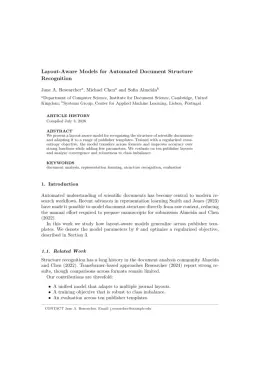
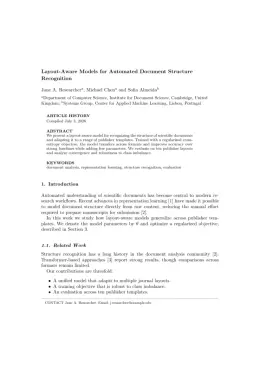
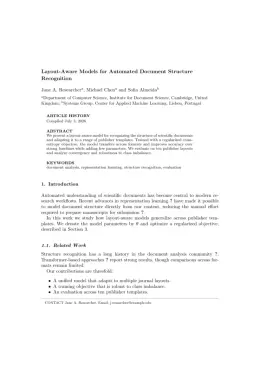
Taylor & Francis

Membrane Biochemistry Template

Write in a clean editor, then format for Membrane Biochemistry in one click — DocuGuru applies the official Taylor & Francis template with author–year references and exports a submission-ready PDF plus the editable LaTeX source. Free to start.

About the Membrane Biochemistry format

Membrane Biochemistry is a peer-reviewed journal published by Taylor & Francis, covering Lipid Membrane Structure and Behavior, Ion channel regulation and function, Erythrocyte Function and Pathophysiology.

PublisherTaylor & Francis
Reference styleAuthor–year (Chicago, T&F)
Author–year — (Smith, 2023) in the text
Smith, Ada, Ben Jones, and Cara Lee. 2023. "A Representative Article Title." Membrane Biochemistry 12 (3): 45–58.

Formats any DOI in Membrane Biochemistry style. No sign-up.

Publishes research inLipid Membrane Structure and Behavior Ion channel regulation and function Erythrocyte Function and Pathophysiology Ion Transport and Channel Regulation Neuroscience and Neuropharmacology Research
ISSN0149-046X
h-index31
i10-index100
Total citations3,512
Top institutions publishing hereUniversity of Maryland, Baltimore
Journal websitewww.tandfonline.com
You getA submission-ready PDF and the editable LaTeX source — ready to submit.

Papers published in Membrane Biochemistry per year

18
1980
10
1981
15
1982
5
1983
11
1984
8
1985
15
1986
19
1987
21
1989
24
1990
24
1993
1
2013

Citation impact of Membrane Biochemistry by publication year

243
1980
224
1981
148
1982
55
1983
120
1984
77
1985
330
1986
279
1987
276
1989
263
1990
215
1993
0
2013

Citations each year’s papers have accumulated so far — the most recent years are still building up.

Most-cited papers in Membrane Biochemistry

Properties of Brush Border Vesicles Isolated from Rat Kidney Cortex by Calcium Precipitation

Carla Evers, Winfried Haase, H. Murer et al. · 1 Jan 1978

Brush border membrane vesicles were isolated from rat kidney cortex by differential centrifugation in the presence of 10 mM calcium. Their properties were compared to brush border vesicles isolated by free-flow electrophoresis. By the calcium precipitation method membrane vesicles were obtained in a shorter time with a similar enrichment of brush border marker enzymes (11-…

Cation-Sugar Cotransport in the Melibiose Transport System of Escherichia coli

Tomofusa Tsuchiya, T. Hastings Wilson · 1 Jan 1978

The entry of Na+ or H+ into cells of Escherichia coli via the melibiose transport system was stimulated by the addition of certain galactosides. The principal cell used in these studies (W3133) was a lactose transport negative strain of E. coli possessing an inducible melibiose transport system. Such cells were grown in the presence of…

High Affinity Stereospecific Binding of [<sup>3</sup>H] Cocaine in Striatum and its Relationship to the Dopamine Transporter

David O. Calligaro, Mohyee E. Eldefrawi · 1 Jan 1987

A high affinity (KD 35 nM) binding site for [3H]cocaine is detected in rat brain striatum present at 2-3 pmol/mg protein of synaptic membranes. This binding is displaced by cocaine analogues with the same rank order as their inhibition of [3H]dopamine ([3H]DA) uptake into striatal synaptosomes (r = 0.99), paralleling the order of their central…

Biophysics of Mechanoreception

Frederick Sachs · 1 Jan 1986

Several types of cells' skeletal, muscle, nerve, epithelia, and heart have been shown to contain ion channels which are sensitive to membrane tension. In chick skeletal muscle, the transduction persists in excised patches and involves no chemical messengers. Quantitative analysis of single channel records reveals that the sensitivity to stretch can be described by a…

Anion Transport in Red Blood Cells I. Chemical Properties of Anion Recognition Sites as Revealed by Structure-Activity Relationships of Aromatic Sulfonic Acids

M. Barzilay, Saul Ship, Z. Ioav Cabantchik · 1 Jan 1979

The present study is concerned with the chemical factors that determine the inhibitory properties of reversible aromatic sulfonic acids on sulfate exchange system of human red blood cells. Two series of compounds were tested for inhibitory potencies: benzene sulfonic acid (BS) and 2,2'-disulfonic stilbene (DS) derivatives, each series with substituent groups such as Cl, OH,…

Membrane Biochemistry template — frequently asked questions

How do I write a paper in the Membrane Biochemistry format?
In DocuGuru you write your manuscript in a normal editor — no LaTeX setup required — and select the Membrane Biochemistry template. When you export, DocuGuru compiles the paper into the official Taylor & Francis format and hands you a submission-ready PDF along with the editable LaTeX source.
What reference style does Membrane Biochemistry use?
Membrane Biochemistry uses Author–year (Chicago, T&F) references, shown as author–year markers such as (Smith, 2023) in the text. DocuGuru formats every in-text citation and the reference list in this exact style automatically. A reference appears like this: Smith, Ada, Ben Jones, and Cara Lee. 2023. "A Representative Article Title." Membrane Biochemistry 12 (3): 45–58.
Do I need to know LaTeX to submit to Membrane Biochemistry?
No. DocuGuru generates the interact LaTeX class and compiles the PDF for you in the background, so you get a Taylor & Francis-ready Membrane Biochemistry document without writing any LaTeX. If you do want it, the LaTeX source is included in the export.
Can I import an existing draft into the Membrane Biochemistry template?
Yes. Paste or upload your current manuscript — Word, LaTeX, Markdown, or plain text — and DocuGuru reflows it into the Membrane Biochemistry format with correct headings, figures, tables, and author–year citations.
Who publishes Membrane Biochemistry?
Membrane Biochemistry is a multidisciplinary journal published by Taylor & Francis. DocuGuru's Membrane Biochemistry template matches Taylor & Francis's official submission format.
Can I export a submission-ready Membrane Biochemistry PDF?
Yes — DocuGuru produces a PDF built with the official Membrane Biochemistry template (the interact class) that is ready to submit to Taylor & Francis, together with the matching LaTeX source files.
How much does the Membrane Biochemistry template cost?
You can start writing in the Membrane Biochemistry template for free. Exporting the final submission-ready Membrane Biochemistry PDF and LaTeX source is part of DocuGuru's paid plans — see the app for current pricing.

Use the Membrane Biochemistry template