Taylor & Francis

Journal of Toxicology and Environmental Health Template

Write in a clean editor, then format for Journal of Toxicology and Environmental Health in one click — DocuGuru applies the official Taylor & Francis template with author–year references and exports a submission-ready PDF plus the editable LaTeX source. Free to start.

About the Journal of Toxicology and Environmental Health format

Journal of Toxicology and Environmental Health is a peer-reviewed journal published by Taylor & Francis, covering Carcinogens and Genotoxicity Assessment, Air Quality and Health Impacts, Toxic Organic Pollutants Impact.

PublisherTaylor & Francis
Reference styleAuthor–year (Chicago, T&F)
Author–year — (Smith, 2023) in the text
Smith, Ada, Ben Jones, and Cara Lee. 2023. "A Representative Article Title." Journal of Toxicology and Environmental Health 12 (3): 45–58.

Formats any DOI in Journal of Toxicology and Environmental Health style. No sign-up.

Publishes research inCarcinogens and Genotoxicity Assessment Air Quality and Health Impacts Toxic Organic Pollutants Impact Effects and risks of endocrine disrupting chemicals Heavy Metal Exposure and Toxicity
ISSN0098-4108
Citation impact (2-yr)2.75
h-index137
i10-index4,352
Total citations181,195
Top institutions publishing hereEnvironmental Protection Agency
Journal websitewww.tandfonline.com
You getA submission-ready PDF and the editable LaTeX source — ready to submit.

Papers published in Journal of Toxicology and Environmental Health per year

142
2014
108
2015
112
2016
132
2017
93
2018
108
2019
84
2020
72
2021
49
2022
84
2023
78
2024
85
2025

Citation impact of Journal of Toxicology and Environmental Health by publication year

3.9K
2014
3.1K
2015
2.7K
2016
3.3K
2017
1.9K
2018
1.8K
2019
1.4K
2020
876
2021
593
2022
523
2023
398
2024
122
2025

Citations each year’s papers have accumulated so far — the most recent years are still building up.

Most-cited papers in Journal of Toxicology and Environmental Health

Exposure to Carbon Nanotube Material: Assessment of Nanotube Cytotoxicity using Human Keratinocyte Cells

Anna A. Shvedova, Vincent Castranova, Elena R. Kisin et al. · 1 Jun 2003

Carbon nanotubes are new members of carbon allotropes similar to fullerenes and graphite. Because of their unique electrical, mechanical, and thermal properties, carbon nanotubes are important for novel applications in the electronics, aerospace, and computer industries. Exposure to graphite and carbon materials has been associated with increased incidence of skin diseases, such as carbon fiber…

1,242 citations Cite SaveGo to paper →
The Global Burden of Disease Due to Outdoor Air Pollution

Aaron Cohen, H R Anderson, Bart Ostro et al. · 1 Jul 2005

As part of the World Health Organization (WHO) Global Burden of Disease Comparative Risk Assessment, the burden of disease attributable to urban ambient air pollution was estimated in terms of deaths and disability-adjusted life years (DALYs). Air pollution is associated with a broad spectrum of acute and chronic health effects, the nature of which may…

1,156 citations Cite SaveGo to paper →
EXTRAPULMONARY TRANSLOCATION OF ULTRAFINE CARBON PARTICLES FOLLOWING WHOLE-BODY INHALATION EXPOSURE OF RATS

Günter Oberdörster, Z. D. Sharp, Viorel Atudorei et al. · 12 Oct 2002

Studies with intravenously injected ultrafine particles have shown that the liver is the major organ of their uptake from the blood circulation. Measuring translocation of inhaled ultrafine particles to extrapulmonary organs via the blood compartment is hampered by methodological difficulties (i.e., label may come off, partial solubilization) and analytical limitations (measurement of very small amounts).…

1,081 citations Cite SaveGo to paper →
Invited Review: TOXICOLOGY OF DEOXYNIVALENOL (VOMITOXIN)

B. A. Rotter · 1 May 1996

Trichothecene mycotoxins are a group of structurally similar fungal metabolites that are capable of producing a wide range of toxic effects. Deoxynivalenol (DON, vomitoxin), a trichothecene, is prevalent worldwide in crops used for food and feed production, including in Canada and the United States. Although DON is one of the least acutely toxic trichothecenes, it…

TRANSLOCATION OF ULTRAFINE INSOLUBLE IRIDIUM PARTICLES FROM LUNG EPITHELIUM TO EXTRAPULMONARY ORGANS IS SIZE DEPENDENT BUT VERY LOW

Wolfgang G. Kreyling, Manuela Semmler, F. Erbe et al. · 12 Oct 2002

Recently it was speculated that ultrafine particles may translocate from deposition sites in the lungs to systemic circulation. This could lead to accumulation and potentially adverse reactions in critical organs such as liver, heart, and even brain, consistent with the hypothesis that ultrafine insoluble particles may play a role in the onset of cardiovascular diseases,…

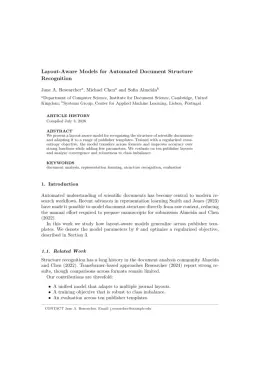
Journal of Toxicology and Environmental Health template — frequently asked questions

How do I write a paper in the Journal of Toxicology and Environmental Health format?
In DocuGuru you write your manuscript in a normal editor — no LaTeX setup required — and select the Journal of Toxicology and Environmental Health template. When you export, DocuGuru compiles the paper into the official Taylor & Francis format and hands you a submission-ready PDF along with the editable LaTeX source.
What reference style does Journal of Toxicology and Environmental Health use?
Journal of Toxicology and Environmental Health uses Author–year (Chicago, T&F) references, shown as author–year markers such as (Smith, 2023) in the text. DocuGuru formats every in-text citation and the reference list in this exact style automatically. A reference appears like this: Smith, Ada, Ben Jones, and Cara Lee. 2023. "A Representative Article Title." Journal of Toxicology and Environmental Health 12 (3): 45–58.
Do I need to know LaTeX to submit to Journal of Toxicology and Environmental Health?
No. DocuGuru generates the interact LaTeX class and compiles the PDF for you in the background, so you get a Taylor & Francis-ready Journal of Toxicology and Environmental Health document without writing any LaTeX. If you do want it, the LaTeX source is included in the export.
Can I import an existing draft into the Journal of Toxicology and Environmental Health template?
Yes. Paste or upload your current manuscript — Word, LaTeX, Markdown, or plain text — and DocuGuru reflows it into the Journal of Toxicology and Environmental Health format with correct headings, figures, tables, and author–year citations.
Who publishes Journal of Toxicology and Environmental Health?
Journal of Toxicology and Environmental Health is a multidisciplinary journal published by Taylor & Francis. DocuGuru's Journal of Toxicology and Environmental Health template matches Taylor & Francis's official submission format.
Can I export a submission-ready Journal of Toxicology and Environmental Health PDF?
Yes — DocuGuru produces a PDF built with the official Journal of Toxicology and Environmental Health template (the interact class) that is ready to submit to Taylor & Francis, together with the matching LaTeX source files.
How much does the Journal of Toxicology and Environmental Health template cost?
You can start writing in the Journal of Toxicology and Environmental Health template for free. Exporting the final submission-ready Journal of Toxicology and Environmental Health PDF and LaTeX source is part of DocuGuru's paid plans — see the app for current pricing.
Use the Journal of Toxicology and Environmental Health template