Taylor & Francis

Journal of Research on Educational Effectiveness Template

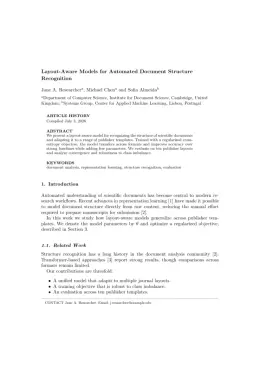
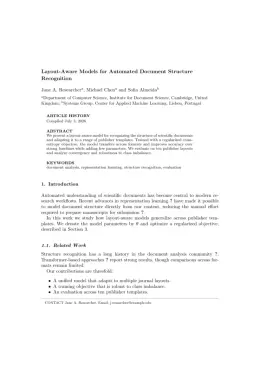
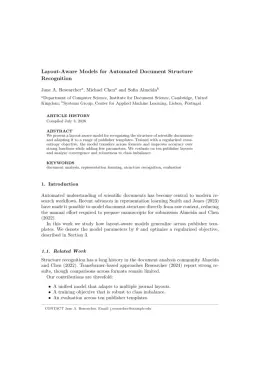
Write in a clean editor, then format for Journal of Research on Educational Effectiveness in one click — DocuGuru applies the official Taylor & Francis template with author–year references and exports a submission-ready PDF plus the editable LaTeX source. Free to start.

About the Journal of Research on Educational Effectiveness format

Journal of Research on Educational Effectiveness is a peer-reviewed journal published by Taylor & Francis, covering School Choice and Performance, Early Childhood Education and Development, Reading and Literacy Development.

PublisherTaylor & Francis
Reference styleAuthor–year (Chicago, T&F)
Author–year — (Smith, 2023) in the text
Smith, Ada, Ben Jones, and Cara Lee. 2023. "A Representative Article Title." Journal of Research on Educational Effectiveness 12 (3): 45–58.

Formats any DOI in Journal of Research on Educational Effectiveness style. No sign-up.

Publishes research inSchool Choice and Performance Early Childhood Education and Development Reading and Literacy Development Advanced Causal Inference Techniques Parental Involvement in Education
ISSN1934-5739
Citation impact (2-yr)1.94
h-index65
i10-index300
Total citations17,165
Top institutions publishing hereAmerican Institutes for Research
Journal websitewww.tandfonline.com
You getA submission-ready PDF and the editable LaTeX source — ready to submit.

Papers published in Journal of Research on Educational Effectiveness per year

35
2014
27
2015
61
2016
33
2017
14
2018
36
2019
33
2020
46
2021
47
2022
38
2023
41
2024
32
2025

Citation impact of Journal of Research on Educational Effectiveness by publication year

1.1K
2014
627
2015
3.1K
2016
838
2017
614
2018
873
2019
660
2020
720
2021
423
2022
227
2023
130
2024
40
2025

Citations each year’s papers have accumulated so far — the most recent years are still building up.

Most-cited papers in Journal of Research on Educational Effectiveness

Why We (Usually) Don't Have to Worry About Multiple Comparisons

Andrew Gelman, Jennifer Hill, Masanao Yajima · 1 Apr 2012

Applied researchers often find themselves making statistical inferences in settings that would seem to require multiple comparisons adjustments. We challenge the Type I error paradigm that underlies these corrections. Moreover we posit that the problem of multiple comparisons can disappear entirely when viewed from a hierarchical Bayesian perspective. We propose building multilevel models in the…

1,342 citations Cite SaveGo to paper →
Persistence and Fadeout in the Impacts of Child and Adolescent Interventions

Drew H. Bailey, Greg J. Duncan, Candice L. Odgers et al. · 6 Sep 2016

Many interventions targeting cognitive skills or socioemotional skills and behaviors demonstrate initially promising but then quickly disappearing impacts. Our paper seeks to identify the key features of interventions, as well as the characteristics and environments of the children and adolescents who participate in them, that can be expected to sustain persistently beneficial program impacts. We…

Performance Trajectories and Performance Gaps as Achievement Effect-Size Benchmarks for Educational Interventions

Howard S. Bloom, Carolyn J. Hill, Alison Black et al. · 14 Oct 2008

Abstract Two complementary approaches to developing empirical benchmarks for achievement effect sizes in educational interventions are explored. The first approach characterizes the natural developmental progress in achievement made by students from one year to the next as effect sizes. Data for seven nationally standardized achievement tests show large annual gains in the early elementary grades…

Moving From the Lab to the Field: The Role of Fidelity and Achieved Relative Intervention Strength

Chris S. Hulleman, David S. Cordray · 14 Jan 2009

Abstract As an example of how the effectiveness of well-designed laboratory interventions is often diffused in the field, we examined the effects of a motivation intervention on students' perceptions and learning. The intervention proved to be more effective in the laboratory (g = 0.45) than the field (g = 0.05) in enhancing subsequent motivation. We…

Generating Knowledge of Academic Language Among Urban Middle School Students

Catherine E. Snow, Joshua F. Lawrence, Claire E. White · 13 Oct 2009

A quasi-experimental study of a novel, cross-content area vocabulary intervention program called Word Generation showed significantly greater growth among 6th- to 8th-grade students in schools implementing the program than in comparison schools, on a curriculum-specific test. Furthermore, the language-minority students in the treatment, but not the comparison, schools showed greater growth than the English-only students.…

Journal of Research on Educational Effectiveness template — frequently asked questions

How do I write a paper in the Journal of Research on Educational Effectiveness format?
In DocuGuru you write your manuscript in a normal editor — no LaTeX setup required — and select the Journal of Research on Educational Effectiveness template. When you export, DocuGuru compiles the paper into the official Taylor & Francis format and hands you a submission-ready PDF along with the editable LaTeX source.
What reference style does Journal of Research on Educational Effectiveness use?
Journal of Research on Educational Effectiveness uses Author–year (Chicago, T&F) references, shown as author–year markers such as (Smith, 2023) in the text. DocuGuru formats every in-text citation and the reference list in this exact style automatically. A reference appears like this: Smith, Ada, Ben Jones, and Cara Lee. 2023. "A Representative Article Title." Journal of Research on Educational Effectiveness 12 (3): 45–58.
Do I need to know LaTeX to submit to Journal of Research on Educational Effectiveness?
No. DocuGuru generates the interact LaTeX class and compiles the PDF for you in the background, so you get a Taylor & Francis-ready Journal of Research on Educational Effectiveness document without writing any LaTeX. If you do want it, the LaTeX source is included in the export.
Can I import an existing draft into the Journal of Research on Educational Effectiveness template?
Yes. Paste or upload your current manuscript — Word, LaTeX, Markdown, or plain text — and DocuGuru reflows it into the Journal of Research on Educational Effectiveness format with correct headings, figures, tables, and author–year citations.
Who publishes Journal of Research on Educational Effectiveness?
Journal of Research on Educational Effectiveness is a multidisciplinary journal published by Taylor & Francis. DocuGuru's Journal of Research on Educational Effectiveness template matches Taylor & Francis's official submission format.
Can I export a submission-ready Journal of Research on Educational Effectiveness PDF?
Yes — DocuGuru produces a PDF built with the official Journal of Research on Educational Effectiveness template (the interact class) that is ready to submit to Taylor & Francis, together with the matching LaTeX source files.
How much does the Journal of Research on Educational Effectiveness template cost?
You can start writing in the Journal of Research on Educational Effectiveness template for free. Exporting the final submission-ready Journal of Research on Educational Effectiveness PDF and LaTeX source is part of DocuGuru's paid plans — see the app for current pricing.

Use the Journal of Research on Educational Effectiveness template