Taylor & Francis

Journal of Microwave Power and Electromagnetic Energy Template

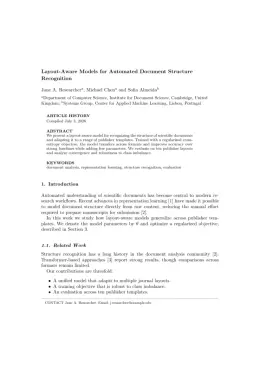
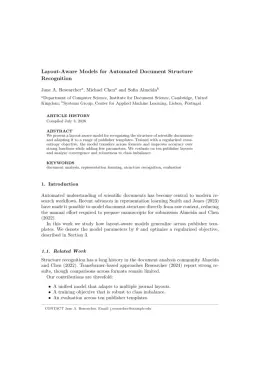
Write in a clean editor, then format for Journal of Microwave Power and Electromagnetic Energy in one click — DocuGuru applies the official Taylor & Francis template with author–year references and exports a submission-ready PDF plus the editable LaTeX source. Free to start.

About the Journal of Microwave Power and Electromagnetic Energy format

Journal of Microwave Power and Electromagnetic Energy is a peer-reviewed journal published by Taylor & Francis, covering Microwave-Assisted Synthesis and Applications, Microwave and Dielectric Measurement Techniques, Food Drying and Modeling.

PublisherTaylor & Francis
Reference styleAuthor–year (Chicago, T&F)
Author–year — (Smith, 2023) in the text
Smith, Ada, Ben Jones, and Cara Lee. 2023. "A Representative Article Title." Journal of Microwave Power and Electromagnetic Energy 12 (3): 45–58.

Formats any DOI in Journal of Microwave Power and Electromagnetic Energy style. No sign-up.

Publishes research inMicrowave-Assisted Synthesis and Applications Microwave and Dielectric Measurement Techniques Food Drying and Modeling Microwave Engineering and Waveguides Gyrotron and Vacuum Electronics Research
ISSN0832-7823
Citation impact (2-yr)0.84
h-index49
i10-index358
Total citations12,101
Top institutions publishing hereUniversidad Autónoma de Nuevo León
Journal websitewww.tandfonline.com
You getA submission-ready PDF and the editable LaTeX source — ready to submit.

Papers published in Journal of Microwave Power and Electromagnetic Energy per year

24
2014
24
2015
25
2016
25
2017
23
2018
24
2019
24
2020
23
2021
22
2022
24
2023
25
2024
24
2025

Citation impact of Journal of Microwave Power and Electromagnetic Energy by publication year

255
2014
80
2015
236
2016
253
2017
250
2018
202
2019
214
2020
119
2021
65
2022
85
2023
35
2024
10
2025

Citations each year’s papers have accumulated so far — the most recent years are still building up.

Most-cited papers in Journal of Microwave Power and Electromagnetic Energy

Microwave Athermal Effects in Chemistry: A Myth’s Autopsy: Part I: Historical background and fundamentals of wave-matter interaction.

D. Stuerga, P. Gaillard · 1 Jan 1996

The purpose of this paper is to enlighten by a theoretical analysis the controversial question of athermal, specific or molecular effects of microwave heating claimed in chemistry.In this Part 1, thermodynamic considerations relating to transition state theories are reviewed. The different assumption.s of specific effects claimed in chemistry are examined, and a brief overview of…

The Application of Microwave Heating to Chemical Syntheses

A. Gavin Whittaker, D. Michael P. Mingos · 1 Jan 1994

AbstractA review of microwave-activated chemical reactions, with 154 references.Key Words: MicrowaveDielectric heatingDipolar polarizationSynthesis2.45 GHzSuperheating Additional informationNotes on contributorsA.G. WhittakerA.Gavin Whittaker is affiliated with the Chemistry Department, University of Edinburgh, West Mains Rd., Edinburgh, Scotland EH9 3JJ. D. Michael P. Mingos is affiliated with the Imperial College of Science, Technology and Medicine, South Kensington, London SW7…

Microwave-assisted Extraction of Essential Oils from Herbs

Gabriel Abraham Cardoso‐Ugarte, Gladys Paola Juárez-Becerra, María Elena Sosa‐Morales et al. · 1 Jan 2013

Microwave-assisted extraction (MAE) has been recognized as a technique with several advantages over other extraction methods, such as reduction of costs, extraction time, energy consumption, and CO2 emissions. In this study, MAE was performed to obtain essential oils from two different herbs (basil and epazote). A factorial design was conducted in order to determine the…

Factors Influencing the Dielectric Properties of Agricultural and Food Products

Stuart O. Nelson, Samir Trabelsi · 1 Jan 2012

Dielectric properties of materials are defined, and the major factors that influence these properties of agricultural and food materials, namely, frequency of the applied radiofrequency or microwave electric fields, and water content, temperature, and density of the materials, are discussed on the basis of fundamental concepts. The dependence of measured dielectric properties on these factors…

Microwave Sintering of Refractory Metals/alloys: W, Mo, Re, W-Cu, W-Ni-Cu and W-Ni-Fe Alloys

Avijit Mondal, Dinesh Agrawal, Anish Upadhyaya · 1 Jan 2010

Refractory metals and alloys are well known for their high mechanical properties which make them useful for wide range of high temperature applications. However, owing to the refractoriness of these metals and alloys, it is very difficult to consolidate them under moderate conditions. Conventional P/M processing is a viable sintering technique for these refractory metals.…

Journal of Microwave Power and Electromagnetic Energy template — frequently asked questions

How do I write a paper in the Journal of Microwave Power and Electromagnetic Energy format?
In DocuGuru you write your manuscript in a normal editor — no LaTeX setup required — and select the Journal of Microwave Power and Electromagnetic Energy template. When you export, DocuGuru compiles the paper into the official Taylor & Francis format and hands you a submission-ready PDF along with the editable LaTeX source.
What reference style does Journal of Microwave Power and Electromagnetic Energy use?
Journal of Microwave Power and Electromagnetic Energy uses Author–year (Chicago, T&F) references, shown as author–year markers such as (Smith, 2023) in the text. DocuGuru formats every in-text citation and the reference list in this exact style automatically. A reference appears like this: Smith, Ada, Ben Jones, and Cara Lee. 2023. "A Representative Article Title." Journal of Microwave Power and Electromagnetic Energy 12 (3): 45–58.
Do I need to know LaTeX to submit to Journal of Microwave Power and Electromagnetic Energy?
No. DocuGuru generates the interact LaTeX class and compiles the PDF for you in the background, so you get a Taylor & Francis-ready Journal of Microwave Power and Electromagnetic Energy document without writing any LaTeX. If you do want it, the LaTeX source is included in the export.
Can I import an existing draft into the Journal of Microwave Power and Electromagnetic Energy template?
Yes. Paste or upload your current manuscript — Word, LaTeX, Markdown, or plain text — and DocuGuru reflows it into the Journal of Microwave Power and Electromagnetic Energy format with correct headings, figures, tables, and author–year citations.
Who publishes Journal of Microwave Power and Electromagnetic Energy?
Journal of Microwave Power and Electromagnetic Energy is a multidisciplinary journal published by Taylor & Francis. DocuGuru's Journal of Microwave Power and Electromagnetic Energy template matches Taylor & Francis's official submission format.
Can I export a submission-ready Journal of Microwave Power and Electromagnetic Energy PDF?
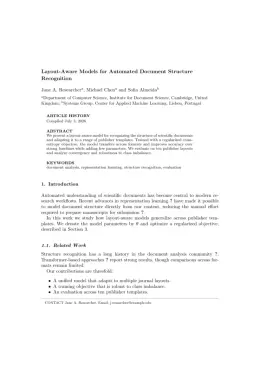
Yes — DocuGuru produces a PDF built with the official Journal of Microwave Power and Electromagnetic Energy template (the interact class) that is ready to submit to Taylor & Francis, together with the matching LaTeX source files.
How much does the Journal of Microwave Power and Electromagnetic Energy template cost?
You can start writing in the Journal of Microwave Power and Electromagnetic Energy template for free. Exporting the final submission-ready Journal of Microwave Power and Electromagnetic Energy PDF and LaTeX source is part of DocuGuru's paid plans — see the app for current pricing.
Use the Journal of Microwave Power and Electromagnetic Energy template