Taylor & Francis

Journal of Japanese and Korean Cinema Template

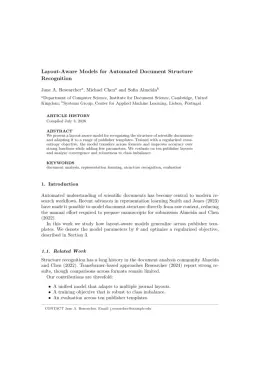
Write in a clean editor, then format for Journal of Japanese and Korean Cinema in one click — DocuGuru applies the official Taylor & Francis template with author–year references and exports a submission-ready PDF plus the editable LaTeX source. Free to start.

About the Journal of Japanese and Korean Cinema format

Journal of Japanese and Korean Cinema is a peer-reviewed journal published by Taylor & Francis, covering Asian Culture and Media Studies, Japanese History and Culture, Cinema and Media Studies.

PublisherTaylor & Francis
Reference styleAuthor–year (Chicago, T&F)
Author–year — (Smith, 2023) in the text
Smith, Ada, Ben Jones, and Cara Lee. 2023. "A Representative Article Title." Journal of Japanese and Korean Cinema 12 (3): 45–58.

Formats any DOI in Journal of Japanese and Korean Cinema style. No sign-up.

Publishes research inAsian Culture and Media Studies Japanese History and Culture Cinema and Media Studies Hong Kong and Taiwan Politics Media, Gender, and Advertising
ISSN1756-4905
Citation impact (2-yr)0.1
h-index12
i10-index14
Total citations533
Top institutions publishing hereNagoya University
Journal websitewww.tandfonline.com
You getA submission-ready PDF and the editable LaTeX source — ready to submit.

Papers published in Journal of Japanese and Korean Cinema per year

14
2014
14
2015
15
2016
14
2017
17
2018
15
2019
14
2020
16
2021
16
2022
10
2023
17
2024
8
2025

Citation impact of Journal of Japanese and Korean Cinema by publication year

42
2014
36
2015
43
2016
107
2017
35
2018
30
2019
39
2020
21
2021
42
2022
2
2023
3
2024
0
2025

Citations each year’s papers have accumulated so far — the most recent years are still building up.

Most-cited papers in Journal of Japanese and Korean Cinema

<i>Mŏkpang</i> : pay me and I’ll show you how much I can eat for your pleasure

A. Bruno, So-Min Chung · 3 Jul 2017

This article analyses the production and consumption of live-streaming personal broadcasts, focusing on their commercial and economic aspects, as well as their interactivity with their users. Mŏkpang is a term that refers to ‘eating broadcasts’, in which content creators, called Broadcasting Jockeys (BJs), televise themselves while eating. Based on a case study involving in-depth interviews…

Flatness, depth and Kon Satoshi's ethics

Chris Perkins · 1 Jan 2012

This article offers an exploratory reading of two works by Kon Satoshi: his debut Perfect Blue (1998c) and the television series Mōsō Dairinin/Paranoia Agent (2004b). The goal of this article is to work through the relationship between social ontology and ethics embedded in these two examples. To do this the article develops a concept of…

The erased grave of Dersu Uzala: Kurosawa's cinema of memory and mourning

Olga V. Solovieva · 1 Jan 2010

Kurosawa Akira's Dersu Uzala (1975) represents one of the director's many attempts to make his cinema into Japan's entryway into the global community of nations. The price of this entry is the acknowledgment as well as forgetting of uncomfortable historical facts. A revisiting of Kurosawa's film, set in 1902–1907, against the historical foil of the…

The Shape-Shifting Diva: Yamaguchi Yoshiko and the National Body

Jennifer Coates · 2 Jan 2014

This article addresses the postwar film career (1948–1958) of Japanese actress Yamaguchi Yoshiko to suggest that understanding the star persona as ‘diva’ can uncover the affective value of star images for contemporary audiences. The diva persona is often typified by symbols and iconography that transform the actress into something non-human or transcendental. Many scholars and…

The Korean mother in contemporary thriller films: a Monster or just modern?

Ji-yoon An · 3 Jul 2019

This paper investigates the short-lived and easily overlooked cycle of Korean thriller films centring on mother characters in the mid-to-late-2000s. I call these films ‘mother thrillers.’ Through an analysis of the cycle’s key recurrent characteristics, I explore the reasons behind the popularity of this cycle, as well as the social commentary offered by such films.…

Journal of Japanese and Korean Cinema template — frequently asked questions

How do I write a paper in the Journal of Japanese and Korean Cinema format?
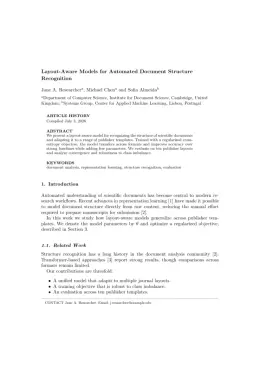
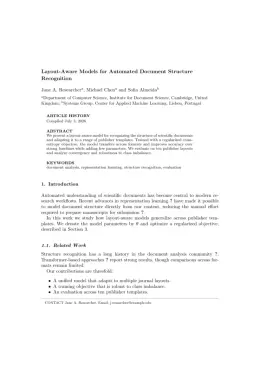
In DocuGuru you write your manuscript in a normal editor — no LaTeX setup required — and select the Journal of Japanese and Korean Cinema template. When you export, DocuGuru compiles the paper into the official Taylor & Francis format and hands you a submission-ready PDF along with the editable LaTeX source.
What reference style does Journal of Japanese and Korean Cinema use?
Journal of Japanese and Korean Cinema uses Author–year (Chicago, T&F) references, shown as author–year markers such as (Smith, 2023) in the text. DocuGuru formats every in-text citation and the reference list in this exact style automatically. A reference appears like this: Smith, Ada, Ben Jones, and Cara Lee. 2023. "A Representative Article Title." Journal of Japanese and Korean Cinema 12 (3): 45–58.
Do I need to know LaTeX to submit to Journal of Japanese and Korean Cinema?
No. DocuGuru generates the interact LaTeX class and compiles the PDF for you in the background, so you get a Taylor & Francis-ready Journal of Japanese and Korean Cinema document without writing any LaTeX. If you do want it, the LaTeX source is included in the export.
Can I import an existing draft into the Journal of Japanese and Korean Cinema template?
Yes. Paste or upload your current manuscript — Word, LaTeX, Markdown, or plain text — and DocuGuru reflows it into the Journal of Japanese and Korean Cinema format with correct headings, figures, tables, and author–year citations.
Who publishes Journal of Japanese and Korean Cinema?
Journal of Japanese and Korean Cinema is a multidisciplinary journal published by Taylor & Francis. DocuGuru's Journal of Japanese and Korean Cinema template matches Taylor & Francis's official submission format.
Can I export a submission-ready Journal of Japanese and Korean Cinema PDF?
Yes — DocuGuru produces a PDF built with the official Journal of Japanese and Korean Cinema template (the interact class) that is ready to submit to Taylor & Francis, together with the matching LaTeX source files.
How much does the Journal of Japanese and Korean Cinema template cost?
You can start writing in the Journal of Japanese and Korean Cinema template for free. Exporting the final submission-ready Journal of Japanese and Korean Cinema PDF and LaTeX source is part of DocuGuru's paid plans — see the app for current pricing.

Use the Journal of Japanese and Korean Cinema template