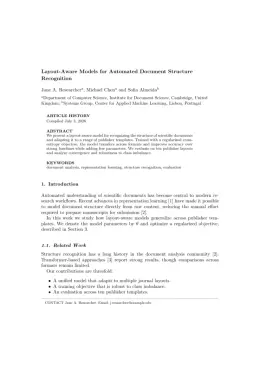
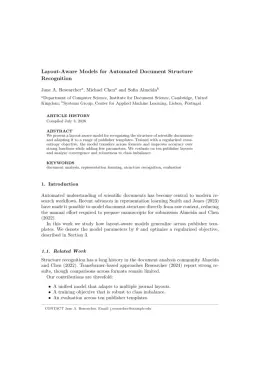
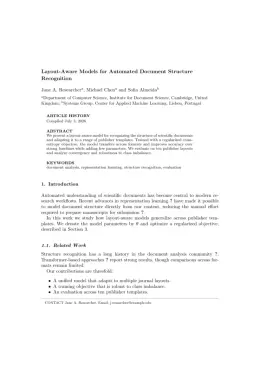
About the Journal of Contemporary East Asia Studies format
Journal of Contemporary East Asia Studies is a peer-reviewed journal published by Taylor & Francis, covering China's Socioeconomic Reforms and Governance, International Development and Aid, International Relations and Foreign Policy.
| Publisher | Taylor & Francis |
|---|
| Reference style | Author–year (Chicago, T&F) Author–year — (Smith, 2023) in the text
Smith, Ada, Ben Jones, and Cara Lee. 2023. "A Representative Article Title." Journal of Contemporary East Asia Studies 12 (3): 45–58.
Formats any DOI in Journal of Contemporary East Asia Studies style. No sign-up.
|
|---|
| Publishes research in | China's Socioeconomic Reforms and Governance International Development and Aid International Relations and Foreign Policy China's Ethnic Minorities and Relations Hong Kong and Taiwan Politics |
|---|
| ISSN | 2476-1028 |
|---|
| Citation impact (2-yr) | 0.78 |
|---|
| h-index | 21 |
|---|
| i10-index | 51 |
|---|
| Total citations | 1,953 |
|---|
| Article processing charge | $1,533 |
|---|
| Open access | Yes |
|---|
| Top institutions publishing here | Waseda University |
|---|
| Journal website | www.tandfonline.com |
|---|
| You get | A submission-ready PDF and the editable LaTeX source — ready to submit. |
|---|
Papers published in Journal of Contemporary East Asia Studies per year
Citation impact of Journal of Contemporary East Asia Studies by publication year
Citations each year’s papers have accumulated so far — the most recent years are still building up.
Most-cited papers in Journal of Contemporary East Asia Studies
“One Belt, One Road”: China's New Global Strategy
Rumi Aoyama · 1 Jan 2016
The “One Belt, One Road” (OBOR) initiative has been a topic of hot debate among Sinologists and pundits in recent years. What is the nature of this foreign policy and how is it implemented under the Xi Jinping administration? By examining China's OBOR initiative, this article argues that OBOR is not only a regional policy…
The ASEAN Economic Community and ASEAN economic integration
Koichi Ishikawa · 2 Jan 2021
ASEAN realized the ASEAN Economic Community (AEC) at the end of 2015. The AEC is an economic integration whose goals are free movement of goods, services, investment, and skilled workers, and freer movement of capital. Following the establishment of the ASEAN Free Trade Area (AFTA), ASEAN deepened its economic integration through the AEC. Evaluations of…
The Belt and Road Initiative (BRI) in the context of China’s opening-up policy
Hideo Ohashi · 3 Jul 2018
[Background]: China’s economy currently shifts its development pattern from investment/export-led to consumption/domestic demand-led growth. In a new stage of domestic-oriented development, what role is expected of China’s opening-up policy? It is no longer just a means to obtain foreign currency and technology but for China as an economic superpower to enhance its role in global…
The ASEAN Economic Community and the RCEP in the world economy
Kazushi Shimizu · 2 Jan 2021
The Association of Southeast Asian Nations (ASEAN) has been leading economic integration within many structural changes in the world economy. ASEAN, established in 1967, has promoted regional economic integration since 1976. It started to work toward realizing the ASEAN Free Trade Area (AFTA) in 1992 and the ASEAN Economic Community (AEC) in 2003. ASEAN finally…
The Belt and Road Initiative – the New Silk Road: a research agenda
Man Hung Thomas Chan · 3 Jul 2018
Despite the prosperity and long continuity in history, the ancient Silk Road was weakened in recent centuries. Only with the end of the Cold War, there come the chances for its revival. The launch of the Belt and Road Initiative in 2013 by the Chinese coincided with the development strategy change of China, but the…