Taylor & Francis

Journal of Carbohydrate Chemistry Template

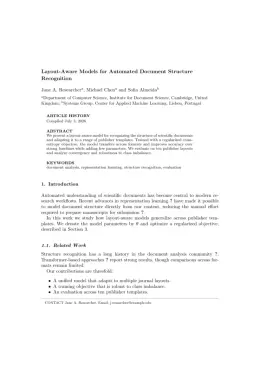
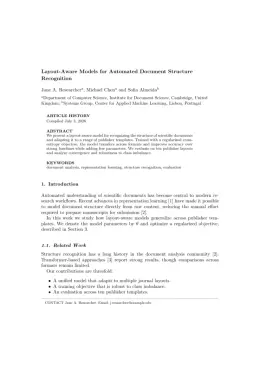
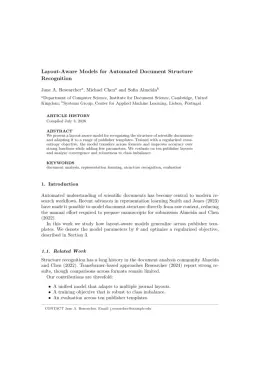
Write in a clean editor, then format for Journal of Carbohydrate Chemistry in one click — DocuGuru applies the official Taylor & Francis template with author–year references and exports a submission-ready PDF plus the editable LaTeX source. Free to start.

About the Journal of Carbohydrate Chemistry format

Journal of Carbohydrate Chemistry is a peer-reviewed journal published by Taylor & Francis, covering Carbohydrate Chemistry and Synthesis, Glycosylation and Glycoproteins Research, Chemical Synthesis and Analysis.

PublisherTaylor & Francis
Reference styleAuthor–year (Chicago, T&F)
Author–year — (Smith, 2023) in the text
Smith, Ada, Ben Jones, and Cara Lee. 2023. "A Representative Article Title." Journal of Carbohydrate Chemistry 12 (3): 45–58.

Formats any DOI in Journal of Carbohydrate Chemistry style. No sign-up.

Publishes research inCarbohydrate Chemistry and Synthesis Glycosylation and Glycoproteins Research Chemical Synthesis and Analysis Enzyme Production and Characterization Microbial Metabolites in Food Biotechnology
ISSN0732-8303
Citation impact (2-yr)1.38
h-index58
i10-index1,119
Total citations32,320
Top institutions publishing hereCentre National de la Recherche Scientifique
Journal websitewww.tandfonline.com
You getA submission-ready PDF and the editable LaTeX source — ready to submit.

Papers published in Journal of Carbohydrate Chemistry per year

45
2014
37
2015
37
2016
25
2017
70
2018
33
2019
23
2020
29
2021
20
2022
20
2023
19
2024
15
2025

Citation impact of Journal of Carbohydrate Chemistry by publication year

424
2014
329
2015
328
2016
257
2017
265
2018
376
2019
179
2020
196
2021
84
2022
34
2023
24
2024
31
2025

Citations each year’s papers have accumulated so far — the most recent years are still building up.

Most-cited papers in Journal of Carbohydrate Chemistry

A Conformational Study of Hydroxymethyl Groups in Carbohydrates Investigated by <sup>1</sup>H NMR Spectroscopy

Klaus Bock, Jens Ø. Duus · 1 Jun 1994

Abstract It is generally acknowledged that information about carbohydrate conformation is important for the understanding of interaction between carbohydrates and other biomolecules, such as proteins.1–5 The major part of oligosaccharides involved in the interactions are made up of hexopyranoses, and the overall conformation can be described by the rotation of the glycosidic linkages and the…

Oxidation of Primary Alcohol Groups of Naturally Occurring Polysaccharides with 2,2,6,6-Tetramethyl-1-Piperidine Oxoammonium Ion

Pahn‐Shick Chang, John F. Robyt · 1 Sep 1996

ABSTRACT The primary alcohol groups of ten polysaccharides, with widely different structures and water solubilities, were oxidized to carboxyl groups using 2,2,6,6-tetramethyl-1-piperidine oxoammonium ion (TEMPO) at pH 10.8 and 0°C. The yield and selectivity for the primary alcohol group were high for all ten of the polysaccharides. The oxidation greatly increased the water-solubility of the…

Reductive Ring Openings of Carbohydrate Benzylidene Acetals Using Borane-Trimethylamine and Aluminium Chloride. Regioselectivity and Solvent Dependance

M. EK, Per J. Garegg, Hans Hultberg et al. · 1 Jan 1983

Abstract Regioselective reductive ring openings of 4, 6-O-benzylidene acetals of hexopyranosides are described using borane trimethylamine-aluminium chloride. Using toluene as solvent, 4-O-benzyl ethers with the 6-OH free are obtained. Using tetrahydrofuran as solvent. 6-O-benzyl ethers with the 4-OH free are obtained.

Glycosylation Using Methylthioglycosides of<i>N</i>-Acetylneuraminic Acid and Dimethyl(Methylthio)Sulfonium Triflate

Osamu Kanie, Makoto Kiso, Akira Hasegawa · 1 May 1988

Abstract Recently, great interest has been focussed on the synthesis of oligosaccharides containing N-acetylneuraminic acid (Neu5Ac) because of its important roles in a variety of biological recognitions.2 However, many difficulties in the synthesis of naturally occurring α-glycosides still remained.3 We have recently reported the stereo-selective synthesis of a series of α- and β-2-thio-neuraminyl glycosides.1-4 In…

Synthesis of a Pentasaccharide Corresponding to the Antithrombin III Binding Fragment of Heparin

C. A. A. VAN BOECKEL, T. Beetz, J. N. Vos et al. · 1 Sep 1985

Abstract The synthesis of a protected pentasaccharide 27b corresponding to the antithrombin III binding region of heparin is presented. This pentasaccharide was prepared from two disaccharides (12c and 23) and a monosaccharide (1). The glucuronic acid containing disaccharide 12c was prepared from easily available monomers 6 and 7. Oxidation to the uronic acid was performed…

Journal of Carbohydrate Chemistry template — frequently asked questions

How do I write a paper in the Journal of Carbohydrate Chemistry format?
In DocuGuru you write your manuscript in a normal editor — no LaTeX setup required — and select the Journal of Carbohydrate Chemistry template. When you export, DocuGuru compiles the paper into the official Taylor & Francis format and hands you a submission-ready PDF along with the editable LaTeX source.
What reference style does Journal of Carbohydrate Chemistry use?
Journal of Carbohydrate Chemistry uses Author–year (Chicago, T&F) references, shown as author–year markers such as (Smith, 2023) in the text. DocuGuru formats every in-text citation and the reference list in this exact style automatically. A reference appears like this: Smith, Ada, Ben Jones, and Cara Lee. 2023. "A Representative Article Title." Journal of Carbohydrate Chemistry 12 (3): 45–58.
Do I need to know LaTeX to submit to Journal of Carbohydrate Chemistry?
No. DocuGuru generates the interact LaTeX class and compiles the PDF for you in the background, so you get a Taylor & Francis-ready Journal of Carbohydrate Chemistry document without writing any LaTeX. If you do want it, the LaTeX source is included in the export.
Can I import an existing draft into the Journal of Carbohydrate Chemistry template?
Yes. Paste or upload your current manuscript — Word, LaTeX, Markdown, or plain text — and DocuGuru reflows it into the Journal of Carbohydrate Chemistry format with correct headings, figures, tables, and author–year citations.
Who publishes Journal of Carbohydrate Chemistry?
Journal of Carbohydrate Chemistry is a multidisciplinary journal published by Taylor & Francis. DocuGuru's Journal of Carbohydrate Chemistry template matches Taylor & Francis's official submission format.
Can I export a submission-ready Journal of Carbohydrate Chemistry PDF?
Yes — DocuGuru produces a PDF built with the official Journal of Carbohydrate Chemistry template (the interact class) that is ready to submit to Taylor & Francis, together with the matching LaTeX source files.
How much does the Journal of Carbohydrate Chemistry template cost?
You can start writing in the Journal of Carbohydrate Chemistry template for free. Exporting the final submission-ready Journal of Carbohydrate Chemistry PDF and LaTeX source is part of DocuGuru's paid plans — see the app for current pricing.

Use the Journal of Carbohydrate Chemistry template