
550 citations
Cite
SaveGo to paper →
Taylor & Francis
Journal of Addictive Diseases Template
Write in a clean editor, then format for Journal of Addictive Diseases in one click — DocuGuru applies the official Taylor & Francis template with author–year references and exports a submission-ready PDF plus the editable LaTeX source. Free to start.
About the Journal of Addictive Diseases format
Journal of Addictive Diseases is a peer-reviewed journal published by Taylor & Francis, covering Substance Abuse Treatment and Outcomes, Opioid Use Disorder Treatment, Prenatal Substance Exposure Effects.
| Publisher | Taylor & Francis |
|---|---|
| Reference style | Author–year (Chicago, T&F) Author–year — (Smith, 2023) in the text Smith, Ada, Ben Jones, and Cara Lee. 2023. "A Representative Article Title." Journal of Addictive Diseases 12 (3): 45–58.
Formats any DOI in Journal of Addictive Diseases style. No sign-up. |
| Publishes research in | Substance Abuse Treatment and Outcomes Opioid Use Disorder Treatment Prenatal Substance Exposure Effects HIV, Drug Use, Sexual Risk Smoking Behavior and Cessation |
| ISSN | 1055-0887 |
| Citation impact (2-yr) | 1.58 |
| h-index | 83 |
| i10-index | 821 |
| Total citations | 37,538 |
| Top institutions publishing here | University of California, Los Angeles |
| Journal website | www.tandfonline.com |
| You get | A submission-ready PDF and the editable LaTeX source — ready to submit. |
Papers published in Journal of Addictive Diseases per year
Citation impact of Journal of Addictive Diseases by publication year
Citations each year’s papers have accumulated so far — the most recent years are still building up.
Most-cited papers in Journal of Addictive Diseases
Overeating in obese individuals shares similarities with the loss of control and compulsive drug taking behavior observed in drug-addicted subjects. The mechanism of these behaviors is not well understood. Our prior studies with positron emission tomography (PET) in drug-addicted subjects documented reductions in striatal dopamine (DA) D2 receptors. In pathologically obese subjects, we found reductions…
502 citations
Cite
SaveGo to paper →
Illicit use of opiates is the fastest growing substance use problem in the United States, and the main reason for seeking addiction treatment services for illicit drug use throughout the world. It is associated with significant morbidity and mortality related to human immunodeficiency virus, hepatitis C, and overdose. Treatment for opiate addiction requires long-term management.…
466 citations
Cite
SaveGo to paper →
Substance use was considered to be primarily a male problem, and many substance abuse studies are conducted with a predominance of male participants. However, recent substance abuse research indicates significant gender differences in the substance-related epidemiology, social factors and characteristics, biological responses, progressions to dependence, medical consequences, co-occurring psychiatric disorders, and barriers to treatment entry,…
399 citations
Cite
SaveGo to paper →
Research on the effectiveness of Alcoholics Anonymous (AA) is controversial and subject to widely divergent interpretations. The goal of this article is to provide a focused review of the literature on AA effectiveness that will allow readers to judge the evidence effectiveness of AA for themselves. The review organizes the research on AA effectiveness according…
314 citations
Cite
SaveGo to paper →
Related journal templates
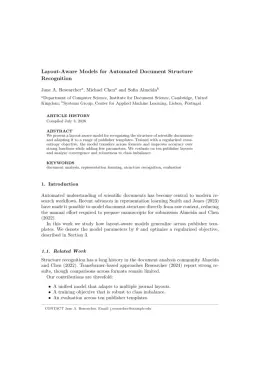
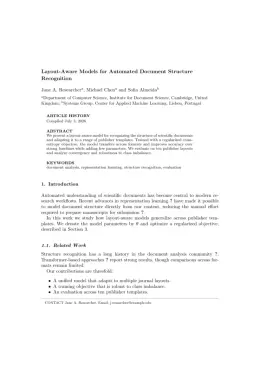
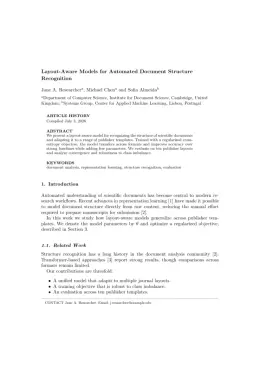
Journal of Addictive Diseases template — frequently asked questions
How do I write a paper in the Journal of Addictive Diseases format?
In DocuGuru you write your manuscript in a normal editor — no LaTeX setup required — and select the Journal of Addictive Diseases template. When you export, DocuGuru compiles the paper into the official Taylor & Francis format and hands you a submission-ready PDF along with the editable LaTeX source.
What reference style does Journal of Addictive Diseases use?
Journal of Addictive Diseases uses Author–year (Chicago, T&F) references, shown as author–year markers such as (Smith, 2023) in the text. DocuGuru formats every in-text citation and the reference list in this exact style automatically. A reference appears like this: Smith, Ada, Ben Jones, and Cara Lee. 2023. "A Representative Article Title." Journal of Addictive Diseases 12 (3): 45–58.
Do I need to know LaTeX to submit to Journal of Addictive Diseases?
No. DocuGuru generates the interact LaTeX class and compiles the PDF for you in the background, so you get a Taylor & Francis-ready Journal of Addictive Diseases document without writing any LaTeX. If you do want it, the LaTeX source is included in the export.
Can I import an existing draft into the Journal of Addictive Diseases template?
Yes. Paste or upload your current manuscript — Word, LaTeX, Markdown, or plain text — and DocuGuru reflows it into the Journal of Addictive Diseases format with correct headings, figures, tables, and author–year citations.
Who publishes Journal of Addictive Diseases?
Journal of Addictive Diseases is a multidisciplinary journal published by Taylor & Francis. DocuGuru's Journal of Addictive Diseases template matches Taylor & Francis's official submission format.
Can I export a submission-ready Journal of Addictive Diseases PDF?
Yes — DocuGuru produces a PDF built with the official Journal of Addictive Diseases template (the interact class) that is ready to submit to Taylor & Francis, together with the matching LaTeX source files.
How much does the Journal of Addictive Diseases template cost?
You can start writing in the Journal of Addictive Diseases template for free. Exporting the final submission-ready Journal of Addictive Diseases PDF and LaTeX source is part of DocuGuru's paid plans — see the app for current pricing.