Taylor & Francis

Invertebrate Reproduction & Development Template

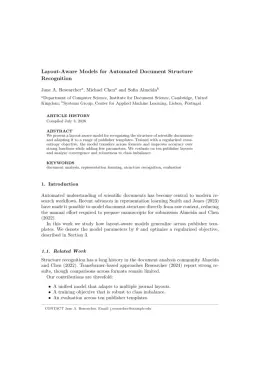
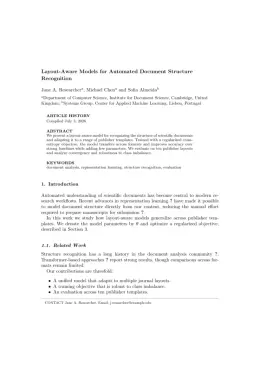
Write in a clean editor, then format for Invertebrate Reproduction & Development in one click — DocuGuru applies the official Taylor & Francis template with author–year references and exports a submission-ready PDF plus the editable LaTeX source. Free to start.

About the Invertebrate Reproduction & Development format

Invertebrate Reproduction & Development is a peer-reviewed journal published by Taylor & Francis, covering Crustacean biology and ecology, Marine Biology and Ecology Research, Marine and fisheries research.

PublisherTaylor & Francis
Reference styleAuthor–year (Chicago, T&F)
Author–year — (Smith, 2023) in the text
Smith, Ada, Ben Jones, and Cara Lee. 2023. "A Representative Article Title." Invertebrate Reproduction & Development 12 (3): 45–58.

Formats any DOI in Invertebrate Reproduction & Development style. No sign-up.

Publishes research inCrustacean biology and ecology Marine Biology and Ecology Research Marine and fisheries research Marine Biology and Environmental Chemistry Neurobiology and Insect Physiology Research
ISSN0792-4259
Citation impact (2-yr)0.59
h-index57
i10-index757
Total citations24,414
Top institutions publishing hereUniversidade Estadual Paulista (Unesp)
Journal websitewww.tandfonline.com
You getA submission-ready PDF and the editable LaTeX source — ready to submit.

Papers published in Invertebrate Reproduction & Development per year

37
2014
28
2015
37
2016
39
2017
32
2018
31
2019
24
2020
24
2021
23
2022
13
2023
27
2024
24
2025

Citation impact of Invertebrate Reproduction & Development by publication year

828
2014
317
2015
319
2016
323
2017
252
2018
260
2019
175
2020
197
2021
61
2022
24
2023
26
2024
8
2025

Citations each year’s papers have accumulated so far — the most recent years are still building up.

Most-cited papers in Invertebrate Reproduction & Development

Accuracy and standardization of brachyuran larval descriptions

Paul F. Clark, DANILOK CALAZANS, Gerhard Pohle · 1 Jan 1998

Summary There is a need for improvement and standardization in larval descriptions for them to become useful not only for identification purposes but also in comparative and phylogenetic studies. Details of the rearing technique and equipment used should be given, the spent female crab and representative larval stages need to be deposited at a national…

Ontogeny of osmoregulation in crustaceans: a review

Guy Charmantier · 1 Jan 1998

Summary From the results of studies conducted from the 1960s, three patterns of ontogeny of postembryonic osmoregulation in crustaceans may be distinguished: (1) osmoregulation varies little with developmental stage and the adults are often weak regulators or osmoconformers;(2) the adult type of osmoregulation is established in the first postembryonic stage; (3) metamorphosis marks the appearance…

Using<i>C. elegans</i>for aging research

Heidi A. Tissenbaum · 9 Dec 2014

Over a century ago, the zoologist Emile Maupas first identified the nematode, Rhabditis elegans, in the soil in Algiers. Subsequent work and phylogenic studies renamed the species Caenorhabditis elegans or more commonly referred to as C. elegans; (Caeno meaning recent; rhabditis meaning rod; elegans meaning nice). However, it was not until 1963, when Sydney Brenner,…

Salinity as a key parameter in the larval biology of decapod crustaceans

Klaus Anger · 1 Mar 2003

Summary Salinity is an ecological key factor in the life of estuarine and coastal plankton, and hence, also in the biology of meroplanktonic decapod crustacean larvae. Its influence has been documented in all principal aspects of larval biology including survival, development, morphology, the moulting cycle, growth, feeding, metabolism, energy partitioning, and behaviour. In this review,…

Molecular approaches to nontoxic antifouling

Anthony S. Clare, Daniel Rittschof, Donald J. Gerhart et al. · 1 Dec 1992

Summary A consequence of environmental and human health concerns arising from the use of toxic metals in marine antifouling coatings has been to recognise the need for a nontoxic alternative to fouling control. Recent research has focused on two approaches to this problem: the development of (a) foul-release coatings that work on the principle of…

Invertebrate Reproduction & Development template — frequently asked questions

How do I write a paper in the Invertebrate Reproduction & Development format?
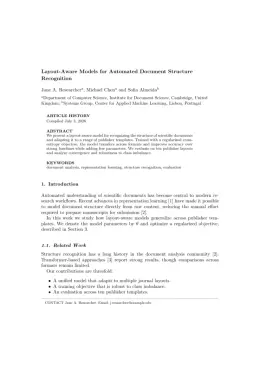
In DocuGuru you write your manuscript in a normal editor — no LaTeX setup required — and select the Invertebrate Reproduction & Development template. When you export, DocuGuru compiles the paper into the official Taylor & Francis format and hands you a submission-ready PDF along with the editable LaTeX source.
What reference style does Invertebrate Reproduction & Development use?
Invertebrate Reproduction & Development uses Author–year (Chicago, T&F) references, shown as author–year markers such as (Smith, 2023) in the text. DocuGuru formats every in-text citation and the reference list in this exact style automatically. A reference appears like this: Smith, Ada, Ben Jones, and Cara Lee. 2023. "A Representative Article Title." Invertebrate Reproduction & Development 12 (3): 45–58.
Do I need to know LaTeX to submit to Invertebrate Reproduction & Development?
No. DocuGuru generates the interact LaTeX class and compiles the PDF for you in the background, so you get a Taylor & Francis-ready Invertebrate Reproduction & Development document without writing any LaTeX. If you do want it, the LaTeX source is included in the export.
Can I import an existing draft into the Invertebrate Reproduction & Development template?
Yes. Paste or upload your current manuscript — Word, LaTeX, Markdown, or plain text — and DocuGuru reflows it into the Invertebrate Reproduction & Development format with correct headings, figures, tables, and author–year citations.
Who publishes Invertebrate Reproduction & Development?
Invertebrate Reproduction & Development is a multidisciplinary journal published by Taylor & Francis. DocuGuru's Invertebrate Reproduction & Development template matches Taylor & Francis's official submission format.
Can I export a submission-ready Invertebrate Reproduction & Development PDF?
Yes — DocuGuru produces a PDF built with the official Invertebrate Reproduction & Development template (the interact class) that is ready to submit to Taylor & Francis, together with the matching LaTeX source files.
How much does the Invertebrate Reproduction & Development template cost?
You can start writing in the Invertebrate Reproduction & Development template for free. Exporting the final submission-ready Invertebrate Reproduction & Development PDF and LaTeX source is part of DocuGuru's paid plans — see the app for current pricing.
Use the Invertebrate Reproduction & Development template