Taylor & Francis

Inorganic Reaction Mechanisms Template

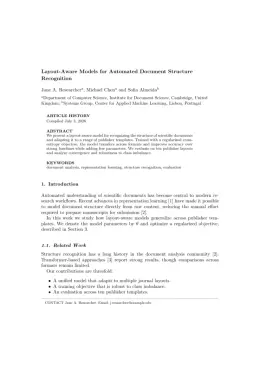
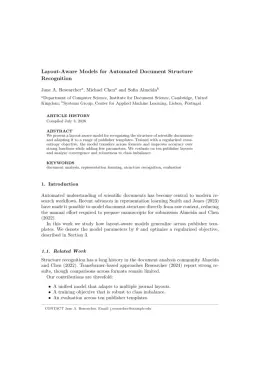
Write in a clean editor, then format for Inorganic Reaction Mechanisms in one click — DocuGuru applies the official Taylor & Francis template with author–year references and exports a submission-ready PDF plus the editable LaTeX source. Free to start.

About the Inorganic Reaction Mechanisms format

Inorganic Reaction Mechanisms is a peer-reviewed journal published by Taylor & Francis, covering Inorganic and Organometallic Chemistry, Metal complexes synthesis and properties, Various Chemistry Research Topics.

PublisherTaylor & Francis
Reference styleAuthor–year (Chicago, T&F)
Author–year — (Smith, 2023) in the text
Smith, Ada, Ben Jones, and Cara Lee. 2023. "A Representative Article Title." Inorganic Reaction Mechanisms 12 (3): 45–58.

Formats any DOI in Inorganic Reaction Mechanisms style. No sign-up.

Publishes research inInorganic and Organometallic Chemistry Metal complexes synthesis and properties Various Chemistry Research Topics Chemical Synthesis and Analysis Electrochemical Analysis and Applications
ISSN1028-6624
h-index10
i10-index12
Total citations443
Top institutions publishing hereKarnatak University
Journal websitewww.tandfonline.com
You getA submission-ready PDF and the editable LaTeX source — ready to submit.

Papers published in Inorganic Reaction Mechanisms per year

17
1971
18
1972
21
1974
20
1976
18
1977
18
1979
26
1981
30
2002

Citation impact of Inorganic Reaction Mechanisms by publication year

4
1971
24
1972
48
1974
19
1976
99
1977
9
1979
58
1981
181
2002

Citations each year’s papers have accumulated so far — the most recent years are still building up.

Most-cited papers in Inorganic Reaction Mechanisms

Base Catalysed Hydrolysis of Aminecobalt(III) Complexes: From the Beginnings to the Present

W.G. Jackson · 1 Jan 2002

This review examines the base catalysed hydrolysis process for cobalt(III) complexes. An overview of the reaction from its initial development to the present day is presented. The various mechanisms developed over the years, including S N 1CB, ion-pair, pseudo-base (covalent hydration), pseudo-aminate and E2 mechanisms, are presented and examined. Electronic, bulk steric, leaving group and…

Ruthenium(III) Mediated Cerium(IV) Oxidation of Thallium(I) in Aqueous Sulphuric Acid--A Kinetic and Mechanistic Study

Shivamurti A. Chimatadar, T. Basavaraj, Sharanappa T. Nandibewoor · 1 Jan 2002

The cerium(IV) oxidation of thallium(I) has been studied in an aqueous sulphuric acid medium. A minute amount (10 6 mol dm 3 ) of ruthenium(III) is sufficient to catalyse the reaction. The reaction is first order in [cerium(IV)] in the presence of ruthenium(III) catalyst. The order in [thallium(I)] varies from zero to unity, whereas that…

Kinetics and Mechanism of Oxidation of Bromate by Diperiodatonickelate(IV) in Aqueous Alkaline Medium--A Simple Method for Formation of Perbromate

Dinesh Bilehal, Raviraj M. Kulkarni, Sharanappa T. Nandibewoor · 1 Jan 2002

The kinetics of oxidation of bromate by diperiodatonickelate(IV) (DPN) in alkaline medium at a constant ionic strength has been studied spectrophotometrically. The reaction between DPN and bromate in alkaline medium exhibits 1:1 stoichiometry (DPN:bromate). The reaction shows first order dependence on [DPN] and zero order dependence in [bromate] and less than unit order dependence in…

Micellar Effects on the Chromium(VI) Oxidation of d (+)-Xylose

KABIR‐UD‐DIN KABIR‐UD‐DIN, Abu Mohammad Azmal Morshed, Zaheer Khan · 1 Jan 2002

Chromic acid oxidation of d (+)-xylose in water and in presence of surfactants has an induction period followed by autoacceleration. The kinetics and mechanism of the induction period have been studied spectrophotometrically in both media. Due to precipitate formation, the effect of cetyltrimethylammonium bromide (CTAB, cationic) cannot be studied whereas the oxidation rate increased with…

Mechanism of Nitric Oxide Release. I. Two-electron Reduction of Sodium Nitroprusside by l -cysteine in Aqueous Solution

James N. Smith, Tara P. Dasgupta · 1 Jan 2002

Abstract Sodium nitroprusside (SNP) is a well-known vasodilator, which activates the cytosolic isozyme guanylate cyclase. It is quite stable by itself in aqueous solution and in the dark, but produces nitric oxide spontaneously under the appropriate reducing conditions. Both the neutral nitric oxide (NO) and the nitroxyl anion (NO m ) can be produced from…

Inorganic Reaction Mechanisms template — frequently asked questions

How do I write a paper in the Inorganic Reaction Mechanisms format?
In DocuGuru you write your manuscript in a normal editor — no LaTeX setup required — and select the Inorganic Reaction Mechanisms template. When you export, DocuGuru compiles the paper into the official Taylor & Francis format and hands you a submission-ready PDF along with the editable LaTeX source.
What reference style does Inorganic Reaction Mechanisms use?
Inorganic Reaction Mechanisms uses Author–year (Chicago, T&F) references, shown as author–year markers such as (Smith, 2023) in the text. DocuGuru formats every in-text citation and the reference list in this exact style automatically. A reference appears like this: Smith, Ada, Ben Jones, and Cara Lee. 2023. "A Representative Article Title." Inorganic Reaction Mechanisms 12 (3): 45–58.
Do I need to know LaTeX to submit to Inorganic Reaction Mechanisms?
No. DocuGuru generates the interact LaTeX class and compiles the PDF for you in the background, so you get a Taylor & Francis-ready Inorganic Reaction Mechanisms document without writing any LaTeX. If you do want it, the LaTeX source is included in the export.
Can I import an existing draft into the Inorganic Reaction Mechanisms template?
Yes. Paste or upload your current manuscript — Word, LaTeX, Markdown, or plain text — and DocuGuru reflows it into the Inorganic Reaction Mechanisms format with correct headings, figures, tables, and author–year citations.
Who publishes Inorganic Reaction Mechanisms?
Inorganic Reaction Mechanisms is a multidisciplinary journal published by Taylor & Francis. DocuGuru's Inorganic Reaction Mechanisms template matches Taylor & Francis's official submission format.
Can I export a submission-ready Inorganic Reaction Mechanisms PDF?
Yes — DocuGuru produces a PDF built with the official Inorganic Reaction Mechanisms template (the interact class) that is ready to submit to Taylor & Francis, together with the matching LaTeX source files.
How much does the Inorganic Reaction Mechanisms template cost?
You can start writing in the Inorganic Reaction Mechanisms template for free. Exporting the final submission-ready Inorganic Reaction Mechanisms PDF and LaTeX source is part of DocuGuru's paid plans — see the app for current pricing.

Use the Inorganic Reaction Mechanisms template