Taylor & Francis

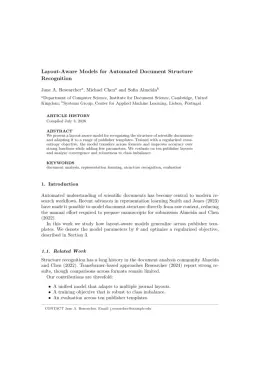
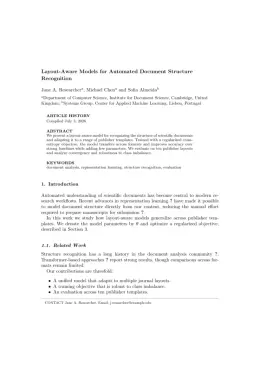
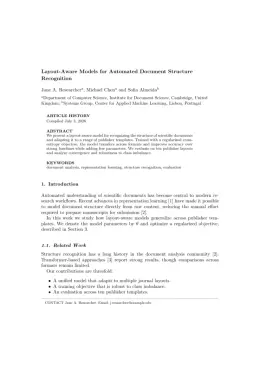
Inhalation Toxicology Template

Write in a clean editor, then format for Inhalation Toxicology in one click — DocuGuru applies the official Taylor & Francis template with author–year references and exports a submission-ready PDF plus the editable LaTeX source. Free to start.

About the Inhalation Toxicology format

Inhalation Toxicology is a peer-reviewed journal published by Taylor & Francis, covering Air Quality and Health Impacts, Inhalation and Respiratory Drug Delivery, Carcinogens and Genotoxicity Assessment.

PublisherTaylor & Francis
Reference styleAuthor–year (Chicago, T&F)
Author–year — (Smith, 2023) in the text
Smith, Ada, Ben Jones, and Cara Lee. 2023. "A Representative Article Title." Inhalation Toxicology 12 (3): 45–58.

Formats any DOI in Inhalation Toxicology style. No sign-up.

Publishes research inAir Quality and Health Impacts Inhalation and Respiratory Drug Delivery Carcinogens and Genotoxicity Assessment Occupational and environmental lung diseases Climate Change and Health Impacts
ISSN0895-8378
Citation impact (2-yr)1.97
h-index113
i10-index1,875
Total citations93,073
Top institutions publishing hereResearch Triangle Park Foundation
Journal websitewww.tandfonline.com
You getA submission-ready PDF and the editable LaTeX source — ready to submit.

Papers published in Inhalation Toxicology per year

108
2014
86
2015
71
2016
64
2017
59
2018
52
2019
52
2020
29
2021
39
2022
27
2023
38
2024
43
2025

Citation impact of Inhalation Toxicology by publication year

2.9K
2014
2.2K
2015
1.7K
2016
1.1K
2017
992
2018
970
2019
713
2020
304
2021
405
2022
137
2023
156
2024
55
2025

Citations each year’s papers have accumulated so far — the most recent years are still building up.

Most-cited papers in Inhalation Toxicology

Translocation of Inhaled Ultrafine Particles to the Brain

Günter Oberdörster, Z. D. Sharp, Viorel Atudorei et al. · 1 Jan 2004

Ultrafine particles (UFP, particles <100 nm) are ubiquitous in ambient urban and indoor air from multiple sources and may contribute to adverse respiratory and cardiovascular effects of particulate matter (PM). Depending on their particle size, inhaled UFP are efficiently deposited in nasal, tracheobronchial, and alveolar regions due to diffusion. Our previous rat studies have shown…

2,579 citations Cite SaveGo to paper →
Woodsmoke Health Effects: A Review

Luke P. Naeher, Michael Bräuer, Michael Lipsett et al. · 27 Nov 2006

The sentiment that woodsmoke, being a natural substance, must be benign to humans is still sometimes heard. It is now well established, however, that wood-burning stoves and fireplaces as well as wildland and agricultural fires emit significant quantities of known health-damaging pollutants, including several carcinogenic compounds. Two of the principal gaseous pollutants in woodsmoke, CO…

1,579 citations Cite SaveGo to paper →
Twenty-Eight-Day Oral Toxicity, Genotoxicity, and Gender-Related Tissue Distribution of Silver Nanoparticles in Sprague-Dawley Rats

Yong Soon Kim, Jin Sik Kim, Hyun Sun Cho et al. · 1 Jan 2008

The antibacterial effect of silver nanoparticles has resulted in their extensive application in health, electronic, and home products. However, while the population exposed to silver nanoparticles continues to increase with ever new applications, silver nanoparticles remain a controversial research area as regards their toxicity to biological systems. In particular, the oral toxicity of silver nanoparticles…

Review of Epidemiological Evidence of Health Effects of Particulate Air Pollution

C. Arden Pope, Douglas W. Dockery, Joel Schwartz · 1 Jan 1995

This article summarizes epidemiological evidence of health effects of particulate air pollution. Acute exposure to elevated levels of particulate air pollution has been associated with increased cardiopulmonary mortality, increased hospitalization for respiratory disease, exacerbation of asthma, increased incidence and duration of respiratory symptoms, declines in lung function, and restricted activity. Small deficits in lung function,…

Inhalation Toxicology template — frequently asked questions

How do I write a paper in the Inhalation Toxicology format?
In DocuGuru you write your manuscript in a normal editor — no LaTeX setup required — and select the Inhalation Toxicology template. When you export, DocuGuru compiles the paper into the official Taylor & Francis format and hands you a submission-ready PDF along with the editable LaTeX source.
What reference style does Inhalation Toxicology use?
Inhalation Toxicology uses Author–year (Chicago, T&F) references, shown as author–year markers such as (Smith, 2023) in the text. DocuGuru formats every in-text citation and the reference list in this exact style automatically. A reference appears like this: Smith, Ada, Ben Jones, and Cara Lee. 2023. "A Representative Article Title." Inhalation Toxicology 12 (3): 45–58.
Do I need to know LaTeX to submit to Inhalation Toxicology?
No. DocuGuru generates the interact LaTeX class and compiles the PDF for you in the background, so you get a Taylor & Francis-ready Inhalation Toxicology document without writing any LaTeX. If you do want it, the LaTeX source is included in the export.
Can I import an existing draft into the Inhalation Toxicology template?
Yes. Paste or upload your current manuscript — Word, LaTeX, Markdown, or plain text — and DocuGuru reflows it into the Inhalation Toxicology format with correct headings, figures, tables, and author–year citations.
Who publishes Inhalation Toxicology?
Inhalation Toxicology is a multidisciplinary journal published by Taylor & Francis. DocuGuru's Inhalation Toxicology template matches Taylor & Francis's official submission format.
Can I export a submission-ready Inhalation Toxicology PDF?
Yes — DocuGuru produces a PDF built with the official Inhalation Toxicology template (the interact class) that is ready to submit to Taylor & Francis, together with the matching LaTeX source files.
How much does the Inhalation Toxicology template cost?
You can start writing in the Inhalation Toxicology template for free. Exporting the final submission-ready Inhalation Toxicology PDF and LaTeX source is part of DocuGuru's paid plans — see the app for current pricing.
Use the Inhalation Toxicology template