Taylor & Francis

Heat Treatment and Surface Engineering Template

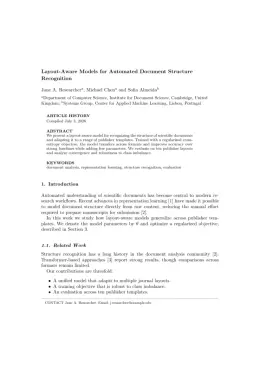
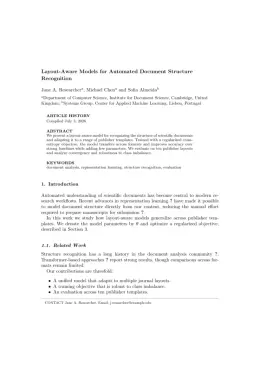
Write in a clean editor, then format for Heat Treatment and Surface Engineering in one click — DocuGuru applies the official Taylor & Francis template with author–year references and exports a submission-ready PDF plus the editable LaTeX source. Free to start.

About the Heat Treatment and Surface Engineering format

Heat Treatment and Surface Engineering is a peer-reviewed journal published by Taylor & Francis, covering Microstructure and Mechanical Properties of Steels, Metal Alloys Wear and Properties, Metal and Thin Film Mechanics.

PublisherTaylor & Francis
Reference styleAuthor–year (Chicago, T&F)
Author–year — (Smith, 2023) in the text
Smith, Ada, Ben Jones, and Cara Lee. 2023. "A Representative Article Title." Heat Treatment and Surface Engineering 12 (3): 45–58.

Formats any DOI in Heat Treatment and Surface Engineering style. No sign-up.

Publishes research inMicrostructure and Mechanical Properties of Steels Metal Alloys Wear and Properties Metal and Thin Film Mechanics Metallurgy and Material Forming Hydrogen embrittlement and corrosion behaviors in metals
ISSN2578-7616
Citation impact (2-yr)1.62
h-index8
i10-index5
Total citations256
Article processing charge$582
Open accessYes
Top institutions publishing hereShanghai Jiao Tong University
Journal websitewww.tandfonline.com
You getA submission-ready PDF and the editable LaTeX source — ready to submit.

Papers published in Heat Treatment and Surface Engineering per year

17
2019
4
2020
4
2021
10
2022
7
2023
12
2024
4
2025

Citation impact of Heat Treatment and Surface Engineering by publication year

86
2019
21
2020
33
2021
37
2022
43
2023
20
2024
4
2025

Citations each year’s papers have accumulated so far — the most recent years are still building up.

Most-cited papers in Heat Treatment and Surface Engineering

A short review: hydroxyapatite coatings for metallic implants

Fernando F. Rios-Pimentel, Magdalena M. Méndez-González, Miguel García Rocha · 18 Apr 2023

The number of orthopedic surgeries will continue increasing over the next decades. The most common causes of orthopedic implant failure after implantation are infections, inflammatory response, corrosion, mismatch in elastic modulus, stress shielding, and excessive wear. To address the problems associated with implants, different modifications related to geometry, materials, and surface have been developed. Among…

CMAS hot corrosion behavior of rare-earth silicates for environmental barrier coatings applications: a comprehensive review

Gui Cao, Yuhao Wang, Zhao-Ying Ding et al. · 2 Jan 2021

As one of the most promising materials for environmental barrier coatings (EBCs) applications, rare-earth (RE) silicates possess good high-temperature stability, coefficients of thermal expansion (CTEs) close to those of Si-based ceramics, low thermal conductivities, and excellent hot-corrosion resistances to water vapor and calcia-magnesia-aluminosilicate (CMAS) molten salts. With the gradual understanding on thermophysical properties of rare-earth…

Revealing the role of Ru in improving corrosion resistance of titanium alloys in HCl solution

Le Wang, Chun Feng, Huiqun Liu et al. · 2 Oct 2019

The corrosion behaviors of CP Ti, Ti-Ru, Ti-6Al-4V-Ru (Ti-64-Ru) and Ti-5Al-5Mo-5V-1Cr-1Fe-Ru (Ti-55511-Ru) in HCl solution were investigated using open circuit potential, polarization curves, mass loss measurement and X-ray photoelectron spectroscopy. The corrosion current density of Ti-64-Ru was 5 times higher than that of Ti-55511-Ru. While the passive current density of Ti-55511-Ru was higher than that…

Stability of FeCrNiTiAl high-entropy alloy at high temperature

Yong Liu, Nan Qu, Xiaoliang Zhao et al. · 2 Jan 2021

High entropy alloys have excellent thermal stability due to its sluggish diffusion effect. Here, we investigated the phase, microstructural and strength stabilities of FeCrNiTiAl alloy. Results show that as-cast alloy exhibits dendrite, interdendrite and eutectic microstructures. No new phase is detected after aging at 800–1100°C for 144 h, while a small change in the phase…

Enhanced mechanical properties of ultrahigh strength Mn–Si–Cr–C steels treated by a novel bainitic transformation plus quenching and partitioning process

Bingzhe Bai, Guhui Gao, Xiaolu Gui et al. · 5 Mar 2019

In this paper, we attempt to review our recent works on the ultrahigh strength Mn–Si–Cr–C steels treated by BQ&P and BQ–P–T processes. The core of these novel processes is to incorporate the formation of carbide-free bainite during the initial quenching step (rather than partitioning step) of Q&P process and to achieve a fine multiphase microstructure…

Heat Treatment and Surface Engineering template — frequently asked questions

How do I write a paper in the Heat Treatment and Surface Engineering format?
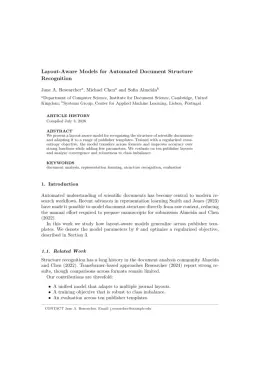
In DocuGuru you write your manuscript in a normal editor — no LaTeX setup required — and select the Heat Treatment and Surface Engineering template. When you export, DocuGuru compiles the paper into the official Taylor & Francis format and hands you a submission-ready PDF along with the editable LaTeX source.
What reference style does Heat Treatment and Surface Engineering use?
Heat Treatment and Surface Engineering uses Author–year (Chicago, T&F) references, shown as author–year markers such as (Smith, 2023) in the text. DocuGuru formats every in-text citation and the reference list in this exact style automatically. A reference appears like this: Smith, Ada, Ben Jones, and Cara Lee. 2023. "A Representative Article Title." Heat Treatment and Surface Engineering 12 (3): 45–58.
Do I need to know LaTeX to submit to Heat Treatment and Surface Engineering?
No. DocuGuru generates the interact LaTeX class and compiles the PDF for you in the background, so you get a Taylor & Francis-ready Heat Treatment and Surface Engineering document without writing any LaTeX. If you do want it, the LaTeX source is included in the export.
Can I import an existing draft into the Heat Treatment and Surface Engineering template?
Yes. Paste or upload your current manuscript — Word, LaTeX, Markdown, or plain text — and DocuGuru reflows it into the Heat Treatment and Surface Engineering format with correct headings, figures, tables, and author–year citations.
Who publishes Heat Treatment and Surface Engineering?
Heat Treatment and Surface Engineering is a multidisciplinary journal published by Taylor & Francis. DocuGuru's Heat Treatment and Surface Engineering template matches Taylor & Francis's official submission format.
Can I export a submission-ready Heat Treatment and Surface Engineering PDF?
Yes — DocuGuru produces a PDF built with the official Heat Treatment and Surface Engineering template (the interact class) that is ready to submit to Taylor & Francis, together with the matching LaTeX source files.
How much does the Heat Treatment and Surface Engineering template cost?
You can start writing in the Heat Treatment and Surface Engineering template for free. Exporting the final submission-ready Heat Treatment and Surface Engineering PDF and LaTeX source is part of DocuGuru's paid plans — see the app for current pricing.
Use the Heat Treatment and Surface Engineering template