Taylor & Francis

Expert Opinion on Drug Metabolism & Toxicology Template

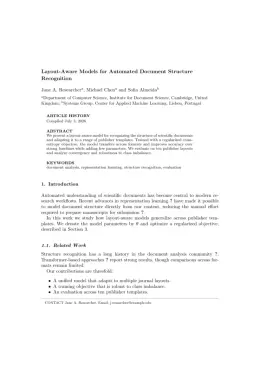
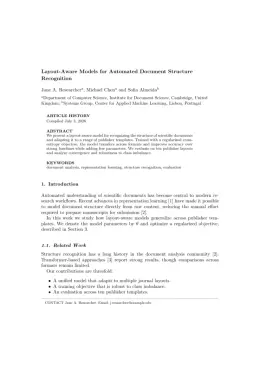
Write in a clean editor, then format for Expert Opinion on Drug Metabolism & Toxicology in one click — DocuGuru applies the official Taylor & Francis template with author–year references and exports a submission-ready PDF plus the editable LaTeX source. Free to start.

About the Expert Opinion on Drug Metabolism & Toxicology format

Expert Opinion on Drug Metabolism & Toxicology is a peer-reviewed journal published by Taylor & Francis, covering Pharmacogenetics and Drug Metabolism, Drug Transport and Resistance Mechanisms, Pharmacological Effects and Toxicity Studies.

PublisherTaylor & Francis
Reference styleAuthor–year (Chicago, T&F)
Author–year — (Smith, 2023) in the text
Smith, Ada, Ben Jones, and Cara Lee. 2023. "A Representative Article Title." Expert Opinion on Drug Metabolism & Toxicology 12 (3): 45–58.

Formats any DOI in Expert Opinion on Drug Metabolism & Toxicology style. No sign-up.

Publishes research inPharmacogenetics and Drug Metabolism Drug Transport and Resistance Mechanisms Pharmacological Effects and Toxicity Studies Computational Drug Discovery Methods Drug-Induced Hepatotoxicity and Protection
ISSN1742-5255
Citation impact (2-yr)4.25
h-index119
i10-index1,647
Total citations82,312
Top institutions publishing hereWeatherford College
Journal websitewww.tandfonline.com
You getA submission-ready PDF and the editable LaTeX source — ready to submit.

Papers published in Expert Opinion on Drug Metabolism & Toxicology per year

157
2014
144
2015
167
2016
102
2017
108
2018
77
2019
120
2020
83
2021
61
2022
88
2023
111
2024
87
2025

Citation impact of Expert Opinion on Drug Metabolism & Toxicology by publication year

5.7K
2014
4K
2015
5.6K
2016
3.3K
2017
3.4K
2018
2.8K
2019
3.5K
2020
2.2K
2021
850
2022
1K
2023
743
2024
212
2025

Citations each year’s papers have accumulated so far — the most recent years are still building up.

Most-cited papers in Expert Opinion on Drug Metabolism & Toxicology

Species differences between mouse, rat, dog, monkey and human CYP-mediated drug metabolism, inhibition and induction

Marcella Martignoni, Geny M. M. Groothuis, Ruben de Kanter · 24 Nov 2006

Animal models are commonly used in the preclinical development of new drugs to predict the metabolic behaviour of new compounds in humans. It is, however, important to realise that humans differ from animals with regards to isoform composition, expression and catalytic activities of drug-metabolising enzymes. In this review the authors describe similarities and differences in…

1,464 citations Cite SaveGo to paper →
Non-P450 aldehyde oxidizing enzymes: the aldehyde dehydrogenase superfamily

Satori A. Marchitti, Chad Brocker, Dimitrios Stagos et al. · 1 Jun 2008

BACKGROUND: Aldehydes are highly reactive molecules. While several non-P450 enzyme systems participate in their metabolism, one of the most important is the aldehyde dehydrogenase (ALDH) superfamily, composed of NAD(P)+-dependent enzymes that catalyze aldehyde oxidation. OBJECTIVE: This article presents a review of what is currently known about each member of the human ALDH superfamily including the…

Caco-2 cell permeability assays to measure drug absorption

Richard B. van Breemen, Yongmei Li · 1 Aug 2005

Caco-2 cells are a human colon epithelial cancer cell line used as a model of human intestinal absorption of drugs and other compounds. When cultured as a monolayer, Caco-2 cells differentiate to form tight junctions between cells to serve as a model of paracellular movement of compounds across the monolayer. In addition, Caco-2 cells express…

The Simcyp <sup>®</sup> Population-based ADME Simulator

Masoud Jamei, Steve Marciniak, Kairui Feng et al. · 1 Feb 2009

The Simcyp population-based absorption, distribution, metabolism and excretion simulator is a platform and database for 'bottom-up' mechanistic modelling and simulation of the processes of oral absorption, tissue distribution, metabolism and excretion of drugs and drug candidates in healthy and disease populations. It combines experimental data generated routinely during preclinical drug discovery and development from in…

The Caco-2 cell monolayer: usefulness and limitations

Huadong Sun, Edwin CY Chow, Shanjun Liu et al. · 1 Apr 2008

BACKGROUND: The Caco-2 monolayer has been used extensively for the high-throughput screening of drug permeability and identification of substrates, inhibitors, and inducers of intestinal transporters, especially P-glycoprotein (P-gp). Traditionally, the Caco-2 monolayer is viewed as a single barrier rather than a polarized cell monolayer consisting of metabolic enzymes that are sandwiched between two membrane barriers…

Expert Opinion on Drug Metabolism & Toxicology template — frequently asked questions

How do I write a paper in the Expert Opinion on Drug Metabolism & Toxicology format?
In DocuGuru you write your manuscript in a normal editor — no LaTeX setup required — and select the Expert Opinion on Drug Metabolism & Toxicology template. When you export, DocuGuru compiles the paper into the official Taylor & Francis format and hands you a submission-ready PDF along with the editable LaTeX source.
What reference style does Expert Opinion on Drug Metabolism & Toxicology use?
Expert Opinion on Drug Metabolism & Toxicology uses Author–year (Chicago, T&F) references, shown as author–year markers such as (Smith, 2023) in the text. DocuGuru formats every in-text citation and the reference list in this exact style automatically. A reference appears like this: Smith, Ada, Ben Jones, and Cara Lee. 2023. "A Representative Article Title." Expert Opinion on Drug Metabolism & Toxicology 12 (3): 45–58.
Do I need to know LaTeX to submit to Expert Opinion on Drug Metabolism & Toxicology?
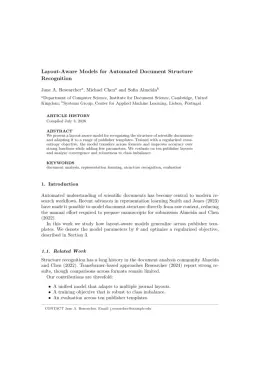
No. DocuGuru generates the interact LaTeX class and compiles the PDF for you in the background, so you get a Taylor & Francis-ready Expert Opinion on Drug Metabolism & Toxicology document without writing any LaTeX. If you do want it, the LaTeX source is included in the export.
Can I import an existing draft into the Expert Opinion on Drug Metabolism & Toxicology template?
Yes. Paste or upload your current manuscript — Word, LaTeX, Markdown, or plain text — and DocuGuru reflows it into the Expert Opinion on Drug Metabolism & Toxicology format with correct headings, figures, tables, and author–year citations.
Who publishes Expert Opinion on Drug Metabolism & Toxicology?
Expert Opinion on Drug Metabolism & Toxicology is a multidisciplinary journal published by Taylor & Francis. DocuGuru's Expert Opinion on Drug Metabolism & Toxicology template matches Taylor & Francis's official submission format.
Can I export a submission-ready Expert Opinion on Drug Metabolism & Toxicology PDF?
Yes — DocuGuru produces a PDF built with the official Expert Opinion on Drug Metabolism & Toxicology template (the interact class) that is ready to submit to Taylor & Francis, together with the matching LaTeX source files.
How much does the Expert Opinion on Drug Metabolism & Toxicology template cost?
You can start writing in the Expert Opinion on Drug Metabolism & Toxicology template for free. Exporting the final submission-ready Expert Opinion on Drug Metabolism & Toxicology PDF and LaTeX source is part of DocuGuru's paid plans — see the app for current pricing.
Use the Expert Opinion on Drug Metabolism & Toxicology template