Taylor & Francis

Energy Sources Part A Recovery Utilization and Environmental Effects Template

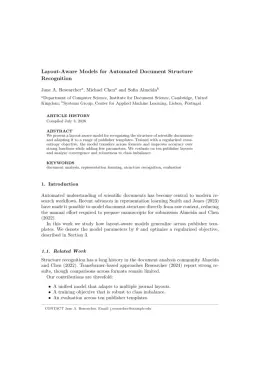
Write in a clean editor, then format for Energy Sources Part A Recovery Utilization and Environmental Effects in one click — DocuGuru applies the official Taylor & Francis template with author–year references and exports a submission-ready PDF plus the editable LaTeX source. Free to start.

About the Energy Sources Part A Recovery Utilization and Environmental Effects format

Energy Sources Part A Recovery Utilization and Environmental Effects is a peer-reviewed journal published by Taylor & Francis, covering Biodiesel Production and Applications, Thermochemical Biomass Conversion Processes, Advanced Combustion Engine Technologies.

PublisherTaylor & Francis
Reference styleAuthor–year (Chicago, T&F)
Author–year — (Smith, 2023) in the text
Smith, Ada, Ben Jones, and Cara Lee. 2023. "A Representative Article Title." Energy Sources Part A Recovery Utilization and Environmental Effects 12 (3): 45–58.

Formats any DOI in Energy Sources Part A Recovery Utilization and Environmental Effects style. No sign-up.

Publishes research inBiodiesel Production and Applications Thermochemical Biomass Conversion Processes Advanced Combustion Engine Technologies Hydrocarbon exploration and reservoir analysis Solar Thermal and Photovoltaic Systems
ISSN1556-7036
Citation impact (2-yr)2.29
h-index85
i10-index3,004
Total citations96,794
Top institutions publishing hereChina University of Mining and Technology
Journal websitewww.tandfonline.com
You getA submission-ready PDF and the editable LaTeX source — ready to submit.

Papers published in Energy Sources Part A Recovery Utilization and Environmental Effects per year

279
2014
306
2015
519
2016
350
2017
491
2018
825
2019
748
2020
535
2021
528
2022
631
2023
505
2024
318
2025

Citation impact of Energy Sources Part A Recovery Utilization and Environmental Effects by publication year

2.3K
2014
2.7K
2015
6.2K
2016
5.8K
2017
8.8K
2018
13.4K
2019
12.1K
2020
6.5K
2021
5.6K
2022
4.2K
2023
1.7K
2024
351
2025

Citations each year’s papers have accumulated so far — the most recent years are still building up.

Most-cited papers in Energy Sources Part A Recovery Utilization and Environmental Effects

Carbon capture and utilization technologies: a literature review and recent advances

Francisco M. Baena‐Moreno, Mónica Rodríguez‐Galán, Fernando Vega et al. · 21 Nov 2018

This paper presents a comprehensive list of Carbon Capture and Utilization technologies and applications, ranging from lab-scale R&D activities reported in academic papers to commercially established uses of carbon dioxide. Carbon dioxide, as a source of carbon, has the potential to be used as a solvent, as a raw material in the manufacturing of fuels,…

Production of Biodiesel from Algae Oils

A. Demirbaş · 27 Nov 2008

Abstract A macroalga (Cladophora fracta) and a microalga (Chlorella protothecoides) samples were used in this work. Most current research on oil extraction is focused on microalgae to produce biodiesel from algal oil. The biodiesel from algal oil in itself is not significantly different from biodiesel produced from vegetable oils. Algal oils, as well as vegetable…

Hydrophilic and hydrophobic materials and their applications

Darem Ahmad, Inge van den Boogaert, Jeremey Miller et al. · 5 Sep 2018

Wettability of a material’s surface plays a significant role in how fluids interact with such surfaces. Wetting behavior is universal but can vary depending on the chemical nature of the solid and liquid phases. Plants and animals adapt to their environment by having evolved special properties. These properties are such as hydrophilic and hydrophobic. Hydrophilic…

Bioplastics and Petroleum-based Plastics: Strengths and Weaknesses

Fausto Gironi, Vincenzo Piemonte · 1 Aug 2011

Abstract The application of biomass, such as starch, cellulose, wood, and sugar, used to substitute fossil resources for the production of plastics, is a widely accepted strategy towards sustainable development. In fact, this way a significant reduction of non renewable energy consumption and carbon dioxide emission is accomplished. In recent years, several typologies of bioplastics…

Biogas as a Renewable Energy Source—A Review

Mustafa Balat, Havva Balat · 19 May 2009

Abstract This article reviews the production processes and characterization of biogas as an alternative energy source. Biogas, the gas generated from organic digestion under anaerobic conditions by mixed population of microorganisms, is an alternative energy source, which has been commenced to be utilized both in rural and industrial areas at least since 1958. Biogas technology…

Energy Sources Part A Recovery Utilization and Environmental Effects template — frequently asked questions

How do I write a paper in the Energy Sources Part A Recovery Utilization and Environmental Effects format?
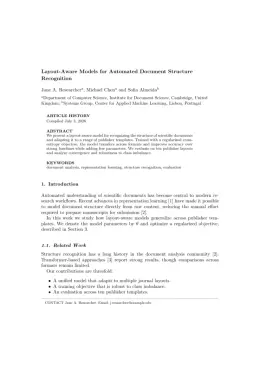
In DocuGuru you write your manuscript in a normal editor — no LaTeX setup required — and select the Energy Sources Part A Recovery Utilization and Environmental Effects template. When you export, DocuGuru compiles the paper into the official Taylor & Francis format and hands you a submission-ready PDF along with the editable LaTeX source.
What reference style does Energy Sources Part A Recovery Utilization and Environmental Effects use?
Energy Sources Part A Recovery Utilization and Environmental Effects uses Author–year (Chicago, T&F) references, shown as author–year markers such as (Smith, 2023) in the text. DocuGuru formats every in-text citation and the reference list in this exact style automatically. A reference appears like this: Smith, Ada, Ben Jones, and Cara Lee. 2023. "A Representative Article Title." Energy Sources Part A Recovery Utilization and Environmental Effects 12 (3): 45–58.
Do I need to know LaTeX to submit to Energy Sources Part A Recovery Utilization and Environmental Effects?
No. DocuGuru generates the interact LaTeX class and compiles the PDF for you in the background, so you get a Taylor & Francis-ready Energy Sources Part A Recovery Utilization and Environmental Effects document without writing any LaTeX. If you do want it, the LaTeX source is included in the export.
Can I import an existing draft into the Energy Sources Part A Recovery Utilization and Environmental Effects template?
Yes. Paste or upload your current manuscript — Word, LaTeX, Markdown, or plain text — and DocuGuru reflows it into the Energy Sources Part A Recovery Utilization and Environmental Effects format with correct headings, figures, tables, and author–year citations.
Who publishes Energy Sources Part A Recovery Utilization and Environmental Effects?
Energy Sources Part A Recovery Utilization and Environmental Effects is a multidisciplinary journal published by Taylor & Francis. DocuGuru's Energy Sources Part A Recovery Utilization and Environmental Effects template matches Taylor & Francis's official submission format.
Can I export a submission-ready Energy Sources Part A Recovery Utilization and Environmental Effects PDF?
Yes — DocuGuru produces a PDF built with the official Energy Sources Part A Recovery Utilization and Environmental Effects template (the interact class) that is ready to submit to Taylor & Francis, together with the matching LaTeX source files.
How much does the Energy Sources Part A Recovery Utilization and Environmental Effects template cost?
You can start writing in the Energy Sources Part A Recovery Utilization and Environmental Effects template for free. Exporting the final submission-ready Energy Sources Part A Recovery Utilization and Environmental Effects PDF and LaTeX source is part of DocuGuru's paid plans — see the app for current pricing.
Use the Energy Sources Part A Recovery Utilization and Environmental Effects template