Taylor & Francis

Critical Reviews in Toxicology Template

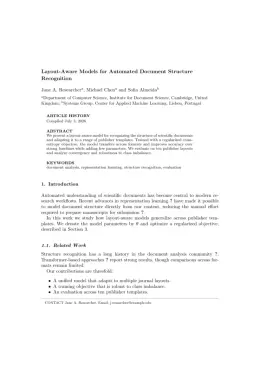
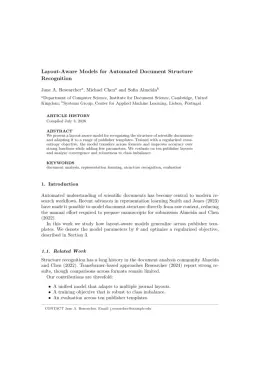
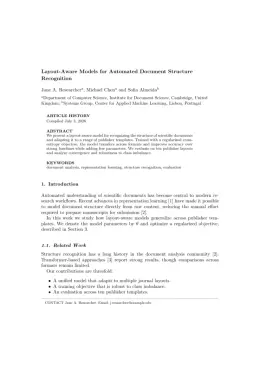
Write in a clean editor, then format for Critical Reviews in Toxicology in one click — DocuGuru applies the official Taylor & Francis template with author–year references and exports a submission-ready PDF plus the editable LaTeX source. Free to start.

About the Critical Reviews in Toxicology format

Critical Reviews in Toxicology is a peer-reviewed journal published by Taylor & Francis, covering Carcinogens and Genotoxicity Assessment, Effects and risks of endocrine disrupting chemicals, Air Quality and Health Impacts.

PublisherTaylor & Francis
Reference styleAuthor–year (Chicago, T&F)
Author–year — (Smith, 2023) in the text
Smith, Ada, Ben Jones, and Cara Lee. 2023. "A Representative Article Title." Critical Reviews in Toxicology 12 (3): 45–58.

Formats any DOI in Critical Reviews in Toxicology style. No sign-up.

Publishes research inCarcinogens and Genotoxicity Assessment Effects and risks of endocrine disrupting chemicals Air Quality and Health Impacts Toxic Organic Pollutants Impact Pesticide Exposure and Toxicity
ISSN1040-8444
Citation impact (2-yr)6.56
h-index167
i10-index911
Total citations111,102
Top institutions publishing hereEnvironmental Protection Agency
Journal websitewww.tandfonline.com
You getA submission-ready PDF and the editable LaTeX source — ready to submit.

Papers published in Critical Reviews in Toxicology per year

49
2014
40
2015
42
2016
43
2017
45
2018
39
2019
54
2020
45
2021
43
2022
32
2023
41
2024
45
2025

Citation impact of Critical Reviews in Toxicology by publication year

3.6K
2014
2.9K
2015
2.7K
2016
1.7K
2017
1.8K
2018
1.9K
2019
2.3K
2020
1.6K
2021
740
2022
445
2023
508
2024
162
2025

Citations each year’s papers have accumulated so far — the most recent years are still building up.

Most-cited papers in Critical Reviews in Toxicology

The Toxicology of Mercury and Its Chemical Compounds

Thomas W. Clarkson, L. Magós · 1 Jan 2006

This review covers the toxicology of mercury and its compounds. Special attention is paid to those forms of mercury of current public health concern. Human exposure to the vapor of metallic mercury dates back to antiquity but continues today in occupational settings and from dental amalgam. Health risks from methylmercury in edible tissues of fish…

2,353 citations Cite SaveGo to paper →
Minamata Disease: Methylmercury Poisoning in Japan Caused by Environmental Pollution

Masazumi Harada · 1 Jan 1995

Minamata disease (M. d.) is methylmercury (MeHg) poisoning that occurred in humans who ingested fish and shellfish contaminated by MeHg discharged in waste water from a chemical plant (Chisso Co. Ltd.). It was in May 1956, that M. d. was first officially "discovered" in Minamata City, south-west region of Japan's Kyushu Island. The marine products…

2,062 citations Cite SaveGo to paper →
Polychlorinated Biphenyls (PCBs), Dibenzo-p-Dioxins (PCDDs), Dibenzofurans (PCDFs), and Related Compounds: Environmental and Mechanistic Considerations Which Support the Development of Toxic Equivalency Factors (TEFs)

Stephen Safe · 1 Jan 1990

Halogenated aromatic compounds, typified by the polychlorinated dibenzo-p-dioxins (PCDDs), dibenzofurans (PCDFs), biphenyls (PCBs), and diphenylethers (PCDEs), are industrial compounds or byproducts which have been widely identified in the environment and in chemical-waste dumpsites. Halogenated aromatics are invariably present in diverse analytes as highly complex mixtures of isomers and congeners and this complicates the hazard and…

1,874 citations Cite SaveGo to paper →
Hepatotoxicity and Mechanism of Action of Haloalkanes: Carbon Tetrachloride as a Toxicological Model

Lutz W. D. Weber, Meinrad Boll, Andreas Stampfl · 1 Jan 2003

The use of many halogenated alkanes such as carbon tetrachloride (CCl4), chloroform (CHCl3) or iodoform (CHI3), has been banned or severely restricted because of their distinct toxicity. Yet CCl4 continues to provide an important service today as a model substance to elucidate the mechanisms of action of hepatotoxic effects such as fatty degeneration, fibrosis, hepatocellular…

1,767 citations Cite SaveGo to paper →
Polychlorinated Biphenyls (PCBs): Environmental Impact, Biochemical and Toxic Responses, and Implications for Risk Assessment

Stephen Safe · 1 Jan 1994

Commercial polychlorinated biphenyls (PCBs) and environmental extracts contain complex mixtures of congeners that can be unequivocally identified and quantitated. Some PCB mixtures elicit a spectrum of biochemical and toxic responses in humans and laboratory animals and many of these effects resemble those caused by 2,3,7,8-tetrachlorodibenzo-p-dioxin (TCDD) and related halogenated aromatic hydrocarbons, which act through the…

1,762 citations Cite SaveGo to paper →

Critical Reviews in Toxicology template — frequently asked questions

How do I write a paper in the Critical Reviews in Toxicology format?
In DocuGuru you write your manuscript in a normal editor — no LaTeX setup required — and select the Critical Reviews in Toxicology template. When you export, DocuGuru compiles the paper into the official Taylor & Francis format and hands you a submission-ready PDF along with the editable LaTeX source.
What reference style does Critical Reviews in Toxicology use?
Critical Reviews in Toxicology uses Author–year (Chicago, T&F) references, shown as author–year markers such as (Smith, 2023) in the text. DocuGuru formats every in-text citation and the reference list in this exact style automatically. A reference appears like this: Smith, Ada, Ben Jones, and Cara Lee. 2023. "A Representative Article Title." Critical Reviews in Toxicology 12 (3): 45–58.
Do I need to know LaTeX to submit to Critical Reviews in Toxicology?
No. DocuGuru generates the interact LaTeX class and compiles the PDF for you in the background, so you get a Taylor & Francis-ready Critical Reviews in Toxicology document without writing any LaTeX. If you do want it, the LaTeX source is included in the export.
Can I import an existing draft into the Critical Reviews in Toxicology template?
Yes. Paste or upload your current manuscript — Word, LaTeX, Markdown, or plain text — and DocuGuru reflows it into the Critical Reviews in Toxicology format with correct headings, figures, tables, and author–year citations.
Who publishes Critical Reviews in Toxicology?
Critical Reviews in Toxicology is a multidisciplinary journal published by Taylor & Francis. DocuGuru's Critical Reviews in Toxicology template matches Taylor & Francis's official submission format.
Can I export a submission-ready Critical Reviews in Toxicology PDF?
Yes — DocuGuru produces a PDF built with the official Critical Reviews in Toxicology template (the interact class) that is ready to submit to Taylor & Francis, together with the matching LaTeX source files.
How much does the Critical Reviews in Toxicology template cost?
You can start writing in the Critical Reviews in Toxicology template for free. Exporting the final submission-ready Critical Reviews in Toxicology PDF and LaTeX source is part of DocuGuru's paid plans — see the app for current pricing.

Use the Critical Reviews in Toxicology template