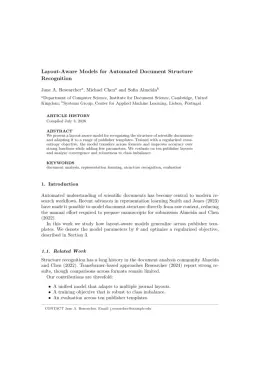
Taylor & Francis

Critical Reviews in Microbiology Template

Write in a clean editor, then format for Critical Reviews in Microbiology in one click — DocuGuru applies the official Taylor & Francis template with author–year references and exports a submission-ready PDF plus the editable LaTeX source. Free to start.

About the Critical Reviews in Microbiology format

Critical Reviews in Microbiology is a peer-reviewed journal published by Taylor & Francis, covering Bacterial biofilms and quorum sensing, Gut microbiota and health, Bacteriophages and microbial interactions.

PublisherTaylor & Francis
Reference styleAuthor–year (Chicago, T&F)
Author–year — (Smith, 2023) in the text
Smith, Ada, Ben Jones, and Cara Lee. 2023. "A Representative Article Title." Critical Reviews in Microbiology 12 (3): 45–58.

Formats any DOI in Critical Reviews in Microbiology style. No sign-up.

Publishes research inBacterial biofilms and quorum sensing Gut microbiota and health Bacteriophages and microbial interactions Antibiotic Resistance in Bacteria Probiotics and Fermented Foods
ISSN1040-841X
Citation impact (2-yr)7.08
h-index147
i10-index808
Total citations78,803
Top institutions publishing hereKU Leuven
Journal websitewww.tandfonline.com
You getA submission-ready PDF and the editable LaTeX source — ready to submit.

Papers published in Critical Reviews in Microbiology per year

53
2014
24
2015
29
2016
42
2017
26
2018
41
2019
51
2020
67
2021
54
2022
45
2023
55
2024
55
2025

Citation impact of Critical Reviews in Microbiology by publication year

4.1K
2014
2.3K
2015
3.2K
2016
4.8K
2017
2.3K
2018
2.5K
2019
3K
2020
3.4K
2021
1.3K
2022
889
2023
675
2024
184
2025

Citations each year’s papers have accumulated so far — the most recent years are still building up.

Most-cited papers in Critical Reviews in Microbiology

Critical review on biofilm methods

Joana Azeredo, Nuno F. Azevedo, Romain Briandet et al. · 21 Nov 2016

Biofilms are widespread in nature and constitute an important strategy implemented by microorganisms to survive in sometimes harsh environmental conditions. They can be beneficial or have a negative impact particularly when formed in industrial settings or on medical devices. As such, research into the formation and elimination of biofilms is important for many disciplines. Several…

1,005 citations Cite SaveGo to paper →
Rodent-borne diseases and their risks for public health

B.G. Meerburg, Grant R. Singleton, Aize Kijlstra · 23 Jun 2009

Rodents are the most abundant and diversified order of living mammals in the world. Already since the Middle Ages we know that they can contribute to human disease, as black rats were associated with distribution of plague. However, also in modern times rodents form a threat for public health. In this review article a large…

1,001 citations Cite SaveGo to paper →
Epidemiology of Invasive Mycoses in North America

Michael A. Pfaller, Daniel J. Diekema · 20 Jan 2010

The incidence of invasive mycoses is increasing, especially among patients who are immunocompromised or hospitalized with serious underlying diseases. Such infections may be broken into two broad categories: opportunistic and endemic. The most important agents of the opportunistic mycoses are Candida spp., Cryptococcus neoformans, Pneumocystis jirovecii, and Aspergillus spp. (although the list of potential pathogens…

Antimicrobial photodynamic therapy – what we know and what we don’t

Fabian Cieplik, Dongmei Deng, Wim Crielaard et al. · 11 May 2018

Considering increasing number of pathogens resistant towards commonly used antibiotics as well as antiseptics, there is a pressing need for antimicrobial approaches that are capable of inactivating pathogens efficiently without the risk of inducing resistances. In this regard, an alternative approach is the antimicrobial photodynamic therapy (aPDT). The antimicrobial effect of aPDT is based on…

Antimicrobial activity of eugenol and essential oils containing eugenol: A mechanistic viewpoint

Anna Marchese, Ramona Barbieri, Erika Coppo et al. · 27 Mar 2017

Eugenol is a hydroxyphenyl propene, naturally occurring in the essential oils of several plants belonging to the Lamiaceae, Lauraceae, Myrtaceae, and Myristicaceae families. It is one of the major constituents of clove (Syzygium aromaticum (L.) Merr. & L.M. Perry, Myrtaceae) oil and is largely used in both foods and cosmetics as a flavoring agent. A…

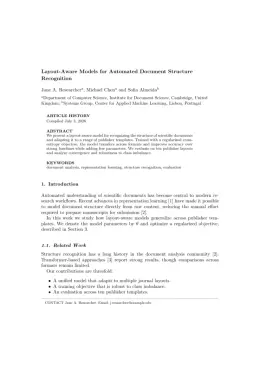
Critical Reviews in Microbiology template — frequently asked questions

How do I write a paper in the Critical Reviews in Microbiology format?
In DocuGuru you write your manuscript in a normal editor — no LaTeX setup required — and select the Critical Reviews in Microbiology template. When you export, DocuGuru compiles the paper into the official Taylor & Francis format and hands you a submission-ready PDF along with the editable LaTeX source.
What reference style does Critical Reviews in Microbiology use?
Critical Reviews in Microbiology uses Author–year (Chicago, T&F) references, shown as author–year markers such as (Smith, 2023) in the text. DocuGuru formats every in-text citation and the reference list in this exact style automatically. A reference appears like this: Smith, Ada, Ben Jones, and Cara Lee. 2023. "A Representative Article Title." Critical Reviews in Microbiology 12 (3): 45–58.
Do I need to know LaTeX to submit to Critical Reviews in Microbiology?
No. DocuGuru generates the interact LaTeX class and compiles the PDF for you in the background, so you get a Taylor & Francis-ready Critical Reviews in Microbiology document without writing any LaTeX. If you do want it, the LaTeX source is included in the export.
Can I import an existing draft into the Critical Reviews in Microbiology template?
Yes. Paste or upload your current manuscript — Word, LaTeX, Markdown, or plain text — and DocuGuru reflows it into the Critical Reviews in Microbiology format with correct headings, figures, tables, and author–year citations.
Who publishes Critical Reviews in Microbiology?
Critical Reviews in Microbiology is a multidisciplinary journal published by Taylor & Francis. DocuGuru's Critical Reviews in Microbiology template matches Taylor & Francis's official submission format.
Can I export a submission-ready Critical Reviews in Microbiology PDF?
Yes — DocuGuru produces a PDF built with the official Critical Reviews in Microbiology template (the interact class) that is ready to submit to Taylor & Francis, together with the matching LaTeX source files.
How much does the Critical Reviews in Microbiology template cost?
You can start writing in the Critical Reviews in Microbiology template for free. Exporting the final submission-ready Critical Reviews in Microbiology PDF and LaTeX source is part of DocuGuru's paid plans — see the app for current pricing.
Use the Critical Reviews in Microbiology template