Taylor & Francis

Critical Reviews in Clinical Laboratory Sciences Template

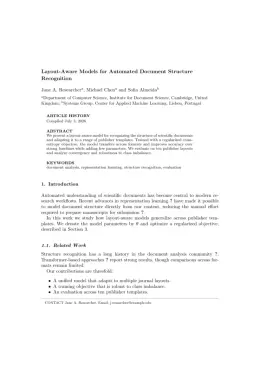
Write in a clean editor, then format for Critical Reviews in Clinical Laboratory Sciences in one click — DocuGuru applies the official Taylor & Francis template with author–year references and exports a submission-ready PDF plus the editable LaTeX source. Free to start.

About the Critical Reviews in Clinical Laboratory Sciences format

Critical Reviews in Clinical Laboratory Sciences is a peer-reviewed journal published by Taylor & Francis, covering Clinical Laboratory Practices and Quality Control, Meta-analysis and systematic reviews, Cancer Genomics and Diagnostics.

PublisherTaylor & Francis
Reference styleAuthor–year (Chicago, T&F)
Author–year — (Smith, 2023) in the text
Smith, Ada, Ben Jones, and Cara Lee. 2023. "A Representative Article Title." Critical Reviews in Clinical Laboratory Sciences 12 (3): 45–58.

Formats any DOI in Critical Reviews in Clinical Laboratory Sciences style. No sign-up.

Publishes research inClinical Laboratory Practices and Quality Control Meta-analysis and systematic reviews Cancer Genomics and Diagnostics Lipoproteins and Cardiovascular Health Diabetes, Cardiovascular Risks, and Lipoproteins
ISSN1040-8363
Citation impact (2-yr)5.86
h-index117
i10-index580
Total citations53,260
Top institutions publishing hereUniversity of Toronto
Journal websitewww.tandfonline.com
You getA submission-ready PDF and the editable LaTeX source — ready to submit.

Papers published in Critical Reviews in Clinical Laboratory Sciences per year

32
2014
27
2015
25
2016
27
2017
30
2018
48
2019
36
2020
29
2021
27
2022
41
2023
28
2024
49
2025

Citation impact of Critical Reviews in Clinical Laboratory Sciences by publication year

2.9K
2014
2.6K
2015
1.2K
2016
2.8K
2017
2.2K
2018
2K
2019
4.2K
2020
1.3K
2021
966
2022
755
2023
360
2024
163
2025

Citations each year’s papers have accumulated so far — the most recent years are still building up.

Most-cited papers in Critical Reviews in Clinical Laboratory Sciences

The COVID-19 pandemic

Marco Ciotti, Massimo Ciccozzi, Alessandro Terrinoni et al. · 9 Jul 2020

. The global spread of SARS-CoV-2 and the thousands of deaths caused by coronavirus disease (COVID-19) led the World Health Organization to declare a pandemic on 12 March 2020. To date, the world has paid a high toll in this pandemic in terms of human lives lost, economic repercussions and increased poverty. In this review,…

1,531 citations Cite SaveGo to paper →
Red blood cell distribution width: A simple parameter with multiple clinical applications

Gian Luca Salvagno, Fabián Sanchis‐Gomar, Alessandra Picanza et al. · 23 Dec 2014

The red blood cell distribution width (RDW) is a simple and inexpensive parameter, which reflects the degree of heterogeneity of erythrocyte volume (conventionally known as anisocytosis), and is traditionally used in laboratory hematology for differential diagnosis of anemias. Nonetheless, recent evidence attests that anisocytosis is commonplace in human disorders such as cardiovascular disease, venous thromboembolism,…

1,238 citations Cite SaveGo to paper →
Gamma Glutamyl Transferase

John B. Whitfield · 1 Jan 2001

Serum gamma-glutamyl transferase (GGT) has been widely used as an index of liver dysfunction and marker of alcohol intake. The last few years have seen improvements in these areas and advances in understanding of its physiological role in counteracting oxidative stress by breaking down extracellular glutathione and making its component amino acids available to the…

1,141 citations Cite SaveGo to paper →
Glutathione in Cancer Biology and Therapy

José M. Estrela, Ángel Ortega, Elena Obrador · 1 Jan 2006

The glutathione (GSH) content of cancer cells is particularly relevant in regulating mutagenic mechanisms, DNA synthesis, growth, and multidrug and radiation resistance. In malignant tumors, as compared with normal tissues, that resistance associates in most cases with higher GSH levels within these cancer cells. Thus, approaches to cancer treatment based on modulation of GSH should…

1,045 citations Cite SaveGo to paper →
Dipeptidyl-Peptidase IV from Bench to Bedside: An Update on Structural Properties, Functions, and Clinical Aspects of the Enzyme DPP IV

Anne‐Marie Lambeir, Christine Durinx, Simon Scharpé et al. · 1 Jan 2003

Dipeptidyl-peptidase IV/CD26 (DPP IV) is a cell-surface protease belonging to the prolyloligopeptidase family. It selectively removes the N-terminal dipeptide from peptides with proline or alanine in the second position. Apart from its catalytic activity, it interacts with several proteins, for instance, adenosine deaminase, the HIV gp120 protein, fibronectin, collagen, the chemokine receptor CXCR4, and the…


Critical Reviews in Clinical Laboratory Sciences template — frequently asked questions

How do I write a paper in the Critical Reviews in Clinical Laboratory Sciences format?
In DocuGuru you write your manuscript in a normal editor — no LaTeX setup required — and select the Critical Reviews in Clinical Laboratory Sciences template. When you export, DocuGuru compiles the paper into the official Taylor & Francis format and hands you a submission-ready PDF along with the editable LaTeX source.
What reference style does Critical Reviews in Clinical Laboratory Sciences use?
Critical Reviews in Clinical Laboratory Sciences uses Author–year (Chicago, T&F) references, shown as author–year markers such as (Smith, 2023) in the text. DocuGuru formats every in-text citation and the reference list in this exact style automatically. A reference appears like this: Smith, Ada, Ben Jones, and Cara Lee. 2023. "A Representative Article Title." Critical Reviews in Clinical Laboratory Sciences 12 (3): 45–58.
Do I need to know LaTeX to submit to Critical Reviews in Clinical Laboratory Sciences?
No. DocuGuru generates the interact LaTeX class and compiles the PDF for you in the background, so you get a Taylor & Francis-ready Critical Reviews in Clinical Laboratory Sciences document without writing any LaTeX. If you do want it, the LaTeX source is included in the export.
Can I import an existing draft into the Critical Reviews in Clinical Laboratory Sciences template?
Yes. Paste or upload your current manuscript — Word, LaTeX, Markdown, or plain text — and DocuGuru reflows it into the Critical Reviews in Clinical Laboratory Sciences format with correct headings, figures, tables, and author–year citations.
Who publishes Critical Reviews in Clinical Laboratory Sciences?
Critical Reviews in Clinical Laboratory Sciences is a multidisciplinary journal published by Taylor & Francis. DocuGuru's Critical Reviews in Clinical Laboratory Sciences template matches Taylor & Francis's official submission format.
Can I export a submission-ready Critical Reviews in Clinical Laboratory Sciences PDF?
Yes — DocuGuru produces a PDF built with the official Critical Reviews in Clinical Laboratory Sciences template (the interact class) that is ready to submit to Taylor & Francis, together with the matching LaTeX source files.
How much does the Critical Reviews in Clinical Laboratory Sciences template cost?
You can start writing in the Critical Reviews in Clinical Laboratory Sciences template for free. Exporting the final submission-ready Critical Reviews in Clinical Laboratory Sciences PDF and LaTeX source is part of DocuGuru's paid plans — see the app for current pricing.
Use the Critical Reviews in Clinical Laboratory Sciences template