Taylor & Francis

Communicative & Integrative Biology Template

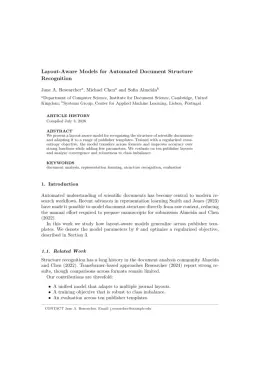
Write in a clean editor, then format for Communicative & Integrative Biology in one click — DocuGuru applies the official Taylor & Francis template with author–year references and exports a submission-ready PDF plus the editable LaTeX source. Free to start.

About the Communicative & Integrative Biology format

Communicative & Integrative Biology is a peer-reviewed journal published by Taylor & Francis, covering Cellular transport and secretion, Plant and animal studies, Neuroscience and Neuropharmacology Research.

PublisherTaylor & Francis
Reference styleAuthor–year (Chicago, T&F)
Author–year — (Smith, 2023) in the text
Smith, Ada, Ben Jones, and Cara Lee. 2023. "A Representative Article Title." Communicative & Integrative Biology 12 (3): 45–58.

Formats any DOI in Communicative & Integrative Biology style. No sign-up.

Publishes research inCellular transport and secretion Plant and animal studies Neuroscience and Neuropharmacology Research Microtubule and mitosis dynamics Cellular Mechanics and Interactions
ISSN1942-0889
Citation impact (2-yr)4.81
h-index68
i10-index827
Total citations29,765
Article processing charge$1,459
Open accessYes
Top institutions publishing hereCentre National de la Recherche Scientifique
Journal websitewww.tandfonline.com
You getA submission-ready PDF and the editable LaTeX source — ready to submit.

Papers published in Communicative & Integrative Biology per year

58
2014
81
2015
65
2016
66
2017
35
2018
24
2019
25
2020
26
2021
25
2022
18
2023
18
2024
13
2025

Citation impact of Communicative & Integrative Biology by publication year

1.2K
2014
1.4K
2015
1.3K
2016
1K
2017
645
2018
328
2019
426
2020
306
2021
199
2022
116
2023
128
2024
21
2025

Citations each year’s papers have accumulated so far — the most recent years are still building up.

Most-cited papers in Communicative & Integrative Biology

Exosomes

Anoek Zomer, Tineke Vendrig, Erik Hopmans et al. · 1 Sep 2010

Exosomes are specialized membranous nano-sized vesicles derived from endocytic compartments that are released by many cell types. Microvesicles are distinctive from exosomes in that they are produced by shedding of the plasmamembrane and usually larger in size (>1 µm). Exosome biogenesis involves the tightly controlled process of inward budding from the limiting membrane of multivesicular…

The mechanism of action of PA-824

Ujjini H. Manjunatha, Helena I. Boshoff, Clifton E. Barry · 1 May 2009

The bicyclic nitroimidazole PA-824 is a pro-drug with a very complex mechanism of action active against both replicating and hypoxic, non-replicating Mycobacterium tuberculosis. Microarray analysis of the mode of action of PA-824 showed a puzzling mixed effect both on genes responsive to both cell wall inhibition (like isoniazid) and respiratory poisoning (like cyanide). The aerobic…

Root exudates mediate kin recognition in plants

Meredith L. Biedrzycki, Tafari A. Jilany, Susan A. Dudley et al. · 1 Jan 2010

Though recent work has demonstrated that plants can recognize species, kin versus strangers, and self/non-self roots, no mechanism for identity recognition in plants has yet been found. Here we examined the role of soluble chemicals in signaling among roots. Utilizing Arabidopsis thaliana, we exposed young seedlings to liquid media containing exudates from siblings, strangers (non-siblings),…

The rhizobacterial elicitor acetoin induces systemic resistance in <i>Arabidopsis thaliana</i>

Thimmaraju Rudrappa, Meredith L. Biedrzycki, Sridhara G. Kunjeti et al. · 1 Mar 2010

The majority of plant growth promoting rhizobacteria (PGPR) confer plant immunity against a wide range of foliar diseases by activating plant defences that reduce a plant's susceptibility to pathogen attack. Here we show that Arabidopsis thaliana (Col-0) plants exposed to Bacillus subtilis strain FB17 (hereafter FB17), results in reduced disease severity against Pseudomonas syringae pv.…

Nucleolin

Marjan M. Tajrishi, Renu Tuteja, Narendra Tuteja · 1 May 2011

Nucleolin is a multifunctional phosphoprotein ubiquitously distributed in the nucleolus, nucleus and cytoplasm of the cell. Nucleolin has a bipartite nuclear localization signal sequence and is conserved in animals, plants and yeast. Its levels are correlated with the rate of functional activity of the nucleolus in exponentially growing cells. Nucleolin contains intrinsic DNA and RNA…

Communicative & Integrative Biology template — frequently asked questions

How do I write a paper in the Communicative & Integrative Biology format?
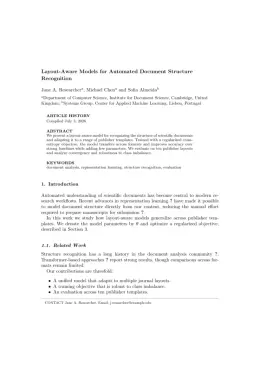
In DocuGuru you write your manuscript in a normal editor — no LaTeX setup required — and select the Communicative & Integrative Biology template. When you export, DocuGuru compiles the paper into the official Taylor & Francis format and hands you a submission-ready PDF along with the editable LaTeX source.
What reference style does Communicative & Integrative Biology use?
Communicative & Integrative Biology uses Author–year (Chicago, T&F) references, shown as author–year markers such as (Smith, 2023) in the text. DocuGuru formats every in-text citation and the reference list in this exact style automatically. A reference appears like this: Smith, Ada, Ben Jones, and Cara Lee. 2023. "A Representative Article Title." Communicative & Integrative Biology 12 (3): 45–58.
Do I need to know LaTeX to submit to Communicative & Integrative Biology?
No. DocuGuru generates the interact LaTeX class and compiles the PDF for you in the background, so you get a Taylor & Francis-ready Communicative & Integrative Biology document without writing any LaTeX. If you do want it, the LaTeX source is included in the export.
Can I import an existing draft into the Communicative & Integrative Biology template?
Yes. Paste or upload your current manuscript — Word, LaTeX, Markdown, or plain text — and DocuGuru reflows it into the Communicative & Integrative Biology format with correct headings, figures, tables, and author–year citations.
Who publishes Communicative & Integrative Biology?
Communicative & Integrative Biology is a multidisciplinary journal published by Taylor & Francis. DocuGuru's Communicative & Integrative Biology template matches Taylor & Francis's official submission format.
Can I export a submission-ready Communicative & Integrative Biology PDF?
Yes — DocuGuru produces a PDF built with the official Communicative & Integrative Biology template (the interact class) that is ready to submit to Taylor & Francis, together with the matching LaTeX source files.
How much does the Communicative & Integrative Biology template cost?
You can start writing in the Communicative & Integrative Biology template for free. Exporting the final submission-ready Communicative & Integrative Biology PDF and LaTeX source is part of DocuGuru's paid plans — see the app for current pricing.
Use the Communicative & Integrative Biology template