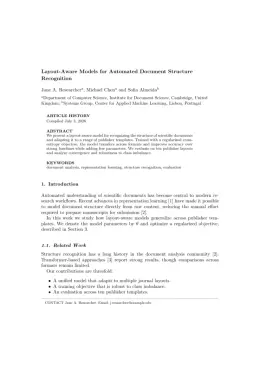
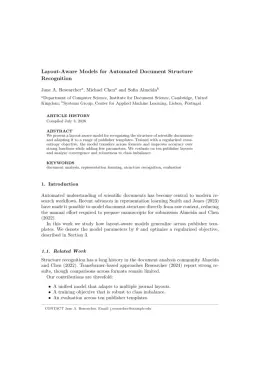
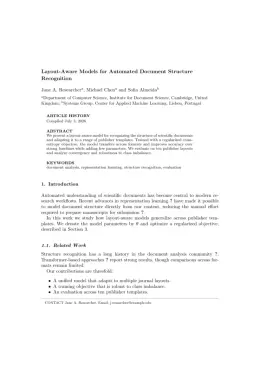
About the Cognitive Neuropsychology format
Cognitive Neuropsychology is a peer-reviewed journal published by Taylor & Francis, covering Neurobiology of Language and Bilingualism, Reading and Literacy Development, Neural and Behavioral Psychology Studies.
| Publisher | Taylor & Francis |
|---|
| Reference style | Author–year (Chicago, T&F) Author–year — (Smith, 2023) in the text
Smith, Ada, Ben Jones, and Cara Lee. 2023. "A Representative Article Title." Cognitive Neuropsychology 12 (3): 45–58.
Formats any DOI in Cognitive Neuropsychology style. No sign-up.
|
|---|
| Publishes research in | Neurobiology of Language and Bilingualism Reading and Literacy Development Neural and Behavioral Psychology Studies Language Development and Disorders Face Recognition and Perception |
|---|
| ISSN | 0264-3294 |
|---|
| Citation impact (2-yr) | 1.39 |
|---|
| h-index | 139 |
|---|
| i10-index | 1,035 |
|---|
| Total citations | 85,509 |
|---|
| Top institutions publishing here | University College London |
|---|
| Journal website | www.tandfonline.com |
|---|
| You get | A submission-ready PDF and the editable LaTeX source — ready to submit. |
|---|
Papers published in Cognitive Neuropsychology per year
Citation impact of Cognitive Neuropsychology by publication year
Citations each year’s papers have accumulated so far — the most recent years are still building up.
Most-cited papers in Cognitive Neuropsychology
The Brain's concepts: the role of the Sensory-motor system in conceptual knowledge
Vittorio Gallese, George Lakoff · 11 Jan 2005
Concepts are the elementary units of reason and linguistic meaning. They are conventional and relatively stable. As such, they must somehow be the result of neural activity in the brain. The questions are: Where? and How? A common philosophical position is that all concepts-even concepts about action and perception-are symbolic and abstract, and therefore must…
THREE PARIETAL CIRCUITS FOR NUMBER PROCESSING
Stanislas Dehaene, Manuela Piazza, Philippe Pinel et al. · 1 May 2003
Did evolution endow the human brain with a predisposition to represent and acquire knowledge about numbers? Although the parietal lobe has been suggested as a potential substrate for a domain-specific representation of quantities, it is also engaged in verbal, spatial, and attentional functions that may contribute to calculation. To clarify the organisation of number-related processes…
Inhibition of return: Neural basis and function
Michael I. Posner, Robert D. Rafal, Lisa S. Choate et al. · 1 Aug 1985
A goal of neuropsychology is to connect cognitive functions with underlying neural systems. Posner (in press) has proposed a framework for doing so in which elementary mental operations in cognitive models are expressed in terms of component facilitations and inhibitions in the performance domain. These components are in turn linked to underlying neural systems. In…
How Many Levels of Processing Are There in Lexical Access?
Alfonso Caramazza · 1 Jan 1997
The patterns of semantic errors in speaking and writing are used to constrain claims about the structure of lexical access mechanisms in speech and written language production. It is argued that it is not necessary to postulate a modality-neutral level of lexical representation (lemma) that is intermediate between lexical-semantic representations and modality-specific lexical representations. A…
Deep dyslexia: A case study of connectionist neuropsychology
David C. Plaut, Tim Shallice · 1 Nov 1993
Abstract Deep dyslexia is an acquired reading disorder marked by the Occurrence of semantic errors (e.g. reading RIVER as “ocean”). In addition, patients exhibit a number of other symptoms, including visual and morphological effects in their errors, a part-of-speech effect, and an advantage for concrete over abstract words. Deep dyslexia poses a distinct challenge for…