Taylor & Francis

Cellular Logistics Template

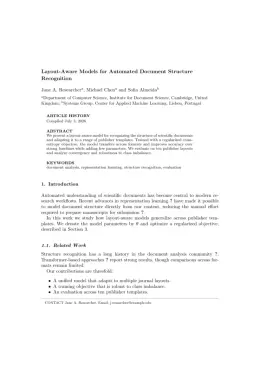
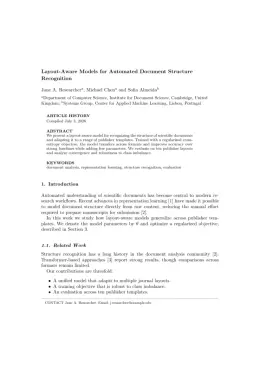
Write in a clean editor, then format for Cellular Logistics in one click — DocuGuru applies the official Taylor & Francis template with author–year references and exports a submission-ready PDF plus the editable LaTeX source. Free to start.

About the Cellular Logistics format

Cellular Logistics is a peer-reviewed journal published by Taylor & Francis, covering Cellular transport and secretion, Lipid Membrane Structure and Behavior, Endoplasmic Reticulum Stress and Disease.

PublisherTaylor & Francis
Reference styleAuthor–year (Chicago, T&F)
Author–year — (Smith, 2023) in the text
Smith, Ada, Ben Jones, and Cara Lee. 2023. "A Representative Article Title." Cellular Logistics 12 (3): 45–58.

Formats any DOI in Cellular Logistics style. No sign-up.

Publishes research inCellular transport and secretion Lipid Membrane Structure and Behavior Endoplasmic Reticulum Stress and Disease Protein Kinase Regulation and GTPase Signaling Pancreatic function and diabetes
ISSN2159-2780
h-index29
i10-index85
Total citations3,407
Open accessYes
Top institutions publishing hereUniversity of Illinois Chicago
You getA submission-ready PDF and the editable LaTeX source — ready to submit.

Papers published in Cellular Logistics per year

33
2011
32
2012
9
2013
23
2014
9
2015
7
2016
13
2017

Citation impact of Cellular Logistics by publication year

606
2011
1.5K
2012
140
2013
539
2014
334
2015
131
2016
151
2017

Citations each year’s papers have accumulated so far — the most recent years are still building up.

Most-cited papers in Cellular Logistics

Search for inhibitors of endocytosis

Dipannita Dutta, Julie G. Donaldson · 1 Oct 2012

We discuss here the variety of approaches that have been taken to inhibit different forms of endocytosis. Typically, both non-specific and specific chemical inhibitors of endocytosis are tried in order to "classify" entry of a new plasma membrane protein into one of the various types of endocytosis. This classification can be confirmed through genetic approaches…

PAK signaling in cancer

Diana Zi Ye, Jeffrey Field · 1 Apr 2012

Transformation of a normal cell to a cancer cell is caused by mutations in genes that regulate proliferation, apoptosis, and invasion. Small GTPases such as Ras, Rho, Rac and Cdc42 orchestrate many of the signals that are required for malignant transformation. The p21-activated kinases (PAKs) are effectors of Rac and Cdc42. PAKs are a family…

The proteolytic landscape of the yeast vacuole

Karen A. Hecht, Allyson F. O’Donnell, Jeffrey L. Brodsky · 1 Jan 2014

plays a number of essential roles, and to provide some of these required functions the vacuole harbors at least seven distinct proteases. These proteases exhibit a range of activities and different classifications, and they follow unique paths to arrive at their ultimate, common destination in the cell. This review will first summarize the major functions…

PAK family kinases

Zhuo-shen Zhao, Ed Manser · 1 Apr 2012

The p21-activated kinases (PAKs) are a family of Ser/Thr protein kinases that are represented by six genes in humans (PAK 1-6), and are found in all eukaryotes sequenced to date. Genetic and knockdown experiments in frogs, fish and mice indicate group I PAKs are widely expressed, required for multiple tissue development, and particularly important for…

Arf-like GTPase Arl8: Moving from the periphery to the center of lysosomal biology

Divya Khatter, Aastha Sindhwani, Mahak Sharma · 3 Jul 2015

Lysosomes are dynamic organelles that not only mediate degradation of cellular substrates but also play critical roles in processes such as cholesterol homeostasis, plasma membrane repair, antigen presentation, and cell migration. The small GTPase Arl8, a member of Arf-like (Arl) family of proteins, has recently emerged as a crucial regulator of lysosome positioning and membrane…

Cellular Logistics template — frequently asked questions

How do I write a paper in the Cellular Logistics format?
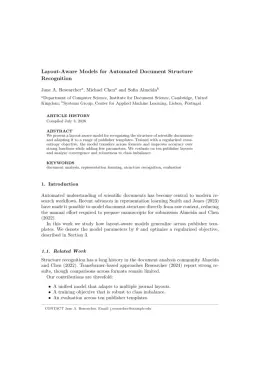
In DocuGuru you write your manuscript in a normal editor — no LaTeX setup required — and select the Cellular Logistics template. When you export, DocuGuru compiles the paper into the official Taylor & Francis format and hands you a submission-ready PDF along with the editable LaTeX source.
What reference style does Cellular Logistics use?
Cellular Logistics uses Author–year (Chicago, T&F) references, shown as author–year markers such as (Smith, 2023) in the text. DocuGuru formats every in-text citation and the reference list in this exact style automatically. A reference appears like this: Smith, Ada, Ben Jones, and Cara Lee. 2023. "A Representative Article Title." Cellular Logistics 12 (3): 45–58.
Do I need to know LaTeX to submit to Cellular Logistics?
No. DocuGuru generates the interact LaTeX class and compiles the PDF for you in the background, so you get a Taylor & Francis-ready Cellular Logistics document without writing any LaTeX. If you do want it, the LaTeX source is included in the export.
Can I import an existing draft into the Cellular Logistics template?
Yes. Paste or upload your current manuscript — Word, LaTeX, Markdown, or plain text — and DocuGuru reflows it into the Cellular Logistics format with correct headings, figures, tables, and author–year citations.
Who publishes Cellular Logistics?
Cellular Logistics is a multidisciplinary journal published by Taylor & Francis. DocuGuru's Cellular Logistics template matches Taylor & Francis's official submission format.
Can I export a submission-ready Cellular Logistics PDF?
Yes — DocuGuru produces a PDF built with the official Cellular Logistics template (the interact class) that is ready to submit to Taylor & Francis, together with the matching LaTeX source files.
How much does the Cellular Logistics template cost?
You can start writing in the Cellular Logistics template for free. Exporting the final submission-ready Cellular Logistics PDF and LaTeX source is part of DocuGuru's paid plans — see the app for current pricing.
Use the Cellular Logistics template