Taylor & Francis

Canadian Society of Forensic Science Journal Template

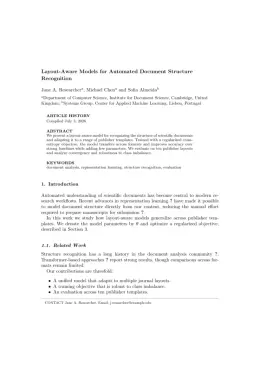
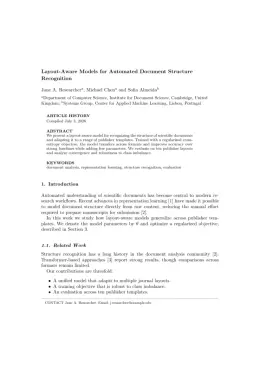
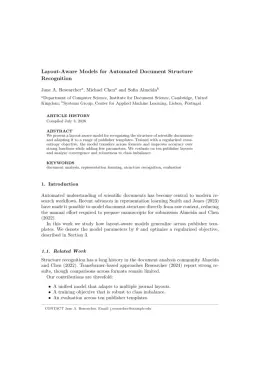
Write in a clean editor, then format for Canadian Society of Forensic Science Journal in one click — DocuGuru applies the official Taylor & Francis template with author–year references and exports a submission-ready PDF plus the editable LaTeX source. Free to start.

About the Canadian Society of Forensic Science Journal format

Canadian Society of Forensic Science Journal is a peer-reviewed journal published by Taylor & Francis, covering Forensic and Genetic Research, Forensic Anthropology and Bioarchaeology Studies, Forensic Toxicology and Drug Analysis.

PublisherTaylor & Francis
Reference styleAuthor–year (Chicago, T&F)
Author–year — (Smith, 2023) in the text
Smith, Ada, Ben Jones, and Cara Lee. 2023. "A Representative Article Title." Canadian Society of Forensic Science Journal 12 (3): 45–58.

Formats any DOI in Canadian Society of Forensic Science Journal style. No sign-up.

Publishes research inForensic and Genetic Research Forensic Anthropology and Bioarchaeology Studies Forensic Toxicology and Drug Analysis Forensic Fingerprint Detection Methods Alcohol Consumption and Health Effects
ISSN0008-5030
Citation impact (2-yr)0.62
h-index34
i10-index182
Total citations6,414
Top institutions publishing hereRoyal Canadian Mounted Police
Journal websitewww.tandfonline.com
You getA submission-ready PDF and the editable LaTeX source — ready to submit.

Papers published in Canadian Society of Forensic Science Journal per year

24
2014
23
2015
17
2016
16
2017
5
2018
15
2019
14
2020
16
2021
23
2022
15
2023
10
2024
10
2025

Citation impact of Canadian Society of Forensic Science Journal by publication year

85
2014
168
2015
108
2016
93
2017
44
2018
46
2019
49
2020
55
2021
51
2022
18
2023
10
2024
3
2025

Citations each year’s papers have accumulated so far — the most recent years are still building up.

Most-cited papers in Canadian Society of Forensic Science Journal

A Test of Several Methods of Skeletal Age Estimation using a Documented Archaeological Sample

Shelley R. Saunders, Cheryl Fitzgerald, Tracy L. Rogers et al. · 1 Jan 1992

ABSTRACTThis study presents the results of blind tests of four morphological methods of adult age at death estimation from the human skeleton as well as a statistical technique for combining multiple age indicators, carried out on personally identified skeletons from a nineteenth century Canadian pioneer cemetery. Sample sizes for the four methods ranged from 27…

A Comparison of Drug Concentrations in Postmortem Cardiac and Peripheral Blood in 320 Cases

Marthe Dalpé-Scott, Marc Degouffe, D. Garbutt et al. · 1 Jan 1995

For many years it has become increasingly apparent from literature reports that the postmortem cardiac blood concentrations of certain drugs can be significantly different than those found in peripheral blood.The cardiac to peripheral ratio (C/P) of drug concentrations in postmortem blood samples was determined for 113 drugs representing toxicological findings in 320 cases. Theories postulated…

The use of Insects in Death Investigations: An Analysis of Cases in British Columbia over a Five Year Period

Gail S. Anderson · 1 Jan 1995

Forty-two forensic entomology cases, from human death investigations in British Columbia, (B.C.) were analyzed. The insects collected from the remains were identified based on species, developmental stage, and age of remains to begin a database for B.C. Cases also were summarized by habitat and geographical region, toxicology, manner of death and season of discovery. Most…

Application of Stable Isotope Variation in Human Tissues to Problems in Identification

M. Anne Katzenberg, H. Roy Krouse · 1 Jan 1989

Variation in the stable isotope composition of human tissues and fluids suggests the use of such data as an aid in identification of unknown human remains. Carbon isotope values vary depending specifically on the photosynthetic pathways utilized by plants consumed as feed by domesticated animals, and by humans directly. Sulphur isotopes vary depending on environmental…

Canadian Society of Forensic Science Journal template — frequently asked questions

How do I write a paper in the Canadian Society of Forensic Science Journal format?
In DocuGuru you write your manuscript in a normal editor — no LaTeX setup required — and select the Canadian Society of Forensic Science Journal template. When you export, DocuGuru compiles the paper into the official Taylor & Francis format and hands you a submission-ready PDF along with the editable LaTeX source.
What reference style does Canadian Society of Forensic Science Journal use?
Canadian Society of Forensic Science Journal uses Author–year (Chicago, T&F) references, shown as author–year markers such as (Smith, 2023) in the text. DocuGuru formats every in-text citation and the reference list in this exact style automatically. A reference appears like this: Smith, Ada, Ben Jones, and Cara Lee. 2023. "A Representative Article Title." Canadian Society of Forensic Science Journal 12 (3): 45–58.
Do I need to know LaTeX to submit to Canadian Society of Forensic Science Journal?
No. DocuGuru generates the interact LaTeX class and compiles the PDF for you in the background, so you get a Taylor & Francis-ready Canadian Society of Forensic Science Journal document without writing any LaTeX. If you do want it, the LaTeX source is included in the export.
Can I import an existing draft into the Canadian Society of Forensic Science Journal template?
Yes. Paste or upload your current manuscript — Word, LaTeX, Markdown, or plain text — and DocuGuru reflows it into the Canadian Society of Forensic Science Journal format with correct headings, figures, tables, and author–year citations.
Who publishes Canadian Society of Forensic Science Journal?
Canadian Society of Forensic Science Journal is a multidisciplinary journal published by Taylor & Francis. DocuGuru's Canadian Society of Forensic Science Journal template matches Taylor & Francis's official submission format.
Can I export a submission-ready Canadian Society of Forensic Science Journal PDF?
Yes — DocuGuru produces a PDF built with the official Canadian Society of Forensic Science Journal template (the interact class) that is ready to submit to Taylor & Francis, together with the matching LaTeX source files.
How much does the Canadian Society of Forensic Science Journal template cost?
You can start writing in the Canadian Society of Forensic Science Journal template for free. Exporting the final submission-ready Canadian Society of Forensic Science Journal PDF and LaTeX source is part of DocuGuru's paid plans — see the app for current pricing.

Use the Canadian Society of Forensic Science Journal template