
Taylor & Francis

British Phycological Bulletin Template

Write in a clean editor, then format for British Phycological Bulletin in one click — DocuGuru applies the official Taylor & Francis template with author–year references and exports a submission-ready PDF plus the editable LaTeX source. Free to start.

About the British Phycological Bulletin format

British Phycological Bulletin is a peer-reviewed journal published by Taylor & Francis, covering Diatoms and Algae Research, Marine and coastal plant biology, Biocrusts and Microbial Ecology.

PublisherTaylor & Francis
Reference styleAuthor–year (Chicago, T&F)
Author–year — (Smith, 2023) in the text
Smith, Ada, Ben Jones, and Cara Lee. 2023. "A Representative Article Title." British Phycological Bulletin 12 (3): 45–58.

Formats any DOI in British Phycological Bulletin style. No sign-up.

Publishes research inDiatoms and Algae Research Marine and coastal plant biology Biocrusts and Microbial Ecology Algal biology and biofuel production Lichen and fungal ecology
ISSN0374-6534
h-index26
i10-index64
Total citations2,288
Top institutions publishing hereFreshwater Biological Association
Journal websitewww.tandfonline.com
You getA submission-ready PDF and the editable LaTeX source — ready to submit.

Papers published in British Phycological Bulletin per year

14
1957
8
1958
13
1959
13
1960
13
1961
20
1962
15
1963
14
1964
17
1965
16
1966
30
1967
27
1968

Citation impact of British Phycological Bulletin by publication year

25
1957
20
1958
154
1959
33
1960
99
1961
96
1962
144
1963
205
1964
231
1965
203
1966
640
1967
371
1968

Citations each year’s papers have accumulated so far — the most recent years are still building up.

Most-cited papers in British Phycological Bulletin

Persistent, vertical-migration rhythms in benthic microflora

F. E. Round, Christine M. Happey · 1 Dec 1965

Abstract The diurnal migratory rhythm of the epipelic diatom association of freshwater streams has been investigated in laboratory studies. Movement of the diatom flora up to the surface of the sediment and down beneath the surface occurs once every 24 hours reaching a peak of cell numbers at the surface at approximately the same time…

The fine structure of<i>Woloszynskia micra</i>Sp.Nov., a new marine dinoflagellate

B. S. C. Leadbeater, J. D. Dodge · 1 Dec 1966

The morphology and fine structure of a new dinoflagellate speries are described.Superficially this organism appears to be a Gymnodinium but electron microscopy has clearly revealed the presence of a complex theca which is indicative of the genus Woloszynskia.The fine structure of the typical dinoflagellate organelles, trichocysts, pusule and nucleus with permanently condensed chromosomes are detailed.The…

Measurements of diatom adhesion and their relationship with movement

Margaret Harper, J. F. Harper · 1 Dec 1967

Adhesive and tractive forces of diatoms have been measured by the bending of a glass fibre. The results show that motility depends on attachment to the substrate. Movement on girdle bands occurs when the raphe acts against lumps of trail substance. Resistance to shear stress in laminar flow through a capillary tube is found to…
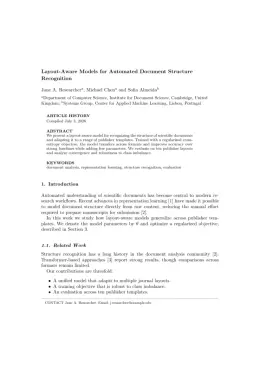
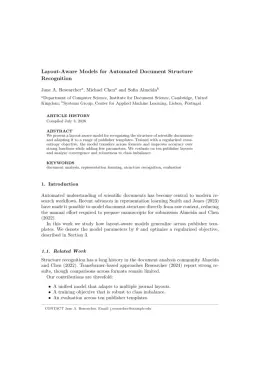
British Phycological Bulletin template — frequently asked questions

How do I write a paper in the British Phycological Bulletin format?
In DocuGuru you write your manuscript in a normal editor — no LaTeX setup required — and select the British Phycological Bulletin template. When you export, DocuGuru compiles the paper into the official Taylor & Francis format and hands you a submission-ready PDF along with the editable LaTeX source.
What reference style does British Phycological Bulletin use?
British Phycological Bulletin uses Author–year (Chicago, T&F) references, shown as author–year markers such as (Smith, 2023) in the text. DocuGuru formats every in-text citation and the reference list in this exact style automatically. A reference appears like this: Smith, Ada, Ben Jones, and Cara Lee. 2023. "A Representative Article Title." British Phycological Bulletin 12 (3): 45–58.
Do I need to know LaTeX to submit to British Phycological Bulletin?
No. DocuGuru generates the interact LaTeX class and compiles the PDF for you in the background, so you get a Taylor & Francis-ready British Phycological Bulletin document without writing any LaTeX. If you do want it, the LaTeX source is included in the export.
Can I import an existing draft into the British Phycological Bulletin template?
Yes. Paste or upload your current manuscript — Word, LaTeX, Markdown, or plain text — and DocuGuru reflows it into the British Phycological Bulletin format with correct headings, figures, tables, and author–year citations.
Who publishes British Phycological Bulletin?
British Phycological Bulletin is a multidisciplinary journal published by Taylor & Francis. DocuGuru's British Phycological Bulletin template matches Taylor & Francis's official submission format.
Can I export a submission-ready British Phycological Bulletin PDF?
Yes — DocuGuru produces a PDF built with the official British Phycological Bulletin template (the interact class) that is ready to submit to Taylor & Francis, together with the matching LaTeX source files.
How much does the British Phycological Bulletin template cost?
You can start writing in the British Phycological Bulletin template for free. Exporting the final submission-ready British Phycological Bulletin PDF and LaTeX source is part of DocuGuru's paid plans — see the app for current pricing.
Use the British Phycological Bulletin template