Taylor & Francis

Australian Journal of Structural Engineering Template

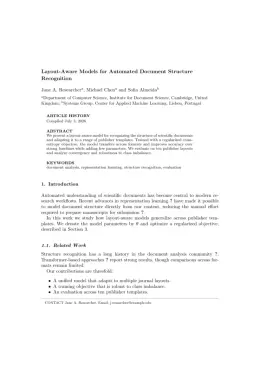
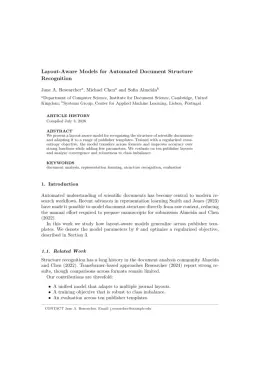
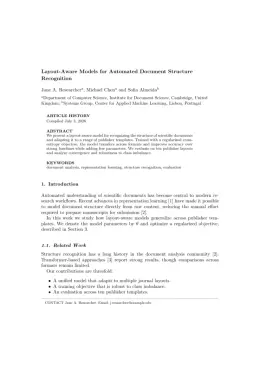
Write in a clean editor, then format for Australian Journal of Structural Engineering in one click — DocuGuru applies the official Taylor & Francis template with author–year references and exports a submission-ready PDF plus the editable LaTeX source. Free to start.

About the Australian Journal of Structural Engineering format

Australian Journal of Structural Engineering is a peer-reviewed journal published by Taylor & Francis, covering Structural Behavior of Reinforced Concrete, Structural Load-Bearing Analysis, Structural Engineering and Vibration Analysis.

PublisherTaylor & Francis
Reference styleAuthor–year (Chicago, T&F)
Author–year — (Smith, 2023) in the text
Smith, Ada, Ben Jones, and Cara Lee. 2023. "A Representative Article Title." Australian Journal of Structural Engineering 12 (3): 45–58.

Formats any DOI in Australian Journal of Structural Engineering style. No sign-up.

Publishes research inStructural Behavior of Reinforced Concrete Structural Load-Bearing Analysis Structural Engineering and Vibration Analysis Concrete Corrosion and Durability Innovative concrete reinforcement materials
ISSN1328-7982
Citation impact (2-yr)1.28
h-index33
i10-index157
Total citations5,875
Top institutions publishing hereSwinburne University of Technology
Journal websitewww.tandfonline.com
You getA submission-ready PDF and the editable LaTeX source — ready to submit.

Papers published in Australian Journal of Structural Engineering per year

27
2014
45
2015
24
2016
36
2017
21
2018
28
2019
21
2020
31
2021
35
2022
27
2023
31
2024
33
2025

Citation impact of Australian Journal of Structural Engineering by publication year

213
2014
309
2015
250
2016
402
2017
187
2018
426
2019
194
2020
135
2021
223
2022
125
2023
69
2024
28
2025

Citations each year’s papers have accumulated so far — the most recent years are still building up.

Most-cited papers in Australian Journal of Structural Engineering

Fly Ash-Based Geopolymer Concrete

Djwantoro Hardjito, Steenie E. Wallah, Dody M.J. Sumajouw et al. · 1 Jan 2005

In recent years, attempts to increase the utilisation of fly ash to partially replace the use of Portland cement in concrete are gathering momentum. Geopolymer concrete is a ‘new’ material that does not need the presence of Portland cement as a binder. Instead, activating the source materials such as fly ash that are rich in…

Performance of Unreinforced Masonry Buildings During the 2010 Darfield (Christchurch, Nz) Earthquake

Jason Ingham, Michael Griffith · 1 Jan 2010

The 2010 Darfield earthquake caused extensive damage to a number of unreinforced masonry buildings. While this damage to important heritage buildings was the largest natural disaster to occur in New Zealand since the 1931 Hawke’s Bay earthquake, the damage was consistent with projections for the scale of this earthquake, and indeed even greater damage might…

Experimental Study of Dynamic Material Properties of Clay Brick and Mortar at Different Strain Rates

Hong Hao, B. G. Tarasov · 1 Jan 2008

It is well known that most construction materials behave differently under highspeed and static loading conditions. The strain rate effect on many materials, such as metals, concrete and rock, has been intensively investigated. However, the strain rate effect on masonry materials, such as clay bricks and mortar mixed with cement, lime and sand, cannot be…

Benefits of using sea sand and seawater in concrete: a comprehensive review

Tanaz Dhondy, Alex Remennikov, M. Neaz Shiekh · 29 Aug 2019

The population worldwide is growing and so is the demand for more infrastructure. The rate of consumption of concrete has grown significantly over the years, becoming one of the most fundamental construction materials. This growth has depleted natural river sand and freshwater sources. The use of sea sand and seawater in concrete can provide sustainability…

Effect of Elevated Temperature on Bond Behaviour of High Modulus CFRP/Steel Double-Strap Joints

Ahmed Al-Shawaf, Riadh Al‐Mahaidi, Xiao‐Ling Zhao · 1 Jan 2009

This paper investigates and provides experimental evidence of the bond characteristics between carbon fibre reinforced polymer (CFRP) and steel plates under elevated temperature exposures. A series of tensile tests was carried out on CFRP/steel plates specimens joined together in double-lap shear joints and subjected to a range of environmental temperatures between 20 °C up to…

Australian Journal of Structural Engineering template — frequently asked questions

How do I write a paper in the Australian Journal of Structural Engineering format?
In DocuGuru you write your manuscript in a normal editor — no LaTeX setup required — and select the Australian Journal of Structural Engineering template. When you export, DocuGuru compiles the paper into the official Taylor & Francis format and hands you a submission-ready PDF along with the editable LaTeX source.
What reference style does Australian Journal of Structural Engineering use?
Australian Journal of Structural Engineering uses Author–year (Chicago, T&F) references, shown as author–year markers such as (Smith, 2023) in the text. DocuGuru formats every in-text citation and the reference list in this exact style automatically. A reference appears like this: Smith, Ada, Ben Jones, and Cara Lee. 2023. "A Representative Article Title." Australian Journal of Structural Engineering 12 (3): 45–58.
Do I need to know LaTeX to submit to Australian Journal of Structural Engineering?
No. DocuGuru generates the interact LaTeX class and compiles the PDF for you in the background, so you get a Taylor & Francis-ready Australian Journal of Structural Engineering document without writing any LaTeX. If you do want it, the LaTeX source is included in the export.
Can I import an existing draft into the Australian Journal of Structural Engineering template?
Yes. Paste or upload your current manuscript — Word, LaTeX, Markdown, or plain text — and DocuGuru reflows it into the Australian Journal of Structural Engineering format with correct headings, figures, tables, and author–year citations.
Who publishes Australian Journal of Structural Engineering?
Australian Journal of Structural Engineering is a multidisciplinary journal published by Taylor & Francis. DocuGuru's Australian Journal of Structural Engineering template matches Taylor & Francis's official submission format.
Can I export a submission-ready Australian Journal of Structural Engineering PDF?
Yes — DocuGuru produces a PDF built with the official Australian Journal of Structural Engineering template (the interact class) that is ready to submit to Taylor & Francis, together with the matching LaTeX source files.
How much does the Australian Journal of Structural Engineering template cost?
You can start writing in the Australian Journal of Structural Engineering template for free. Exporting the final submission-ready Australian Journal of Structural Engineering PDF and LaTeX source is part of DocuGuru's paid plans — see the app for current pricing.

Use the Australian Journal of Structural Engineering template