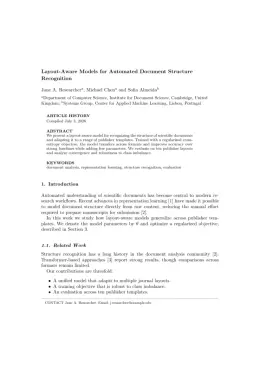
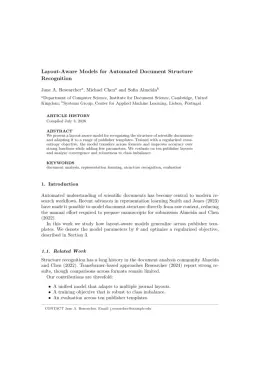
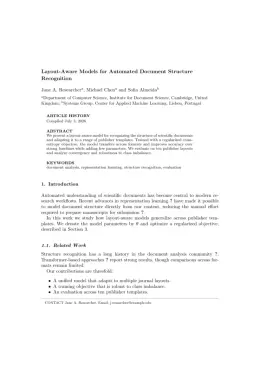
About the Australasian Philosophical Review format
Australasian Philosophical Review is a peer-reviewed journal published by Taylor & Francis, covering Epistemology, Ethics, and Metaphysics, Philosophy and Theoretical Science, Philosophical Ethics and Theory.
| Publisher | Taylor & Francis |
|---|
| Reference style | Author–year (Chicago, T&F) Author–year — (Smith, 2023) in the text
Smith, Ada, Ben Jones, and Cara Lee. 2023. "A Representative Article Title." Australasian Philosophical Review 12 (3): 45–58.
Formats any DOI in Australasian Philosophical Review style. No sign-up.
|
|---|
| Publishes research in | Epistemology, Ethics, and Metaphysics Philosophy and Theoretical Science Philosophical Ethics and Theory Political Philosophy and Ethics Philosophy and History of Science |
|---|
| ISSN | 2474-0500 |
|---|
| Citation impact (2-yr) | 2.21 |
|---|
| h-index | 19 |
|---|
| i10-index | 52 |
|---|
| Total citations | 1,984 |
|---|
| Top institutions publishing here | The University of Sydney |
|---|
| Journal website | www.tandfonline.com |
|---|
| You get | A submission-ready PDF and the editable LaTeX source — ready to submit. |
|---|
Papers published in Australasian Philosophical Review per year
Citation impact of Australasian Philosophical Review by publication year
Citations each year’s papers have accumulated so far — the most recent years are still building up.
Most-cited papers in Australasian Philosophical Review
Cognition as a Social Skill
Sally Haslanger · 2 Jan 2019
Much contemporary social epistemology takes as its starting point individuals with sophisticated propositional attitudes and considers (i) how those individuals depend on each other to gain (or lose) knowledge through testimony, disagreement, and the like and (ii) if, in addition to individual knowers, it is possible for groups to have knowledge. In this paper I…
Forgiveness—An Ordered Pluralism
Miranda Fricker · 3 Jul 2019
There are two kinds of forgiveness that appear as radically different from one another: one presents forgiveness as essentially earned through remorseful apology; the other presents it as fundamentally non-earned—a gift. The first, which I label Moral Justice Forgiveness, adopts a stance of moral demand and conditionality; the second, which I label Gifted Forgiveness, adopts…
The Pleasure of Art
Mohan Matthen · 2 Jan 2017
This paper presents a new account of the pleasure we take in art. It distinguishes first between two types of pleasure. Relief or r-pleasure is transient and marks the end of a state that is difficult to maintain. Facilitation or f-pleasure accompanies an activity and lasts as long as the activity does. It motivates this…
Rethinking Nature: Phenomenology and a Non-reductionist Cognitive Science
Shaun Gallagher · 3 Apr 2018
Resistance to the idea that phenomenology can be relevant to cognitive scientific explanation has faced two objections advanced, respectively, from both sides of the issue: from the scientific perspective it has been suggested that phenomenology, understood as an account of first-person experience, is ultimately reducible to cognitive neuroscientific explanation; and from a phenomenological perspective it…
Political Philosophy and What People Think
Avner de Shalit · 2 Jan 2020
In a democracy what people think matters. Political philosophers are mostly democrats. They often justify deliberative and participatory democracy. And yet when it comes to philosophizing they often turn a blind eye to what people think; they sometimes even express profound doubts about what people think and about consulting the public. I call this the…