Taylor & Francis

Arid Soil Research and Rehabilitation Template

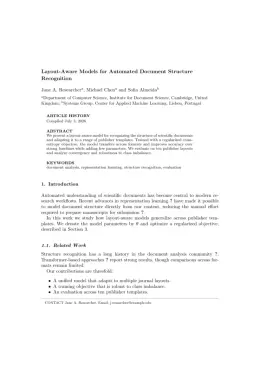
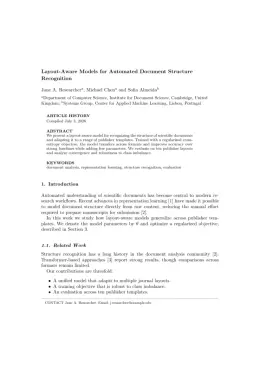
Write in a clean editor, then format for Arid Soil Research and Rehabilitation in one click — DocuGuru applies the official Taylor & Francis template with author–year references and exports a submission-ready PDF plus the editable LaTeX source. Free to start.

About the Arid Soil Research and Rehabilitation format

Arid Soil Research and Rehabilitation is a peer-reviewed journal published by Taylor & Francis, covering Soil Carbon and Nitrogen Dynamics, Soil and Unsaturated Flow, Soil erosion and sediment transport.

PublisherTaylor & Francis
Reference styleAuthor–year (Chicago, T&F)
Author–year — (Smith, 2023) in the text
Smith, Ada, Ben Jones, and Cara Lee. 2023. "A Representative Article Title." Arid Soil Research and Rehabilitation 12 (3): 45–58.

Formats any DOI in Arid Soil Research and Rehabilitation style. No sign-up.

Publishes research inSoil Carbon and Nitrogen Dynamics Soil and Unsaturated Flow Soil erosion and sediment transport Clay minerals and soil interactions Educational Robotics and Engineering
ISSN0890-3069
h-index40
i10-index210
Total citations7,478
Top institutions publishing hereUtah State University
Journal websitewww.tandfonline.com
You getA submission-ready PDF and the editable LaTeX source — ready to submit.

Papers published in Arid Soil Research and Rehabilitation per year

43
1989
34
1990
20
1991
39
1992
33
1993
35
1994
49
1995
39
1996
39
1997
30
1998
34
1999
31
2000

Citation impact of Arid Soil Research and Rehabilitation by publication year

540
1989
326
1990
143
1991
477
1992
456
1993
526
1994
637
1995
835
1996
863
1997
377
1998
841
1999
883
2000

Citations each year’s papers have accumulated so far — the most recent years are still building up.

Most-cited papers in Arid Soil Research and Rehabilitation

Global Assessment of Human-Induced Soil Degradation

E. M. Bridges, L.R. Oldeman · 1 Jan 1999

Soil is a valuable natural resource that in the short - term is nonrenewable and is difficult to reclaim when degraded. The use of soils on a sustainable basis requires that their capability to withstand the demands upon them is not exceeded. Those people concerned with conservation should be aware of the vital importance of…

Influence of cryptobiotic soil crusts on elemental content of tissue of two desert seed plants

Jayne Belnap, Kimball T. Harper · 1 Apr 1995

Soil surface growths dominated by cyanobacteria and the lichen Collema in southeastern Utah are shown to be associated with greater tissue content of several bio‐essential elements in two co‐occurring seed plants (Festuca octoflora, Poaceae, and Mentzelia multiflora, Loasaceae). The elements N, P, K, Ca, Mg, and Fe were present in significantly greater concentrations in Festuca…

Restoration and Rehabilitation of Arid and Semiarid Mediterranean Ecosystems in North Africa and West Asia: A Review

Henry Noël Le Houérou · 1 Jan 2000

Mediterranean-type vegetation and ecosystems have undergone intense processes of degradation for decades, centuries, or millennia under heavy and prolonged pressure from human and livestock populations. An extensive literature on exclosures, afforestation, reafforestation, rehabilitation, and other regeneration operations over several million hectares in Mediterranean bioclimatic areas from the Atlantic Ocean to the Aral Sea, combined with…

Reclamation of physical and chemical properties of a salinized soil by organic amendment

Antonio Lax, E. Díaz, V. Castillo et al. · 1 Jan 1994

An experiment was conducted on a vertic Xerochrept, salinized by saline water irrigation, to investigate the effect of municipal solid waste (MSW) application and irrigation with normal (0.19 S m‐1) and saline (0.42 S m‐1) water, on the physical and chemical properties of the soil. The experiment was carried out during one tomato crop (6…

Soil erosion after land abandonment in a semiarid environment of southeastern Spain

Artemi Cerdà · 1 Apr 1997

Different soil units were selected in southeastern Spain to investigate the effects of land abandonment on soil erosion under semiarid conditions. The study sites selected were a cultivated field (bare), a 3‐yr‐abandoned field (herbs), a 10‐yr‐abandoned field (Artemisia herba‐alba Asso.), and two soil units covered with semi‐native (Stipa tena‐cissima L) and native (Pinus halepensis Miller)…

Arid Soil Research and Rehabilitation template — frequently asked questions

How do I write a paper in the Arid Soil Research and Rehabilitation format?
In DocuGuru you write your manuscript in a normal editor — no LaTeX setup required — and select the Arid Soil Research and Rehabilitation template. When you export, DocuGuru compiles the paper into the official Taylor & Francis format and hands you a submission-ready PDF along with the editable LaTeX source.
What reference style does Arid Soil Research and Rehabilitation use?
Arid Soil Research and Rehabilitation uses Author–year (Chicago, T&F) references, shown as author–year markers such as (Smith, 2023) in the text. DocuGuru formats every in-text citation and the reference list in this exact style automatically. A reference appears like this: Smith, Ada, Ben Jones, and Cara Lee. 2023. "A Representative Article Title." Arid Soil Research and Rehabilitation 12 (3): 45–58.
Do I need to know LaTeX to submit to Arid Soil Research and Rehabilitation?
No. DocuGuru generates the interact LaTeX class and compiles the PDF for you in the background, so you get a Taylor & Francis-ready Arid Soil Research and Rehabilitation document without writing any LaTeX. If you do want it, the LaTeX source is included in the export.
Can I import an existing draft into the Arid Soil Research and Rehabilitation template?
Yes. Paste or upload your current manuscript — Word, LaTeX, Markdown, or plain text — and DocuGuru reflows it into the Arid Soil Research and Rehabilitation format with correct headings, figures, tables, and author–year citations.
Who publishes Arid Soil Research and Rehabilitation?
Arid Soil Research and Rehabilitation is a multidisciplinary journal published by Taylor & Francis. DocuGuru's Arid Soil Research and Rehabilitation template matches Taylor & Francis's official submission format.
Can I export a submission-ready Arid Soil Research and Rehabilitation PDF?
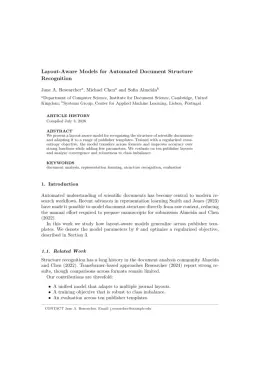
Yes — DocuGuru produces a PDF built with the official Arid Soil Research and Rehabilitation template (the interact class) that is ready to submit to Taylor & Francis, together with the matching LaTeX source files.
How much does the Arid Soil Research and Rehabilitation template cost?
You can start writing in the Arid Soil Research and Rehabilitation template for free. Exporting the final submission-ready Arid Soil Research and Rehabilitation PDF and LaTeX source is part of DocuGuru's paid plans — see the app for current pricing.
Use the Arid Soil Research and Rehabilitation template