SAGE

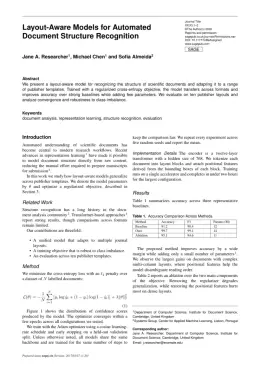
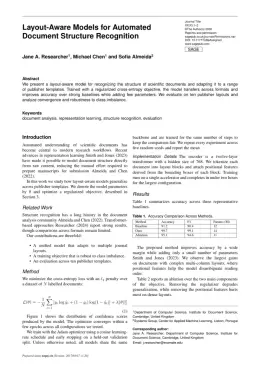
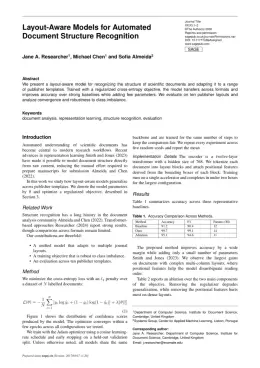
Youth Justice Template

Write in a clean editor, then format for Youth Justice in one click — DocuGuru applies the official SAGE template with author–year references and exports a submission-ready PDF plus the editable LaTeX source. Free to start.

About the Youth Justice format

Youth Justice is a peer-reviewed journal published by SAGE, covering Criminal Justice and Corrections Analysis, Child Abuse and Trauma, Crime Patterns and Interventions.

PublisherSAGE
Reference styleAuthor–year (Harvard)
Author–year — (Smith, 2023) in the text
Smith, A., Jones, B. and Lee, C. (2023) 'A representative article title', Youth Justice, 12(3), pp. 45–58.

Formats any DOI in Youth Justice style. No sign-up.

Publishes research inCriminal Justice and Corrections Analysis Child Abuse and Trauma Crime Patterns and Interventions Homelessness and Social Issues Ethics and Legal Issues in Pediatric Healthcare
ISSN1473-2254
Citation impact (2-yr)0.33
h-index44
i10-index198
Total citations7,273
Top institutions publishing hereUniversity of East Anglia
Journal websitetou.sagepub.com
You getA submission-ready PDF and the editable LaTeX source — ready to submit.

Papers published in Youth Justice per year

39
2014
23
2015
13
2016
18
2017
24
2018
32
2019
31
2020
19
2021
21
2022
29
2023
139
2024
29
2025

Citation impact of Youth Justice by publication year

662
2014
134
2015
160
2016
200
2017
269
2018
378
2019
574
2020
135
2021
109
2022
98
2023
46
2024
13
2025

Citations each year’s papers have accumulated so far — the most recent years are still building up.

Most-cited papers in Youth Justice

The `Punitive Turn' in Juvenile Justice: Cultures of Control and Rights Compliance in Western Europe and the USA

John Muncie · 22 Jul 2008

Separate systems of justice for children and young people have always been beset by issues of contradiction and compromise. There is compelling evidence that such ambiguity is currently being `resolved' by a greater governmental resort to neo-conservative punitive and correctional interventions and a neo-liberal responsibilizing mentality in which the protection historically afforded to children is…

Risks, Rights and Justice: Understanding and Responding to Youth Risk

Hazel Kemshall · 7 Mar 2008

This article reviews current social policy and penal policy responses to risk, with particular attention to how policies of responsibilization have implications for rights leading to an increased emphasis upon conditional rights. Responsibilization has also framed risk policies as increasingly preventative (and potentially exclusionary) and the limits of this `risk factorology' approach are examined. The…

A Risky Business? Research, Policy, Governmentality and Youth Offending

Derrick Armstrong · 1 Aug 2004

Media hyperbole about children and crime, along with electoral politics, may well reflect a configuration of personal anxieties, competing social values and public policy options. In this article, I will argue that it is a configuration that represents a crisis of governance far more than a crisis of ‘youth’. However, the research community is far…

Criminalizing Sociability through Anti-social Behaviour Legislation: Dispersal Powers, Young People and the Police

Adam Crawford · 24 Mar 2009

This article explores the impact of dispersal powers introduced as part of the British government's drive to tackle anti-social behaviour. It focuses especially on the experiences and views of young people affected by dispersal orders. It highlights the importance of experiences of respect and procedural justice for the manner in which they respond to directions…

Youth Justice template — frequently asked questions

How do I write a paper in the Youth Justice format?
In DocuGuru you write your manuscript in a normal editor — no LaTeX setup required — and select the Youth Justice template. When you export, DocuGuru compiles the paper into the official SAGE format and hands you a submission-ready PDF along with the editable LaTeX source.
What reference style does Youth Justice use?
Youth Justice uses Author–year (Harvard) references, shown as author–year markers such as (Smith, 2023) in the text. DocuGuru formats every in-text citation and the reference list in this exact style automatically. A reference appears like this: Smith, A., Jones, B. and Lee, C. (2023) 'A representative article title', Youth Justice, 12(3), pp. 45–58.
Do I need to know LaTeX to submit to Youth Justice?
No. DocuGuru generates the sagej LaTeX class and compiles the PDF for you in the background, so you get a SAGE-ready Youth Justice document without writing any LaTeX. If you do want it, the LaTeX source is included in the export.
Can I import an existing draft into the Youth Justice template?
Yes. Paste or upload your current manuscript — Word, LaTeX, Markdown, or plain text — and DocuGuru reflows it into the Youth Justice format with correct headings, figures, tables, and author–year citations.
Who publishes Youth Justice?
Youth Justice is a multidisciplinary journal published by SAGE. DocuGuru's Youth Justice template matches SAGE's official submission format.
Can I export a submission-ready Youth Justice PDF?
Yes — DocuGuru produces a PDF built with the official Youth Justice template (the sagej class) that is ready to submit to SAGE, together with the matching LaTeX source files.
How much does the Youth Justice template cost?
You can start writing in the Youth Justice template for free. Exporting the final submission-ready Youth Justice PDF and LaTeX source is part of DocuGuru's paid plans — see the app for current pricing.

Use the Youth Justice template