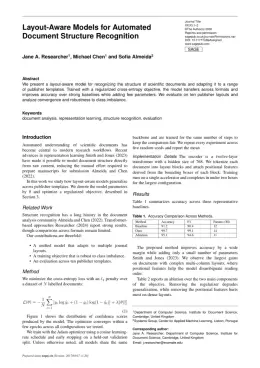
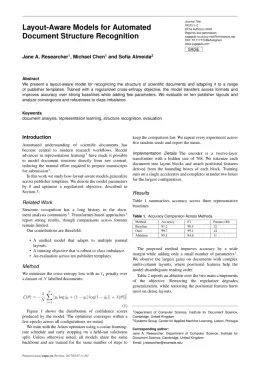
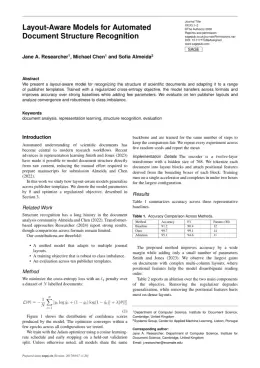
About the Science Communication format
Science Communication is a peer-reviewed journal published by SAGE, covering Climate Change Communication and Perception, Misinformation and Its Impacts, Media Influence and Health. Over its lifetime it has published 1,216 papers, which have received 41,829 citations.
| Publisher | SAGE |
|---|
| Reference style | Author–year (Harvard) Author–year — (Smith, 2023) in the text
Smith, A., Jones, B. and Lee, C. (2023) 'A representative article title', Science Communication, 12(3), pp. 45–58.
Formats any DOI in Science Communication style. No sign-up.
|
|---|
| Publishes research in | Climate Change Communication and Perception Misinformation and Its Impacts Media Influence and Health Media Studies and Communication Environmental Education and Sustainability |
|---|
| ISSN | 1075-5470 |
|---|
| Citation impact (2-yr) | 3.2 |
|---|
| h-index | 100 |
|---|
| i10-index | 626 |
|---|
| Top institutions publishing here | University of Wisconsin–Madison |
|---|
| Journal website | scx.sagepub.com |
|---|
| You get | A submission-ready PDF and the editable LaTeX source — ready to submit. |
|---|
Papers published in Science Communication per year
Citation impact of Science Communication by publication year
Citations each year’s papers have accumulated so far — the most recent years are still building up.
Most-cited papers in Science Communication
“Fear Won't Do It”
Saffron O’Neill, Sophie Nicholson-Cole · 7 Jan 2009
Fear-inducing representations of climate change are widely employed in the public domain. However, there is a lack of clarity in the literature about the impacts that fearful messages in climate change communications have on people's senses of engagement with the issue and associated implications for public engagement strategies. Some literature suggests that using fearful representations…
Politicization and Polarization in COVID-19 News Coverage
P. Sol Hart, Sedona Chinn, Stuart Soroka · 25 Aug 2020
This study examines the level of politicization and polarization in COVID-19 news in U.S. newspapers and televised network news from March to May 2020. Using multiple computer-assisted content analytic approaches, we find that newspaper coverage is highly politicized, network news coverage somewhat less so, and both newspaper and network news coverage are highly polarized. We…
The Rise of the Knowledge Broker
Morgan Meyer · 1 Mar 2010
Knowledge brokers are people or organizations that move knowledge around and create connections between researchers and their various audiences. This commentary reviews some of the literature on knowledge brokering and lays out some thoughts on how to analyze and theorize this practice. Discussing the invisibility and interstitiality of knowledge brokers, the author argues that social…
Using Expert Sources to Correct Health Misinformation in Social Media
Emily K. Vraga, Leticia Bode · 14 Sep 2017
This study tests whether the number (1 vs. 2) and the source (another user vs. the Centers for Disease Control and Prevention [CDC]) of corrective responses affect successful reduction of misperceptions. Using an experimental design, our results suggest that while a single correction from another user did not reduce misperceptions, the CDC on its own…
The Matilda Effect in Science Communication
Silvia Knobloch‐Westerwick, Carroll J. Glynn, Michael E. Huge · 6 Feb 2013
An experiment with 243 young communication scholars tested hypotheses derived from role congruity theory regarding impacts of author gender and gender typing of research topics on perceived quality of scientific publications and collaboration interest. Participants rated conference abstracts ostensibly authored by females or males, with author associations rotated. The abstracts fell into research areas perceived…