SAGE

Science Progress Template

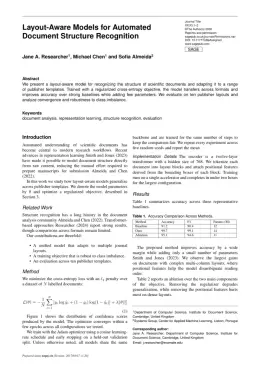
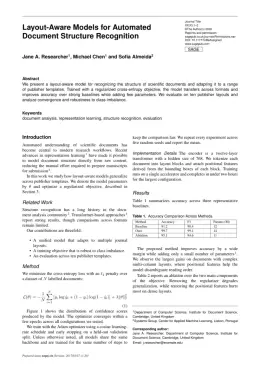
Write in a clean editor, then format for Science Progress in one click — DocuGuru applies the official SAGE template with author–year references and exports a submission-ready PDF plus the editable LaTeX source. Free to start.

About the Science Progress format

Science Progress is a peer-reviewed journal published by SAGE, covering Sepsis Diagnosis and Treatment, Energy, Environment, Economic Growth, Hydraulic and Pneumatic Systems.

PublisherSAGE
Reference styleAuthor–year (Harvard)
Author–year — (Smith, 2023) in the text
Smith, A., Jones, B. and Lee, C. (2023) 'A representative article title', Science Progress, 12(3), pp. 45–58.

Formats any DOI in Science Progress style. No sign-up.

Publishes research inSepsis Diagnosis and Treatment Energy, Environment, Economic Growth Hydraulic and Pneumatic Systems Advanced machining processes and optimization Rock Mechanics and Modeling
ISSN0036-8504
Citation impact (2-yr)2.14
h-index60
i10-index582
Total citations25,446
Open accessYes
Top institutions publishing hereUniversity of Warwick
Journal websiteus.sagepub.com
You getA submission-ready PDF and the editable LaTeX source — ready to submit.

Papers published in Science Progress per year

41
2014
43
2015
41
2016
34
2017
26
2018
99
2019
120
2020
370
2021
137
2022
176
2023
270
2024
426
2025

Citation impact of Science Progress by publication year

479
2014
319
2015
713
2016
629
2017
1.3K
2018
1.7K
2019
1.3K
2020
4.7K
2021
2.2K
2022
1.7K
2023
1.2K
2024
630
2025

Citations each year’s papers have accumulated so far — the most recent years are still building up.

Most-cited papers in Science Progress

COVID-19 pandemic: A review of the global lockdown and its far-reaching effects

Helen Onyeaka, Christian Anumudu, Zainab T. Al‐Sharify et al. · 1 Apr 2021

COVID-19, caused by the severe acute respiratory syndrome coronavirus-2 (SARS-CoV-2), was declared a pandemic by the World Health Organization (WHO) on the 11th of March 2020, leading to some form of lockdown across almost all countries of the world. The extent of the global pandemic due to COVID-19 has a significant impact on our lives…

Plastic Pollution and Potential Solutions

Christopher J. Rhodes · 19 Jul 2018

A review is presented of the manufacture and use of different types of plastic, and the effects of pollution by these materials on animal, human and environmental health, insofar as this is known. Since 2004, the world has made as much plastic as it did in the previous half century, and it has been reckoned…

Overview of Current Additive Manufacturing Technologies and Selected Applications

Tim Horn, Ola Harrysson · 1 Sep 2012

Three-dimensional printing or rapid prototyping are processes by which components are fabricated directly from computer models by selectively curing, depositing or consolidating materials in successive layers. These technologies have traditionally been limited to the fabrication of models suitable for product visualization but, over the past decade, have quickly developed into a new paradigm called additive…

New Electrochromic Materials

Natalie M. Rowley, Roger J. Mortimer · 1 Aug 2002

A number of inorganic and organic materials exhibit redox states (reduced and/or oxidised forms) with distinct UV-Visible (electronic) absorption bands. When electrochemical switching of these redox states gives rise to different colours (i.e. new or different visible region bands), the material is described as being electrochromic. By virtue of their numerous applications, both of academic…

Methicillin Resistance in Staphylococcus Aureus: Mechanisms and Modulation

Paul Stapleton, Peter W. Taylor · 1 Feb 2002

Staphylococcus aureus is a major pathogen both within hospitals and in the community. Methicillin, a beta-lactam antibiotic, acts by inhibiting penicillin-binding proteins (PBPs) that are involved in the synthesis of peptidoglycan, an essential mesh-like polymer that surrounds the cell. S. aureus can become resistant to methicillin and other beta-lactam antibiotics through the expression of a…

Science Progress template — frequently asked questions

How do I write a paper in the Science Progress format?
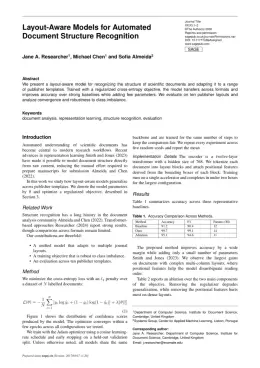
In DocuGuru you write your manuscript in a normal editor — no LaTeX setup required — and select the Science Progress template. When you export, DocuGuru compiles the paper into the official SAGE format and hands you a submission-ready PDF along with the editable LaTeX source.
What reference style does Science Progress use?
Science Progress uses Author–year (Harvard) references, shown as author–year markers such as (Smith, 2023) in the text. DocuGuru formats every in-text citation and the reference list in this exact style automatically. A reference appears like this: Smith, A., Jones, B. and Lee, C. (2023) 'A representative article title', Science Progress, 12(3), pp. 45–58.
Do I need to know LaTeX to submit to Science Progress?
No. DocuGuru generates the sagej LaTeX class and compiles the PDF for you in the background, so you get a SAGE-ready Science Progress document without writing any LaTeX. If you do want it, the LaTeX source is included in the export.
Can I import an existing draft into the Science Progress template?
Yes. Paste or upload your current manuscript — Word, LaTeX, Markdown, or plain text — and DocuGuru reflows it into the Science Progress format with correct headings, figures, tables, and author–year citations.
Who publishes Science Progress?
Science Progress is a multidisciplinary journal published by SAGE. DocuGuru's Science Progress template matches SAGE's official submission format.
Can I export a submission-ready Science Progress PDF?
Yes — DocuGuru produces a PDF built with the official Science Progress template (the sagej class) that is ready to submit to SAGE, together with the matching LaTeX source files.
How much does the Science Progress template cost?
You can start writing in the Science Progress template for free. Exporting the final submission-ready Science Progress PDF and LaTeX source is part of DocuGuru's paid plans — see the app for current pricing.
Use the Science Progress template