SAGE

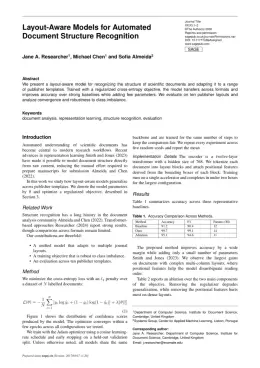
Rehabilitation Process and Outcome Template

Write in a clean editor, then format for Rehabilitation Process and Outcome in one click — DocuGuru applies the official SAGE template with author–year references and exports a submission-ready PDF plus the editable LaTeX source. Free to start.

About the Rehabilitation Process and Outcome format

Rehabilitation Process and Outcome is a peer-reviewed journal published by SAGE, covering Stroke Rehabilitation and Recovery, Cerebral Palsy and Movement Disorders, Musculoskeletal pain and rehabilitation.

PublisherSAGE
Reference styleAuthor–year (Harvard)
Author–year — (Smith, 2023) in the text
Smith, A., Jones, B. and Lee, C. (2023) 'A representative article title', Rehabilitation Process and Outcome, 12(3), pp. 45–58.

Formats any DOI in Rehabilitation Process and Outcome style. No sign-up.

Publishes research inStroke Rehabilitation and Recovery Cerebral Palsy and Movement Disorders Musculoskeletal pain and rehabilitation Spinal Cord Injury Research Osteoarthritis Treatment and Mechanisms
ISSN1179-5727
h-index12
i10-index18
Total citations579
Article processing charge$1,500
Open accessYes
Top institutions publishing hereUniversity of Leeds
Journal websitejournals.sagepub.com
You getA submission-ready PDF and the editable LaTeX source — ready to submit.

Papers published in Rehabilitation Process and Outcome per year

1
2007
2
2008
1
2010
7
2014
5
2015
7
2016
7
2017
7
2018
6
2019
9
2020
5
2021
6
2022

Citation impact of Rehabilitation Process and Outcome by publication year

5
2007
0
2008
1
2010
45
2014
41
2015
29
2016
43
2017
47
2018
62
2019
142
2020
120
2021
37
2022

Citations each year’s papers have accumulated so far — the most recent years are still building up.

Most-cited papers in Rehabilitation Process and Outcome

The Potential of Computer Vision-Based Marker-Less Human Motion Analysis for Rehabilitation

Thomas Hellstén, Jonny Karlsson, Muhammed Shamsuzzaman et al. · 1 Jan 2021

BACKGROUND: Several factors, including the aging population and the recent corona pandemic, have increased the need for cost effective, easy-to-use and reliable telerehabilitation services. Computer vision-based marker-less human pose estimation is a promising variant of telerehabilitation and is currently an intensive research topic. It has attracted significant interest for detailed motion analysis, as it does…

Identifying the Most Common CrossFit Injuries in a Variety of Athletes

Kirill Alekseyev, Alex John, Andrew Malek et al. · 1 Jan 2020

BACKGROUND: CrossFit is an increasingly popular, rapidly growing exercise regimen. Few studies have evaluated CrossFit-associated musculoskeletal injuries on a large scale. This study explores such injuries and associated risk factors in detail. OBJECTIVE: To identify the most common musculoskeletal injuries endured during CrossFit training among athletes at different levels of expertise. DESIGN: Survey-based retrospective cross-sectional…

Force Plate Assessment of Quiet Standing Balance Control: Perspectives on Clinical Application within Stroke Rehabilitation

Avril Mansfield, Elizabeth L. Inness · 1 Jan 2015

Assessment of balance control is essential to guide physical rehabilitation poststroke. However, current observational assessment tools available to physiotherapists provide limited information about underlying dyscontrol. This paper describes a force plate-based assessment of quiet standing balance control that we have implemented for individuals attending inpatient stroke rehabilitation. The assessment uses two force plates to measure…

Predicting Long-Term Mortality, Morbidity, and Survival Outcomes Following a Cardiac Event: A Cardiac Rehabilitation Study

Helen L. Graham, Andrew Lac, Haeok Lee et al. · 1 Jan 2019

Background: Cardiac rehabilitation (CR) has been shown to decrease mortality and morbidity but estimations vary. While there is significant literature supporting short-term benefits, there is not a similarly body of research as to long-term (LT) benefits. Low participation rates in CR are due to several causes and evidence demonstrating positive LT outcomes could be a…

The Effects of Medication on Activity and Rehabilitation of Older People – Opportunities and Risks

Clare Clarke, Miles D. Witham · 1 Jan 2017

Multiple medication use, or polypharmacy, is common in people undergoing rehabilitation. Polypharmacy is also common in older people, where it has the potential to impact on habitual physical activity. Despite this, the interactions between medication, disease, activity, and rehabilitation outcomes are insufficiently researched. In this review, we consider common classes of medications that can affect…

Rehabilitation Process and Outcome template — frequently asked questions

How do I write a paper in the Rehabilitation Process and Outcome format?
In DocuGuru you write your manuscript in a normal editor — no LaTeX setup required — and select the Rehabilitation Process and Outcome template. When you export, DocuGuru compiles the paper into the official SAGE format and hands you a submission-ready PDF along with the editable LaTeX source.
What reference style does Rehabilitation Process and Outcome use?
Rehabilitation Process and Outcome uses Author–year (Harvard) references, shown as author–year markers such as (Smith, 2023) in the text. DocuGuru formats every in-text citation and the reference list in this exact style automatically. A reference appears like this: Smith, A., Jones, B. and Lee, C. (2023) 'A representative article title', Rehabilitation Process and Outcome, 12(3), pp. 45–58.
Do I need to know LaTeX to submit to Rehabilitation Process and Outcome?
No. DocuGuru generates the sagej LaTeX class and compiles the PDF for you in the background, so you get a SAGE-ready Rehabilitation Process and Outcome document without writing any LaTeX. If you do want it, the LaTeX source is included in the export.
Can I import an existing draft into the Rehabilitation Process and Outcome template?
Yes. Paste or upload your current manuscript — Word, LaTeX, Markdown, or plain text — and DocuGuru reflows it into the Rehabilitation Process and Outcome format with correct headings, figures, tables, and author–year citations.
Who publishes Rehabilitation Process and Outcome?
Rehabilitation Process and Outcome is a multidisciplinary journal published by SAGE. DocuGuru's Rehabilitation Process and Outcome template matches SAGE's official submission format.
Can I export a submission-ready Rehabilitation Process and Outcome PDF?
Yes — DocuGuru produces a PDF built with the official Rehabilitation Process and Outcome template (the sagej class) that is ready to submit to SAGE, together with the matching LaTeX source files.
How much does the Rehabilitation Process and Outcome template cost?
You can start writing in the Rehabilitation Process and Outcome template for free. Exporting the final submission-ready Rehabilitation Process and Outcome PDF and LaTeX source is part of DocuGuru's paid plans — see the app for current pricing.

Use the Rehabilitation Process and Outcome template