SAGE

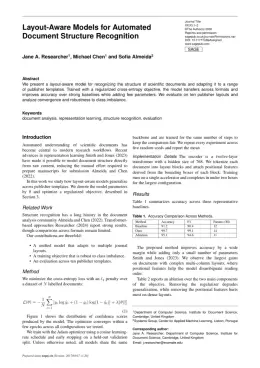
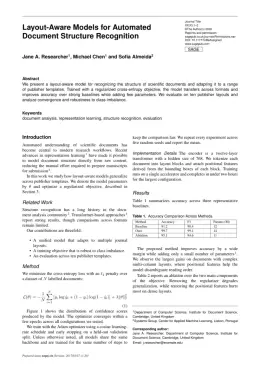
Rare Tumors Template

Write in a clean editor, then format for Rare Tumors in one click — DocuGuru applies the official SAGE template with author–year references and exports a submission-ready PDF plus the editable LaTeX source. Free to start.

About the Rare Tumors format

Rare Tumors is a peer-reviewed journal published by SAGE, covering Sarcoma Diagnosis and Treatment, Cardiac tumors and thrombi, Vascular Tumors and Angiosarcomas.

PublisherSAGE
Reference styleAuthor–year (Harvard)
Author–year — (Smith, 2023) in the text
Smith, A., Jones, B. and Lee, C. (2023) 'A representative article title', Rare Tumors, 12(3), pp. 45–58.

Formats any DOI in Rare Tumors style. No sign-up.

Publishes research inSarcoma Diagnosis and Treatment Cardiac tumors and thrombi Vascular Tumors and Angiosarcomas Bone Tumor Diagnosis and Treatments Tumors and Oncological Cases
ISSN2036-3605
Citation impact (2-yr)1.17
h-index32
i10-index272
Total citations7,036
Article processing charge$895
Open accessYes
Top institutions publishing hereMayo Clinic in Arizona
Journal websitejournals.sagepub.com
You getA submission-ready PDF and the editable LaTeX source — ready to submit.

Papers published in Rare Tumors per year

46
2014
54
2015
65
2016
14
2017
21
2018
21
2019
25
2020
38
2021
18
2022
36
2023
28
2024
15
2025

Citation impact of Rare Tumors by publication year

679
2014
575
2015
602
2016
184
2017
168
2018
195
2019
201
2020
177
2021
89
2022
118
2023
50
2024
10
2025

Citations each year’s papers have accumulated so far — the most recent years are still building up.

Most-cited papers in Rare Tumors

Tumor Lysis Syndrome in Solid Tumors: An up to Date Review of the Literature

Aibek E. Mirrakhimov, Alaa M. Ali, Maliha Khan et al. · 1 Jun 2014

Tumor lysis syndrome (TLS) is a potentially deadly complication of tumors or their treatment. This syndrome consists of a constellation of laboratory findings such as hyperuricemia, hyperkalemia, hyperphosphatemia, and hypocalcemia, known as laboratory TLS. When clinical complications such as seizures, acute renal failure, and cardiac dysrhythmias occur in patients with laboratory TLS, the syndrome is…

The epidemiology of malignant giant cell tumors of bone: an analysis of data from the Surveillance, Epidemiology and End Results Program (1975–2004)

Jennifer Beebe‐Dimmer, Karynsa Cetin, Jon P. Fryzek et al. · 1 Dec 2009

Malignant giant cell tumor (GCT) of bone is a rare tumor with debilitating consequences. Patients with GCT of bone typically present with mechanical difficulty and pain as a result of bone destruction and are at an increased risk for fracture. Because of its unusual occurrence, little is known about the epidemiology of malignant GCT of…

A Bronchogenic Cyst, Presenting as a Retroperitoneal Cystic Mass

Kim Govaerts, Peter Van Eyken, G Verswijvel et al. · 1 Mar 2012

Bronchogenic cysts are mostly benign, congenital abnormalities originating from the remnants of the primitive foregut. A retroperitoneal location is rare. Due to the mostly asymptomatic behavior and the historical confusion regarding histology, an exact prevalence is not known. We present here a case report of a retroperitoneal bronchogenic cyst. A literature review was performed for…

Is radical cystectomy mandatory in every patient with variant histology of bladder cancer

Nandakishore K. Shapur, Ran Katz, Dov Pode et al. · 1 Apr 2011

Urothelial carcinomas have an established propensity for divergent differentiation. Most of these variant tumors are muscle invasive but not all. The response of non muscle invasive variant tumors to intravesical immunotherapy with BCG is not established in the literature, and is reported here. Between June 1995 and December 2007, 760 patients (mean age of 67.5…

Solitary fibrous tumor

Andrea Bruzzone, Marco Varaldo, Claudia Ferrarazzo et al. · 3 Dec 2010

Solitary fibrous tumor (SFT) is a rare mesenchymal neoplasm which may be found everywhere in the body. It is now distinguished into two forms, pleural and extrapleural, which morphologically resemble each other. Abdominal localizations are quite rare, with 10 cases only reported in bladder; rarely they can be source of paraneoplastic syndromes (i.e., hypoglycemia secondary…

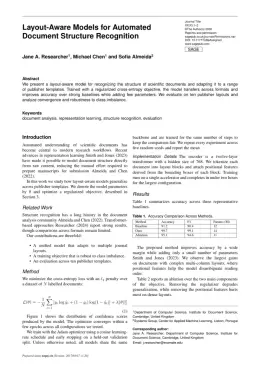
Rare Tumors template — frequently asked questions

How do I write a paper in the Rare Tumors format?
In DocuGuru you write your manuscript in a normal editor — no LaTeX setup required — and select the Rare Tumors template. When you export, DocuGuru compiles the paper into the official SAGE format and hands you a submission-ready PDF along with the editable LaTeX source.
What reference style does Rare Tumors use?
Rare Tumors uses Author–year (Harvard) references, shown as author–year markers such as (Smith, 2023) in the text. DocuGuru formats every in-text citation and the reference list in this exact style automatically. A reference appears like this: Smith, A., Jones, B. and Lee, C. (2023) 'A representative article title', Rare Tumors, 12(3), pp. 45–58.
Do I need to know LaTeX to submit to Rare Tumors?
No. DocuGuru generates the sagej LaTeX class and compiles the PDF for you in the background, so you get a SAGE-ready Rare Tumors document without writing any LaTeX. If you do want it, the LaTeX source is included in the export.
Can I import an existing draft into the Rare Tumors template?
Yes. Paste or upload your current manuscript — Word, LaTeX, Markdown, or plain text — and DocuGuru reflows it into the Rare Tumors format with correct headings, figures, tables, and author–year citations.
Who publishes Rare Tumors?
Rare Tumors is a multidisciplinary journal published by SAGE. DocuGuru's Rare Tumors template matches SAGE's official submission format.
Can I export a submission-ready Rare Tumors PDF?
Yes — DocuGuru produces a PDF built with the official Rare Tumors template (the sagej class) that is ready to submit to SAGE, together with the matching LaTeX source files.
How much does the Rare Tumors template cost?
You can start writing in the Rare Tumors template for free. Exporting the final submission-ready Rare Tumors PDF and LaTeX source is part of DocuGuru's paid plans — see the app for current pricing.
Use the Rare Tumors template