SAGE

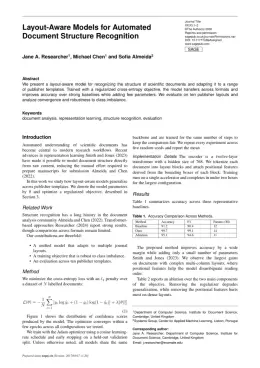
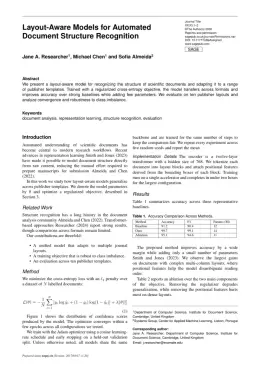
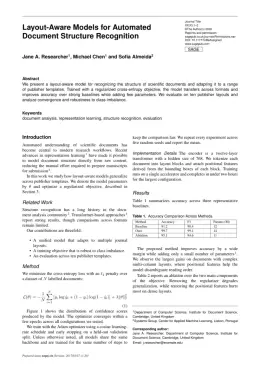
Polymers from Renewable Resources Template

Write in a clean editor, then format for Polymers from Renewable Resources in one click — DocuGuru applies the official SAGE template with author–year references and exports a submission-ready PDF plus the editable LaTeX source. Free to start.

About the Polymers from Renewable Resources format

Polymers from Renewable Resources is a peer-reviewed journal published by SAGE, covering biodegradable polymer synthesis and properties, Natural Fiber Reinforced Composites, Nanocomposite Films for Food Packaging.

PublisherSAGE
Reference styleAuthor–year (Harvard)
Author–year — (Smith, 2023) in the text
Smith, A., Jones, B. and Lee, C. (2023) 'A representative article title', Polymers from Renewable Resources, 12(3), pp. 45–58.

Formats any DOI in Polymers from Renewable Resources style. No sign-up.

Publishes research inbiodegradable polymer synthesis and properties Natural Fiber Reinforced Composites Nanocomposite Films for Food Packaging Advanced Cellulose Research Studies Lignin and Wood Chemistry
ISSN2041-2479
Citation impact (2-yr)3.06
h-index21
i10-index62
Total citations1,992
Top institutions publishing hereKTH Royal Institute of Technology
Journal websiteus.sagepub.com
You getA submission-ready PDF and the editable LaTeX source — ready to submit.

Papers published in Polymers from Renewable Resources per year

12
2014
11
2015
12
2016
12
2017
11
2018
6
2019
8
2020
5
2021
17
2022
23
2023
23
2024
14
2025

Citation impact of Polymers from Renewable Resources by publication year

64
2014
93
2015
338
2016
372
2017
75
2018
121
2019
95
2020
94
2021
142
2022
114
2023
143
2024
12
2025

Citations each year’s papers have accumulated so far — the most recent years are still building up.

Most-cited papers in Polymers from Renewable Resources

A Review - Future Aspect of Natural Fiber Reinforced Composite

Kiran Rohit, Savita Dixit · 1 May 2016

Natural fiber-reinforced polymer composite materials are rapidly growing both in terms of their industrial applications and fundamental research as they are renewable, low, completely or partially recyclable and biodegradable. In order to produce cost effective polymer reinforced composites and to reduce the destruction of ecosystem, researchers have come up with new manufacturing trends for composite…

Natural Fibre Reinforced Polymer Composite Materials - A Review

Savita Dixit, Ritesh Goel, Akash Dubey et al. · 1 May 2017

Availability of natural fibre, low cost and ease of manufacturing have urged the attention of researchers towards the possibility of reinforcement of natural fibre to improve their mechanical properties and study the extent to which they satisfy the required specifications of good reinforced polymer composite for industrial and structural applications. The chemically treated natural fibre…

Perspectives of polylactic acid from structure to applications

Kalyani Sreekumar, B. Bindhu, K. Veluraja · 1 Feb 2021

The demand for an adoption of renewable resources rather than finitely available non renewable sources for industrial purposes are rising, with the growing environmental constraints. Polymers being one of the crucial part of almost all the industries, pioneer in the list of sources needed for various applications. This makes polymers that can be obtained from…

Mechanical Properties of Short Sisal Fibre Reinforced Phenol Formaldehyde Eco-Friendly Composites

M.G. Maya, Soney C. George, Thomasukutty Jose et al. · 1 Feb 2017

Natural fibres are a good reinforcing material. Among the various natural fibres, sisal fibre is of particular interest, since its composites have high impact strength besides having moderate tensile and flexural properties compared to other ligno-cellulosic fibres. Sisal fibre is a promising reinforcement for use in composites on account of its low cost, low density,…

An overview of biopolymer-derived packaging material

Sweta Sinha · 8 Jan 2024

This comprehensive review addresses the vital environmental concerns posed by conventional petroleum-based plastics, particularly in the context of the packaging industry’s extensive reliance on these materials. As nearly 99% of plastics originate from non-renewable petrochemical sources and their non-biodegradable nature leads to widespread waste accumulation and harmful emissions upon disposal, the need for sustainable alternatives…

Polymers from Renewable Resources template — frequently asked questions

How do I write a paper in the Polymers from Renewable Resources format?
In DocuGuru you write your manuscript in a normal editor — no LaTeX setup required — and select the Polymers from Renewable Resources template. When you export, DocuGuru compiles the paper into the official SAGE format and hands you a submission-ready PDF along with the editable LaTeX source.
What reference style does Polymers from Renewable Resources use?
Polymers from Renewable Resources uses Author–year (Harvard) references, shown as author–year markers such as (Smith, 2023) in the text. DocuGuru formats every in-text citation and the reference list in this exact style automatically. A reference appears like this: Smith, A., Jones, B. and Lee, C. (2023) 'A representative article title', Polymers from Renewable Resources, 12(3), pp. 45–58.
Do I need to know LaTeX to submit to Polymers from Renewable Resources?
No. DocuGuru generates the sagej LaTeX class and compiles the PDF for you in the background, so you get a SAGE-ready Polymers from Renewable Resources document without writing any LaTeX. If you do want it, the LaTeX source is included in the export.
Can I import an existing draft into the Polymers from Renewable Resources template?
Yes. Paste or upload your current manuscript — Word, LaTeX, Markdown, or plain text — and DocuGuru reflows it into the Polymers from Renewable Resources format with correct headings, figures, tables, and author–year citations.
Who publishes Polymers from Renewable Resources?
Polymers from Renewable Resources is a multidisciplinary journal published by SAGE. DocuGuru's Polymers from Renewable Resources template matches SAGE's official submission format.
Can I export a submission-ready Polymers from Renewable Resources PDF?
Yes — DocuGuru produces a PDF built with the official Polymers from Renewable Resources template (the sagej class) that is ready to submit to SAGE, together with the matching LaTeX source files.
How much does the Polymers from Renewable Resources template cost?
You can start writing in the Polymers from Renewable Resources template for free. Exporting the final submission-ready Polymers from Renewable Resources PDF and LaTeX source is part of DocuGuru's paid plans — see the app for current pricing.

Use the Polymers from Renewable Resources template