SAGE

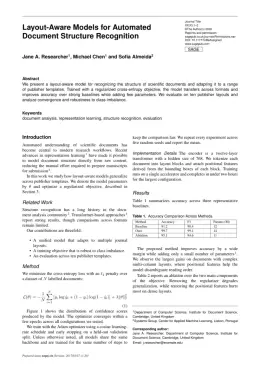
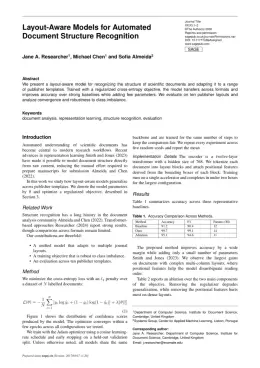
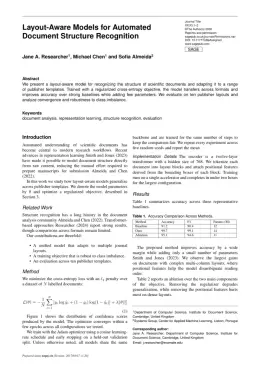
Plasmatology Template

Write in a clean editor, then format for Plasmatology in one click — DocuGuru applies the official SAGE template with author–year references and exports a submission-ready PDF plus the editable LaTeX source. Free to start.

About the Plasmatology format

Plasmatology is a peer-reviewed journal published by SAGE, covering Hemoglobinopathies and Related Disorders, Platelet Disorders and Treatments, Blood groups and transfusion.

PublisherSAGE
Reference styleAuthor–year (Harvard)
Author–year — (Smith, 2023) in the text
Smith, A., Jones, B. and Lee, C. (2023) 'A representative article title', Plasmatology, 12(3), pp. 45–58.

Formats any DOI in Plasmatology style. No sign-up.

Publishes research inHemoglobinopathies and Related Disorders Platelet Disorders and Treatments Blood groups and transfusion Hemophilia Treatment and Research Blood properties and coagulation
ISSN2634-8535
Citation impact (2-yr)1.07
h-index9
i10-index9
Total citations341
Open accessYes
Top institutions publishing hereGrifols (Spain)
Journal websiteus.sagepub.com
You getA submission-ready PDF and the editable LaTeX source — ready to submit.

Papers published in Plasmatology per year

4
2013
2
2014
4
2015
13
2021
9
2022
13
2023
10
2024
4
2025

Citation impact of Plasmatology by publication year

51
2013
103
2014
78
2015
19
2021
59
2022
10
2023
13
2024
0
2025

Citations each year’s papers have accumulated so far — the most recent years are still building up.

Most-cited papers in Plasmatology

Ribosomopathies: Mechanisms of Disease

Hani Nakhoul, Jiangwei Ke, Xiang Zhou et al. · 1 Jan 2014

Ribosomopathies are diseases caused by alterations in the structure or function of ribosomal components. Progress in our understanding of the role of the ribosome in translational and transcriptional regulation has clarified the mechanisms of the ribosomopathies and the relationship between ribosomal dysfunction and other diseases, especially cancer. This review aims to discuss these topics with…

Hemoglobinuria Misidentified as Hematuria: Review of Discolored Urine and Paroxysmal Nocturnal Hemoglobinuria

Prashant Veerreddy · 1 Jan 2013

Discolored urine is a common reason for office visits to a primary care physician and urology referral. Early differentiation of the type or cause of discolored urine is necessary for accurate diagnosis and prompt management. Paroxysmal nocturnal hemoglobinuria is a clonal disorder caused by acquired somatic mutations in the PIG-A gene on the X- chromosome…

A Review of Iron Overload in Beta-Thalassemia Major, and a Discussion on Alternative Potent Iron Chelation Targets

Piyush Kumar Yadav, Ajay Kumar Singh · 1 Jan 2022

For years, arrhythmias have been well documented in the medical arena as a cardiovascular consequence of iron overload (IO). They are thought to be linked to the accumulation of iron in the myocardium. Iron is the earth's fourth most abundant element and the second most plentiful metal (after aluminium). When it comes to biology, iron…

Anemia and the Need for Intravenous Iron Infusion after Roux-en-Y Gastric Bypass

Adam Kotkiewicz, Keri Donaldson, Charles Dye et al. · 1 Jan 2015

The frequency of anemia, iron deficiency, and the long-term need for IV iron following Roux-en-y gastric bypass (RYGB) surgery has not been well characterized. Three-hundred and nineteen out of 904 consecutive subjects who underwent RYGB at Penn State Hershey Medical Center from 1999 to 2006 met the inclusion criteria for a preoperative complete blood count…

Dasatinib Induced Avascular Necrosis of Femoral Head in Adult Patient with Chronic Myeloid Leukemia

Mohamed A. Yassin, Abbas Moustafa, Abdulqadir J. Nashwan et al. · 1 Jan 2015

Chronic myeloid leukemia (CML) is a myeloproliferative neoplasm characterized by the presence of the Philadelphia (Ph) chromosome resulting from the reciprocal translocation t(9;22)(q34;q11). The molecular consequence of this translocation is the generation of the BCR-ABL fusion gene, which encodes a constitutively active protein tyrosine kinase. The oncogenic protein tyrosine kinase, which is located in the…

Plasmatology template — frequently asked questions

How do I write a paper in the Plasmatology format?
In DocuGuru you write your manuscript in a normal editor — no LaTeX setup required — and select the Plasmatology template. When you export, DocuGuru compiles the paper into the official SAGE format and hands you a submission-ready PDF along with the editable LaTeX source.
What reference style does Plasmatology use?
Plasmatology uses Author–year (Harvard) references, shown as author–year markers such as (Smith, 2023) in the text. DocuGuru formats every in-text citation and the reference list in this exact style automatically. A reference appears like this: Smith, A., Jones, B. and Lee, C. (2023) 'A representative article title', Plasmatology, 12(3), pp. 45–58.
Do I need to know LaTeX to submit to Plasmatology?
No. DocuGuru generates the sagej LaTeX class and compiles the PDF for you in the background, so you get a SAGE-ready Plasmatology document without writing any LaTeX. If you do want it, the LaTeX source is included in the export.
Can I import an existing draft into the Plasmatology template?
Yes. Paste or upload your current manuscript — Word, LaTeX, Markdown, or plain text — and DocuGuru reflows it into the Plasmatology format with correct headings, figures, tables, and author–year citations.
Who publishes Plasmatology?
Plasmatology is a multidisciplinary journal published by SAGE. DocuGuru's Plasmatology template matches SAGE's official submission format.
Can I export a submission-ready Plasmatology PDF?
Yes — DocuGuru produces a PDF built with the official Plasmatology template (the sagej class) that is ready to submit to SAGE, together with the matching LaTeX source files.
How much does the Plasmatology template cost?
You can start writing in the Plasmatology template for free. Exporting the final submission-ready Plasmatology PDF and LaTeX source is part of DocuGuru's paid plans — see the app for current pricing.

Use the Plasmatology template