SAGE

Nanomaterials and Nanotechnology Template

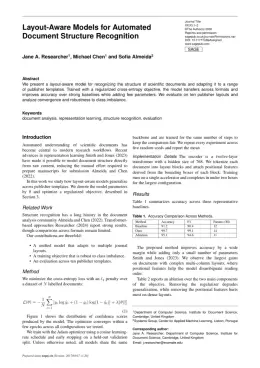
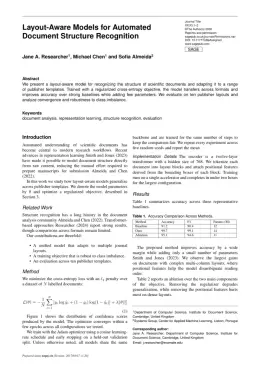
Write in a clean editor, then format for Nanomaterials and Nanotechnology in one click — DocuGuru applies the official SAGE template with author–year references and exports a submission-ready PDF plus the editable LaTeX source. Free to start.

About the Nanomaterials and Nanotechnology format

Nanomaterials and Nanotechnology is a peer-reviewed journal published by SAGE, covering Graphene research and applications, Advanced Photocatalysis Techniques, Nanoparticles: synthesis and applications.

PublisherSAGE
Reference styleAuthor–year (Harvard)
Author–year — (Smith, 2023) in the text
Smith, A., Jones, B. and Lee, C. (2023) 'A representative article title', Nanomaterials and Nanotechnology, 12(3), pp. 45–58.

Formats any DOI in Nanomaterials and Nanotechnology style. No sign-up.

Publishes research inGraphene research and applications Advanced Photocatalysis Techniques Nanoparticles: synthesis and applications Quantum Dots Synthesis And Properties Carbon Nanotubes in Composites
ISSN1847-9804
Citation impact (2-yr)2.55
h-index42
i10-index215
Total citations7,821
Article processing charge$1,300
Open accessYes
Top institutions publishing hereUniversity of Salento
Journal websiteus.sagepub.com
You getA submission-ready PDF and the editable LaTeX source — ready to submit.

Papers published in Nanomaterials and Nanotechnology per year

32
2014
38
2015
64
2016
27
2017
18
2018
26
2019
28
2020
22
2021
21
2022
13
2023
18
2024
15
2025

Citation impact of Nanomaterials and Nanotechnology by publication year

773
2014
860
2015
1.1K
2016
722
2017
396
2018
611
2019
577
2020
368
2021
331
2022
56
2023
64
2024
32
2025

Citations each year’s papers have accumulated so far — the most recent years are still building up.

Most-cited papers in Nanomaterials and Nanotechnology

<i>Lactobacillus</i> Mediated Synthesis of Silver Oxide Nanoparticles

Zuzer Dhoondia, Hemlatta Chakraborty · 1 Jan 2012

The ability of prokaryotic microorganisms to reduce the inorganic metals has opened up an exciting eco-friendly approach towards the development of natural ‘nano-factories’. However, a number of issues have to be addressed from the nanotechnological and microbiological point of view before such a biosynthesis approach can compete with the existing physical and chemical methods. This…

Functional Oxide Nanomaterials and Nanocomposites for the Removal of Heavy Metals and Dyes

Sarika Singh, K.C. Barick, D. Bahadur · 1 Jan 2013

Water scarcity and its contamination with toxic metal ions and organic dyes represent a serious worldwide problem in the 21 st century. A wide range of conventional approaches have been used to remove these contaminants from waste. Recently, nanotechnology has been given great scope for the fabrication of desirable nanomaterials with large surface-to-volume ratios and…

Preparation of Silica Nanoparticles and its Beneficial Role in Cementitious Materials

L.P. Singh, S. K. Agarwal, S. K. Bhattacharyya et al. · 31 Jul 2011

Spherical silica nanoparticles (n-SiO 2 ) with controllable size have been synthesized using tetraethoxysilane as starting material and ethanol as solvent by sol-gel method. Morphology and size of the particles was controlled through surfactants. Sorbitan monolaurate, sorbitain monopalmitate and sorbitain monostearate produced silica nanoparticles of varying sizes (80-150 nm), indicating the effect of chain length…

Graphene-engineered cementitious composites

Qiaofeng Zheng, Baoguo Han, Xia Cui et al. · 1 Jan 2017

Graphene, a two-dimensional monoatomic thick building block of a carbon allotrope, has emerged as nano-inclusions in cementitious materials due to its distinguished mechanical, electrical, thermal, and transport properties. Graphene nanoplatelet and its oxidized derivative graphene oxide were found to be able to reinforce and modify the cementitious materials from atomic scale to macroscale, and thereby…

Surface Enhanced Raman Spectroscopy of Proteins: Implications for Drug Designing

Soumik Siddhanta, Chandrabhas Narayana · 1 Jan 2012

In this review article we present a general overview of the recent progress in the newly developing area of the study of protein-ligand interaction by surface enhanced Raman spectroscopy (SERS). Since its first observation in 1977, SERS have been fast developing into an analytical tool for trace detection of molecular entities, particularly in the area…

Nanomaterials and Nanotechnology template — frequently asked questions

How do I write a paper in the Nanomaterials and Nanotechnology format?
In DocuGuru you write your manuscript in a normal editor — no LaTeX setup required — and select the Nanomaterials and Nanotechnology template. When you export, DocuGuru compiles the paper into the official SAGE format and hands you a submission-ready PDF along with the editable LaTeX source.
What reference style does Nanomaterials and Nanotechnology use?
Nanomaterials and Nanotechnology uses Author–year (Harvard) references, shown as author–year markers such as (Smith, 2023) in the text. DocuGuru formats every in-text citation and the reference list in this exact style automatically. A reference appears like this: Smith, A., Jones, B. and Lee, C. (2023) 'A representative article title', Nanomaterials and Nanotechnology, 12(3), pp. 45–58.
Do I need to know LaTeX to submit to Nanomaterials and Nanotechnology?
No. DocuGuru generates the sagej LaTeX class and compiles the PDF for you in the background, so you get a SAGE-ready Nanomaterials and Nanotechnology document without writing any LaTeX. If you do want it, the LaTeX source is included in the export.
Can I import an existing draft into the Nanomaterials and Nanotechnology template?
Yes. Paste or upload your current manuscript — Word, LaTeX, Markdown, or plain text — and DocuGuru reflows it into the Nanomaterials and Nanotechnology format with correct headings, figures, tables, and author–year citations.
Who publishes Nanomaterials and Nanotechnology?
Nanomaterials and Nanotechnology is a multidisciplinary journal published by SAGE. DocuGuru's Nanomaterials and Nanotechnology template matches SAGE's official submission format.
Can I export a submission-ready Nanomaterials and Nanotechnology PDF?
Yes — DocuGuru produces a PDF built with the official Nanomaterials and Nanotechnology template (the sagej class) that is ready to submit to SAGE, together with the matching LaTeX source files.
How much does the Nanomaterials and Nanotechnology template cost?
You can start writing in the Nanomaterials and Nanotechnology template for free. Exporting the final submission-ready Nanomaterials and Nanotechnology PDF and LaTeX source is part of DocuGuru's paid plans — see the app for current pricing.

Use the Nanomaterials and Nanotechnology template