SAGE

Methodological Innovations Template

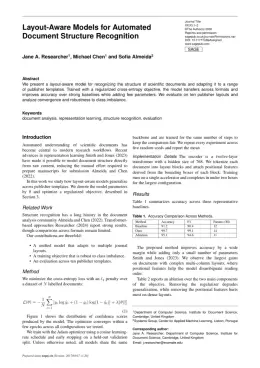
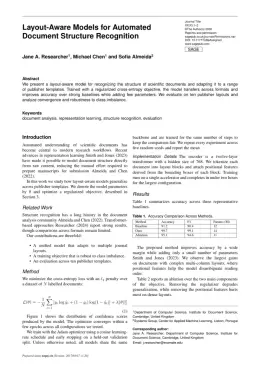
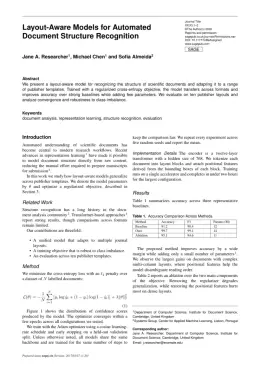
Write in a clean editor, then format for Methodological Innovations in one click — DocuGuru applies the official SAGE template with author–year references and exports a submission-ready PDF plus the editable LaTeX source. Free to start.

About the Methodological Innovations format

Methodological Innovations is a peer-reviewed journal published by SAGE, covering Qualitative Research Methods and Ethics, Participatory Visual Research Methods, Focus Groups and Qualitative Methods.

PublisherSAGE
Reference styleAuthor–year (Harvard)
Author–year — (Smith, 2023) in the text
Smith, A., Jones, B. and Lee, C. (2023) 'A representative article title', Methodological Innovations, 12(3), pp. 45–58.

Formats any DOI in Methodological Innovations style. No sign-up.

Publishes research inQualitative Research Methods and Ethics Participatory Visual Research Methods Focus Groups and Qualitative Methods Health Policy Implementation Science Survey Methodology and Nonresponse
ISSN2059-7991
Citation impact (2-yr)2.29
h-index32
i10-index110
Total citations4,749
Article processing charge$750
Open accessYes
Top institutions publishing hereUniversity of Warwick
Journal websiteus.sagepub.com
You getA submission-ready PDF and the editable LaTeX source — ready to submit.

Papers published in Methodological Innovations per year

33
2016
19
2017
24
2018
41
2019
32
2020
32
2021
37
2022
27
2023
18
2024
20
2025

Citation impact of Methodological Innovations by publication year

1.1K
2016
523
2017
484
2018
724
2019
660
2020
538
2021
264
2022
302
2023
43
2024
69
2025

Citations each year’s papers have accumulated so far — the most recent years are still building up.

Most-cited papers in Methodological Innovations

Three principles of pragmatism for research on organizational processes

Leanne M. Kelly, Maya Cordeiro · 1 May 2020

This article explicates pragmatism as a relevant and useful paradigm for qualitative research on organizational processes. The article focuses on three core methodological principles that underlie a pragmatic approach to inquiry: (1) an emphasis on actionable knowledge, (2) recognition of the interconnectedness between experience, knowing and acting and (3) inquiry as an experiential process. The…

Conceptual models to guide integration during analysis in convergent mixed methods studies

Ellen Moseholm, Michael D. Fetters · 1 Jul 2017

Methodologists have offered general strategies for integration in mixed-methods studies through merging of quantitative and qualitative data. While these strategies provide researchers in the field general guidance on how to integrate data during mixed-methods analysis, a methodological typology detailing specific analytic frameworks has been lacking. The purpose of this article is to introduce a typology…

Test–retest: Agreement or reliability?

André Berchtold · 1 Jan 2016

Test–retest is a concept that is routinely evaluated during the validation phase of many measurement tools. However, this term covers at least two related but very different concepts: reliability and agreement. Reliability is the ability of a measure applied twice upon the same respondents to produce the same ranking on both occasions. Agreement requires the…

A Review of occupation-based social classifications for social survey research

Roxanne Connelly, Vernon Gayle, Paul Lambert · 1 Jan 2016

This article is a review of issues associated with measuring occupations and using occupation-based socio-economic classifications in social science research. The review is orientated towards researchers who undertake secondary analysis of large-scale micro-level social science datasets. This article begins with an outline of how to handle raw occupational information. This is followed by an introduction…

Suspicious and fraudulent online survey participation: Introducing the REAL framework

Jennifer Lawlor, C. C. Thomas, Andrew T Guhin et al. · 1 Sep 2021

Online survey research has significantly increased in popularity in recent years. With its use, researchers have a new set of concerns about data collection and analysis to consider, including the possibility of fraudulent survey submissions. The purpose of this article is to demonstrate to survey researchers an innovative and systematized process for addressing online survey…

Methodological Innovations template — frequently asked questions

How do I write a paper in the Methodological Innovations format?
In DocuGuru you write your manuscript in a normal editor — no LaTeX setup required — and select the Methodological Innovations template. When you export, DocuGuru compiles the paper into the official SAGE format and hands you a submission-ready PDF along with the editable LaTeX source.
What reference style does Methodological Innovations use?
Methodological Innovations uses Author–year (Harvard) references, shown as author–year markers such as (Smith, 2023) in the text. DocuGuru formats every in-text citation and the reference list in this exact style automatically. A reference appears like this: Smith, A., Jones, B. and Lee, C. (2023) 'A representative article title', Methodological Innovations, 12(3), pp. 45–58.
Do I need to know LaTeX to submit to Methodological Innovations?
No. DocuGuru generates the sagej LaTeX class and compiles the PDF for you in the background, so you get a SAGE-ready Methodological Innovations document without writing any LaTeX. If you do want it, the LaTeX source is included in the export.
Can I import an existing draft into the Methodological Innovations template?
Yes. Paste or upload your current manuscript — Word, LaTeX, Markdown, or plain text — and DocuGuru reflows it into the Methodological Innovations format with correct headings, figures, tables, and author–year citations.
Who publishes Methodological Innovations?
Methodological Innovations is a multidisciplinary journal published by SAGE. DocuGuru's Methodological Innovations template matches SAGE's official submission format.
Can I export a submission-ready Methodological Innovations PDF?
Yes — DocuGuru produces a PDF built with the official Methodological Innovations template (the sagej class) that is ready to submit to SAGE, together with the matching LaTeX source files.
How much does the Methodological Innovations template cost?
You can start writing in the Methodological Innovations template for free. Exporting the final submission-ready Methodological Innovations PDF and LaTeX source is part of DocuGuru's paid plans — see the app for current pricing.

Use the Methodological Innovations template