SAGE

Journal of Histochemistry & Cytochemistry Template

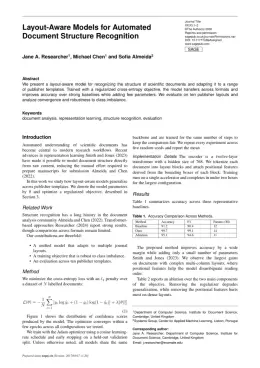
Write in a clean editor, then format for Journal of Histochemistry & Cytochemistry in one click — DocuGuru applies the official SAGE template with author–year references and exports a submission-ready PDF plus the editable LaTeX source. Free to start.

About the Journal of Histochemistry & Cytochemistry format

Journal of Histochemistry & Cytochemistry is a peer-reviewed journal published by SAGE, covering Glycosylation and Glycoproteins Research, Molecular Biology Techniques and Applications, Cell Adhesion Molecules Research.

PublisherSAGE
Reference styleAuthor–year (Harvard)
Author–year — (Smith, 2023) in the text
Smith, A., Jones, B. and Lee, C. (2023) 'A representative article title', Journal of Histochemistry & Cytochemistry, 12(3), pp. 45–58.

Formats any DOI in Journal of Histochemistry & Cytochemistry style. No sign-up.

Publishes research inGlycosylation and Glycoproteins Research Molecular Biology Techniques and Applications Cell Adhesion Molecules Research Monoclonal and Polyclonal Antibodies Research Pancreatic function and diabetes
ISSN0022-1554
Citation impact (2-yr)1.66
h-index243
i10-index7,222
Total citations487,759
Top institutions publishing hereNational Institutes of Health
Journal websitejhc.sagepub.com
You getA submission-ready PDF and the editable LaTeX source — ready to submit.

Papers published in Journal of Histochemistry & Cytochemistry per year

70
2014
74
2015
50
2016
55
2017
71
2018
54
2019
65
2020
54
2021
38
2022
45
2023
40
2024
33
2025

Citation impact of Journal of Histochemistry & Cytochemistry by publication year

3.8K
2014
2.6K
2015
1.7K
2016
1.5K
2017
1.5K
2018
1.4K
2019
1.9K
2020
788
2021
251
2022
152
2023
129
2024
27
2025

Citations each year’s papers have accumulated so far — the most recent years are still building up.

Most-cited papers in Journal of Histochemistry & Cytochemistry

Use of avidin-biotin-peroxidase complex (ABC) in immunoperoxidase techniques: a comparison between ABC and unlabeled antibody (PAP) procedures.

S M Hsu, Laurence Raine, Herbert Fanger · 1 Apr 1981

The use of avidin-biotin interaction in immunoenzymatic techniques provides a simple and sensitive method to localize antigens in formalin-fixed tissues. Among the several staining procedures available, the ABC method, which involves an application of biotin-labeled secondary antibody followed by the addition of avidin-biotin-peroxidase complex, gives a superior result when compared to the unlabeled antibody method.…

14,265 citations Cite SaveGo to paper →
THF EARLY STAGES OF ABSORPTION OF INJECTED HORSERADISH PEROXIDASE IN THE PROXIMAL TUBULES OF MOUSE KIDNEY: ULTRASTRUCTURAL CYTOCHEMISTRY BY A NEW TECHNIQUE

Richard C. Graham, Morris J. Karnovsky · 1 Apr 1966

The early stages of absorption of intravenously injected horseradish peroxidase in proximal tubules of mouse kidney were studied with a new ultrastructural cytochemical technique. In animals killed as early as 90 sec after injection, reaction product was found on the brushborder membranes and in the apical tubular invaginations. From the latter structures it was transported…

6,511 citations Cite SaveGo to paper →
THE UNLABELED ANTIBODY ENZYME METHOD OF IMMUNOHISTOCHEMISTRY PREPARATION AND PROPERTIES OF SOLUBLE ANTIGEN-ANTIBODY COMPLEX (HORSERADISH PEROXIDASE-ANTIHORSERADISH PEROXIDASE) AND ITS USE IN IDENTIFICATION OF SPIROCHETES

Ludwig A. Sternberger, Paul H. Hardy, John J. Cuculis et al. · 1 May 1970

Antigen was identified histochemically without the use of labeled antibodies by the sequential application of (a) specific rabbit antiserum, (b) sheep antiserum to rabbit immunoglobulin G, (c) specifically purified, soluble horseradish peroxidase-anti-horseradish peroxidase complex (PAP), (d) 3,3'-diaminobenzidine and hydrogen peroxide and (e) osmium tetroxide. A simple method for preparation of high yields of PAP consisted…

5,071 citations Cite SaveGo to paper →
Tetramethyl benzidine for horseradish peroxidase neurohistochemistry: a non-carcinogenic blue reaction product with superior sensitivity for visualizing neural afferents and efferents.

M.‐Marsel Mesulam · 1 Feb 1978

Tetramethyl benzidine (TMB) is a presumptively non-carcinogenic chromogen which yields a blue reaction-product at sites of horseradish peroxidase activity. Sixty-six distinct procedures were performed in rats and monkeys in order to determine the optimal incubation parameters for TMB. As a result, a procedure is recommended whose sensitivity greatly surpasses that of a previously described benzidine…

4,311 citations Cite SaveGo to paper →
PERIODATE-LYSINE-PARAFORMALDEHYDE FIXATIVE A NEW FIXATIVE FOR IMMUNOELECTRON MICROSCOPY

Ian W. McLean, Paul K. Nakane · 1 Dec 1974

A new fixative which primarily stabilizes carbohydrate moieties was developed for immunoelectron microscopy. It contains periodate, lysine and paraformaldehyde. Theoretically, the carbohydrates are oxidized by periodate and cross-linked by lysine. The fixative can preserve antigenicity as well as paraformaldehyde and ultrastructure as well as glutaraldehyde. Using this fixative and the peroxidase-labeled antibody technique, basement membrane…

3,826 citations Cite SaveGo to paper →

Journal of Histochemistry & Cytochemistry template — frequently asked questions

How do I write a paper in the Journal of Histochemistry & Cytochemistry format?
In DocuGuru you write your manuscript in a normal editor — no LaTeX setup required — and select the Journal of Histochemistry & Cytochemistry template. When you export, DocuGuru compiles the paper into the official SAGE format and hands you a submission-ready PDF along with the editable LaTeX source.
What reference style does Journal of Histochemistry & Cytochemistry use?
Journal of Histochemistry & Cytochemistry uses Author–year (Harvard) references, shown as author–year markers such as (Smith, 2023) in the text. DocuGuru formats every in-text citation and the reference list in this exact style automatically. A reference appears like this: Smith, A., Jones, B. and Lee, C. (2023) 'A representative article title', Journal of Histochemistry & Cytochemistry, 12(3), pp. 45–58.
Do I need to know LaTeX to submit to Journal of Histochemistry & Cytochemistry?
No. DocuGuru generates the sagej LaTeX class and compiles the PDF for you in the background, so you get a SAGE-ready Journal of Histochemistry & Cytochemistry document without writing any LaTeX. If you do want it, the LaTeX source is included in the export.
Can I import an existing draft into the Journal of Histochemistry & Cytochemistry template?
Yes. Paste or upload your current manuscript — Word, LaTeX, Markdown, or plain text — and DocuGuru reflows it into the Journal of Histochemistry & Cytochemistry format with correct headings, figures, tables, and author–year citations.
Who publishes Journal of Histochemistry & Cytochemistry?
Journal of Histochemistry & Cytochemistry is a multidisciplinary journal published by SAGE. DocuGuru's Journal of Histochemistry & Cytochemistry template matches SAGE's official submission format.
Can I export a submission-ready Journal of Histochemistry & Cytochemistry PDF?
Yes — DocuGuru produces a PDF built with the official Journal of Histochemistry & Cytochemistry template (the sagej class) that is ready to submit to SAGE, together with the matching LaTeX source files.
How much does the Journal of Histochemistry & Cytochemistry template cost?
You can start writing in the Journal of Histochemistry & Cytochemistry template for free. Exporting the final submission-ready Journal of Histochemistry & Cytochemistry PDF and LaTeX source is part of DocuGuru's paid plans — see the app for current pricing.

Use the Journal of Histochemistry & Cytochemistry template