
221 citations
Cite
SaveGo to paper →
SAGE
Journal of Childhool Communication Disorders Template
Write in a clean editor, then format for Journal of Childhool Communication Disorders in one click — DocuGuru applies the official SAGE template with author–year references and exports a submission-ready PDF plus the editable LaTeX source. Free to start.
About the Journal of Childhool Communication Disorders format
Journal of Childhool Communication Disorders is a peer-reviewed journal published by SAGE, covering Language Development and Disorders, Hearing Impairment and Communication, Family and Disability Support Research.
| Publisher | SAGE |
|---|---|
| Reference style | Author–year (Harvard) Author–year — (Smith, 2023) in the text Smith, A., Jones, B. and Lee, C. (2023) 'A representative article title', Journal of Childhool Communication Disorders, 12(3), pp. 45–58.
Formats any DOI in Journal of Childhool Communication Disorders style. No sign-up. |
| Publishes research in | Language Development and Disorders Hearing Impairment and Communication Family and Disability Support Research Reading and Literacy Development Stuttering Research and Treatment |
| ISSN | 0735-3170 |
| h-index | 24 |
| i10-index | 58 |
| Total citations | 2,349 |
| Top institutions publishing here | University of Houston |
| You get | A submission-ready PDF and the editable LaTeX source — ready to submit. |
Papers published in Journal of Childhool Communication Disorders per year
Citation impact of Journal of Childhool Communication Disorders by publication year
Citations each year’s papers have accumulated so far — the most recent years are still building up.
Most-cited papers in Journal of Childhool Communication Disorders
Current philosophy in early childhood education advocates family-centered intervention goals for handicapped children. To develop appropriate gaals for children from diverse cultures, professionals must understand parents' beliefs and values regarding the family's and child's resources and needs; and they must adopt an ecological framework that considers children's functioning within the broader aspects of their environment.…
203 citations
Cite
SaveGo to paper →
The purpose of this investigation was to determine if male adolescents with Down syndrome (DS) have a communication pattern which differs from males in three control groups matched for chronological age and mental age. Descriptive communication profiles were constructed which considered language comprehension and production, oral-motor functioning, articulation and aerodynamic tasks. Of particular interest was…
123 citations
Cite
SaveGo to paper →
117 citations
Cite
SaveGo to paper →
A group of children was identified as “late talkers” (LT) on the basis of small expressive vocabulary size at 20–34 months of age and matched to a group of normally speaking age-mates. The subjects were followed yearly throughout the preschool period in order to track growth in language and related skills. Results showed that although…
102 citations
Cite
SaveGo to paper →
Related journal templates
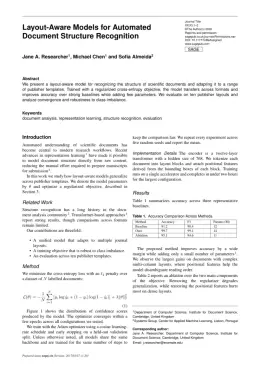
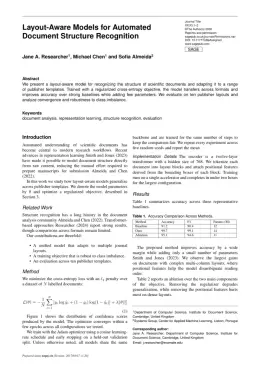
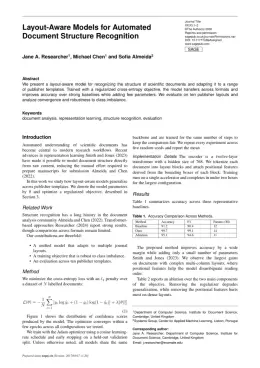
Journal of Childhool Communication Disorders template — frequently asked questions
How do I write a paper in the Journal of Childhool Communication Disorders format?
In DocuGuru you write your manuscript in a normal editor — no LaTeX setup required — and select the Journal of Childhool Communication Disorders template. When you export, DocuGuru compiles the paper into the official SAGE format and hands you a submission-ready PDF along with the editable LaTeX source.
What reference style does Journal of Childhool Communication Disorders use?
Journal of Childhool Communication Disorders uses Author–year (Harvard) references, shown as author–year markers such as (Smith, 2023) in the text. DocuGuru formats every in-text citation and the reference list in this exact style automatically. A reference appears like this: Smith, A., Jones, B. and Lee, C. (2023) 'A representative article title', Journal of Childhool Communication Disorders, 12(3), pp. 45–58.
Do I need to know LaTeX to submit to Journal of Childhool Communication Disorders?
No. DocuGuru generates the sagej LaTeX class and compiles the PDF for you in the background, so you get a SAGE-ready Journal of Childhool Communication Disorders document without writing any LaTeX. If you do want it, the LaTeX source is included in the export.
Can I import an existing draft into the Journal of Childhool Communication Disorders template?
Yes. Paste or upload your current manuscript — Word, LaTeX, Markdown, or plain text — and DocuGuru reflows it into the Journal of Childhool Communication Disorders format with correct headings, figures, tables, and author–year citations.
Who publishes Journal of Childhool Communication Disorders?
Journal of Childhool Communication Disorders is a multidisciplinary journal published by SAGE. DocuGuru's Journal of Childhool Communication Disorders template matches SAGE's official submission format.
Can I export a submission-ready Journal of Childhool Communication Disorders PDF?
Yes — DocuGuru produces a PDF built with the official Journal of Childhool Communication Disorders template (the sagej class) that is ready to submit to SAGE, together with the matching LaTeX source files.
How much does the Journal of Childhool Communication Disorders template cost?
You can start writing in the Journal of Childhool Communication Disorders template for free. Exporting the final submission-ready Journal of Childhool Communication Disorders PDF and LaTeX source is part of DocuGuru's paid plans — see the app for current pricing.