SAGE

Journal of Building Physics Template

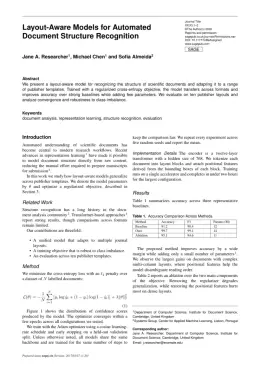
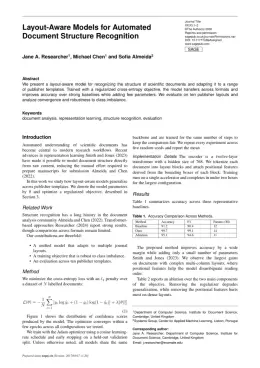
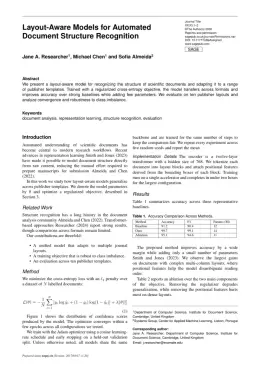
Write in a clean editor, then format for Journal of Building Physics in one click — DocuGuru applies the official SAGE template with author–year references and exports a submission-ready PDF plus the editable LaTeX source. Free to start.

About the Journal of Building Physics format

Journal of Building Physics is a peer-reviewed journal published by SAGE, covering Building Energy and Comfort Optimization, Hygrothermal properties of building materials, Urban Heat Island Mitigation.

PublisherSAGE
Reference styleAuthor–year (Harvard)
Author–year — (Smith, 2023) in the text
Smith, A., Jones, B. and Lee, C. (2023) 'A representative article title', Journal of Building Physics, 12(3), pp. 45–58.

Formats any DOI in Journal of Building Physics style. No sign-up.

Publishes research inBuilding Energy and Comfort Optimization Hygrothermal properties of building materials Urban Heat Island Mitigation Wind and Air Flow Studies Building materials and conservation
ISSN1744-2583
Citation impact (2-yr)2.43
h-index44
i10-index266
Total citations9,452
Top institutions publishing hereKU Leuven
Journal websitewww.sagepub.com
You getA submission-ready PDF and the editable LaTeX source — ready to submit.

Papers published in Journal of Building Physics per year

28
2014
23
2015
33
2016
37
2017
33
2018
31
2019
28
2020
30
2021
15
2022
29
2023
42
2024
48
2025

Citation impact of Journal of Building Physics by publication year

473
2014
449
2015
330
2016
567
2017
567
2018
480
2019
356
2020
383
2021
80
2022
121
2023
224
2024
47
2025

Citations each year’s papers have accumulated so far — the most recent years are still building up.

Most-cited papers in Journal of Building Physics

Moisture and Bio-deterioration Risk of Building Materials and Structures

Hannu Viitanen, Juha Vinha, Kati Salminen et al. · 21 Aug 2009

There are several biological processes causing aging and damage to buildings. This is partly due to natural aging of materials and excessive moisture. The demands on durability, energy balance, and health of houses are continually rising. For mold development, the minimum (critical) ambient humidity requirement is shown to be between RH 80% and 95% depending…

Air infiltration through building envelopes: A review

Chadi Younes, Caesar Abi Shdid, Girma Bitsuamlak · 24 Oct 2011

Air leakage through the building envelope into the building interiors has a considerable impact on the energy loads and consequently energy demand and energy costs of buildings. This phenomenon known as infiltration happens through various openings and venues in the building envelope varying from large openings such as doors and windows to minute cracks and…

The path to the high performance thermal building insulation materials and solutions of tomorrow

Bjørn Petter Jelle, Arild Gustavsen, Ruben Baetens · 20 Jul 2010

In today’s society there is an increased focus on various energy aspects. Buildings constitute a large part of the total energy consumption in the world. In this respect it is important to have the optimum heat balance in buildings. That is, in a cold climate one wants to have as well thermally insulated building envelopes…

Thermal properties of high-volume fly ash mortars and concretes

Dale P. Bentz, MA Peltz, A. Durán-Herrera et al. · 5 Jul 2010

As sustainability moves to the forefront of construction, the utilization of high-volume fly ash concrete mixtures to reduce CO 2 emissions and cement consumption per unit volume of concrete placed is receiving renewed interest. Concrete mixtures in which the fly ash replaces 50% or more of the Portland cement are both economically and technically viable.…

Exploring the building energy impacts of green roof design decisions – a modeling study of buildings in four distinct climates

David J. Sailor, Timothy B. Elley, Max Gibson · 13 Sep 2011

This study explores the complex and interacting physical mechanisms that lead to building energy use implications of green roof design decisions. The EnergyPlus building energy simulation program, complete with an integrated green roof simulation module, was used to analyze the effects of roof surface design on building energy consumption. Simulations were conducted for both black…

Journal of Building Physics template — frequently asked questions

How do I write a paper in the Journal of Building Physics format?
In DocuGuru you write your manuscript in a normal editor — no LaTeX setup required — and select the Journal of Building Physics template. When you export, DocuGuru compiles the paper into the official SAGE format and hands you a submission-ready PDF along with the editable LaTeX source.
What reference style does Journal of Building Physics use?
Journal of Building Physics uses Author–year (Harvard) references, shown as author–year markers such as (Smith, 2023) in the text. DocuGuru formats every in-text citation and the reference list in this exact style automatically. A reference appears like this: Smith, A., Jones, B. and Lee, C. (2023) 'A representative article title', Journal of Building Physics, 12(3), pp. 45–58.
Do I need to know LaTeX to submit to Journal of Building Physics?
No. DocuGuru generates the sagej LaTeX class and compiles the PDF for you in the background, so you get a SAGE-ready Journal of Building Physics document without writing any LaTeX. If you do want it, the LaTeX source is included in the export.
Can I import an existing draft into the Journal of Building Physics template?
Yes. Paste or upload your current manuscript — Word, LaTeX, Markdown, or plain text — and DocuGuru reflows it into the Journal of Building Physics format with correct headings, figures, tables, and author–year citations.
Who publishes Journal of Building Physics?
Journal of Building Physics is a multidisciplinary journal published by SAGE. DocuGuru's Journal of Building Physics template matches SAGE's official submission format.
Can I export a submission-ready Journal of Building Physics PDF?
Yes — DocuGuru produces a PDF built with the official Journal of Building Physics template (the sagej class) that is ready to submit to SAGE, together with the matching LaTeX source files.
How much does the Journal of Building Physics template cost?
You can start writing in the Journal of Building Physics template for free. Exporting the final submission-ready Journal of Building Physics PDF and LaTeX source is part of DocuGuru's paid plans — see the app for current pricing.

Use the Journal of Building Physics template